| Piú viste |
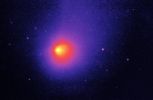
Comets-Schwassmann_Wachmann_1-00.jpgComet Schwassmann-Wachmann I and two asteroids60 visiteSchwassmann-Wachmann 1 (its nucleus is about 30 Km in diameter and is too small to be resolved by the SST while the micron-sized dust grains in the coma and tail stream out away from the Sun) is thought to be a member of a relatively new class of objects called "Centaurs," of which 45 objects are known. These are small icy bodies with orbits between those of Jupiter and Neptune. Astronomers believe that Centaurs are recent escapees from the Kuiper Belt, a zone of small bodies orbiting in a cloud at the distant reaches of the Solar System. Two asteroids, 1996 GM36 (left) and 5238 Naozane (right) were serendipitously captured in the comet image. Because they are closer to us than the comet and have faster orbital velocities, they appear to move relative to the comet and background stars, thereby producing a slight elongated appearance. The SST data have allowed astronomers to use thermal measurements, which reduce the uncertainties of visible-light albedo (reflectivity) measurements, to determine their size.
|
|
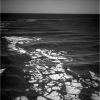
OPP-SOL399-1N163604587EFF5000P0685R0M1.jpgThe "paved walls" of Vostok Crater (2)60 visiteSecondo tassello della bellissima panoramica che Opportunity ci ha regalato. Sono ben visibili non solo i "pavimenti rocciosi" che sembrano formare incastri perfetti, ma anche i bordi più lontani del cratere (sullo sfondo) e le sferule Marziane che, come sapete, sembrano coprire tutta questa parte di Meridiani Planum. Molto interessanti sono anche le "onde" che attraversano quest'area interna al cratere semi-sepolto: la nostra sensazione, infatti, è che non si tratti di dune sabbiose (o terrose) che si "stendono" (o "poggiano") su un terreno duro e compatto, bensì di gibbosità del terreno stesso le quali potrebbero anche avere un'origine rocciosa.
|
|
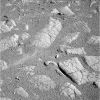
OPP-SOL400-1P163700005EFF5000P2384L7M1.jpgSpherules (3)60 visitenessun commento
|
|

Enceladus-N00030265.jpgEnceladus, from approx. 925.000 Km60 visitenessun commento
|
|
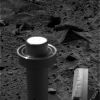
SOL421-2P163744117EFFA884P2376L2M1.jpgInteresting...60 visiteCambio di filtro/colore e leggerissimo shift dell'angolo di ripresa, ma i nostri dubbi e le nostre sensazioni non cambiano: è solo una delle tante rocce Marziane appuntite o è qualcosa di più?
Forse un piccolo aiuto ci può venire dall'analisi accurata delle altre rocce circostanti, ma per avere risultati significativi - se mai ne avremo... - ci vorrà del tempo.
|
|
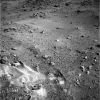
SOL424-2N164014143EFFA8B3P1705R0M1.jpgAnomalous stones from Sol 424 (2)60 visiteAllorchè parliamo della particolare (nel senso di "curiosa") forma e configurazione delle rocce Marziane, non dovete pensare solo alla singola roccia: una stranezza ulteriore del Pianeta Rosso, infatti, risiede anche i quei piccoli "tumuli" - fatti di rocce di piccole e medie dimensioni accatastate le une sulle altre in maniera, a volte, forse troppo regolare per essere un'opera della sola Natura... - che gli Scienziati (NASA e non) chiamano "outcrops" (o "affioramenti").
Alcuni hanno sicuramente origine del tutto (ed indiscutibilmente) naturale; altri - tipo quello che abbiamo battezzato "the nest", ci lasciano leggermente perplessi. Ciò che ci lascia di più perplessi, tuttavia, è il fatto che tutte queste "stranezze" (ed anche gli Scienziati ed i Ricercatori più pragmatici e scettici dovrebbero essere d'accordo con questa blanda definizione) NON vengano MAI minimamente considerate dagli "Esperti" che esaminano le immagini in arrivo da Marte.
Neppure a livello di "commento ironico": nulla.
|
|

Mathilde-PIA02494.jpgMathilde and Eros: C-Type and S-Type60 visiteCaption NASA originale:"In this montage, Mathilde (at left) and Eros (at right) are shown at the same scale, as they were imaged by NEAR Shoemaker from about 1.800 Km on June 27, 1997, and February 12, 2000, respectively. Mathilde is 56 Km across and Eros is 33 Km long and 13 Km wide. However, Mathilde's brightness is greatly exaggerated for viewing purposes - it's actually 6 times darker than Eros, with about the same reflectivity as soot! In a scheme that reflects how asteroids have historically been a topic for astronomy, not geology, they are classified into groups based on their colors as observed through telescopes. The 2 major classes of asteroids are called S-Types and C-Types. S-Types, whose colors are consistent with "stony" or rocky compositions, prevail among asteroids that orbit closer to the Sun than the mid-point of the asteroid belt. Eros and the 2 asteroids encountered briefly by the Galileo spacecraft on its way to Jupiter - Gaspra and Ida - are all S-Types. C-Types like Mathilde have a dark gray color consistent with a "carbonaceous" composition, rich in carbon compounds and other dark materials. They prevail in the outer part of the asteroid belt".
|
|

Telesto.jpgTelesto60 visiteCaption NASA originale:"Saturn's moon Telesto is visible below and to the left of center in this image from the Cassini spacecraft.
Telesto (only 24 Km across) shares the orbit of Saturn's moon Tethys (1.071 Km across), leading the larger moon in its path by 60°. Similarly sized Calypso (22 Km across) trails Tethys by the same amount. These positions, called Lagrange points, are dynamically stable. In being co-orbital moons of Tethys, Telesto and Calypso are like the Trojan moons of Jupiter, which occupy Lagrange points and orbit 60° ahead and behind of Jupiter. The Saturnian moon Dione also has companion moons: Helene, which leads Dione in its orbit and the Cassini-discovered trailing Lagrange moon, Polydeuces. This image was taken in visible light with the Cassini spacecraft narrow angle camera on Jan. 18, 2005, at a distance of approximately 3,7 MKM from Telesto. Resolution in the image is 7 Km per pixel. Telesto has been brightened by a factor of two to aid visibility".
|
|

Westerlund Star Cluster.jpgWesterlund Star Cluster60 visite"...Sebbene la mia esperienza e la Scienza, di cui sono devoto servitore da anni ed anni, mi suggeriscano di non credere, sono costretto ad ammettere che un'eventuale 'non esistenza' di Dio sarebbe, fra le tragedie dell'Umanità e del Cosmo, di certo la più grande..."
P.C. Floegers - "Conversations"
|
|

Janus-PIA06612.jpgJanus rides the Rings60 visiteCaption NASA originale:"Cassini was nearly in the plane of Saturn's Rings when it took this image of Janus. The nearly edge-on rings appear almost ribbon-like in this view and some surface detail is visible on the small moon. The image was taken in visible light with the Cassini spacecraft narrow-angle camera on Feb. 18, 2005, at a distance of approximately 911.000 Km from Janus and at a phase angle of 101°. The image scale is 5 Km per pixel".
|
|

SOL040-ANOMALY-2P129924202EFF0506P2780L4M1.jpgClosing on to the lonely boulder... - Sol 4060 visitenessun commento
|
|

SOL044-2P130265428EFF0700P2543L5M1.jpgSitting Eagle is gone!60 visiteE' bastato un solo giorno (anzi: Sol) di marcia per vedere che il macigno dalla forma bizzarra è, in realtà, il mero prodotto di una semplice illusione determinata dalla prospettiva: muso e becco del "rapace", infatti, non sono un'anomala fattezza della roccia grande in primo piano, bensì una roccia allungata che si trova dietro al boulder, forse a 4/5 metri di distanza.
Peccato.
Ma non c'era solo Sitting Eagle da vedere in questo frame: ci sono, per esempio, tante rocce "bucate" da analizzare. Una di queste, in basso, leggermente alla Vostra Sx, infossata, messa sulla linea che ci porta dritti al centro di Sitting Eagle, sembra essere caratterizzata da un foro quasi rettangolare...
|
|
| 25353 immagini su 2113 pagina(e) |
 |
|
|
|
|
1173 | |
|
|
|
|





