| Piú viste |
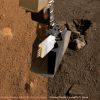
PHOE-SOL049-PIA10963-comp.jpgPhoenix Conductivity Probe - Sol 49 (credits: NASA/JPL/Univ. of Arizona - Sx - and Dr Barca & Lunexit - Dx)61 visiteCaption NASA:"This image taken by the Surface Stereo Imager on Sol 49, or the 49th Martian Day of the mission (July 14, 2008), shows Thermal and Electrical Conductivity Probe on NASA's Phoenix Mars Lander's Robotic Arm". MareKromium
|
|

The_Milky_Way-CN.jpgInfinite Reflections...61 visitenessun commentoMareKromium
|
|

EROS-GIFMovie-051.gif433-Eros: features in motion! (GIF-Movie; credits: Dr G. Barca)61 visitenessun commentoMareKromium
|
|
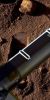
PHOE-SOL069-MF.jpgLooking at the "Trench" - Sol 69 (Superdefinition and natural colors; credits: Dr M. Faccin)61 visitenessun commentoMareKromium
|
|
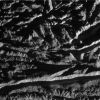
Enceladus-N00118363.jpgThe Unbelievable Surface of Enceladus, from about 1500 Km!61 visiteCaption NASA:"Caption NASA:"N00118365.jpg was taken on August 11, 2008 and received on Earth August 12, 2008. The camera was pointing toward ENCELADUS that, at the time, was approximately 1564 Km away.
The image was taken using the CL1 and CL2 filters and it has not been validated or calibrated".
Nota Lunexit: osservate come l'avvicinarsi alla Linea del Terminatore rende le immagini straordinariamente affilate e dense di profondità...MareKromium
|
|
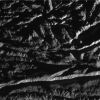
Enceladus-PIA11106.jpgCairo Sulcus61 visiteCaption NASA:"This image is the 3rd skeet-shoot image taken during Cassini's very close flyby of Enceladus on Aug. 11, 2008.
Cairo Sulcus is crossing the southern part of the image. The terrain is littered with blocks of ice.
The image was taken with the Cassini Spacecraft narrow-angle camera on Aug. 11, 2008, a distance of approx. 2446 Km (such as about 1396 miles) above the surface of Enceladus.
Image scale is approximately 18 meters (59 feet) per pixel". MareKromium
|
|

Enceladus-PIA11114.jpgBaghdad and Cairo Sulci on Enceladus (possible True Colors; credits: Lunexit)61 visiteCaption NASA:"Cassini shot past the surface of Saturn's moon Enceladus on Aug. 11, 2008, acquiring a set of 7 HR images targeting known hot spot locations on the moon's "Tiger Stripe" fractures, or Sulci.
Five of those images are presented in this mosaic.
Features on Enceladus are named for characters and places from "The Arabian Nights", and the four most prominent Sulci are named Alexandria, Cairo, Baghdad and Damascus. Here, Baghdad Sulcus runs across the top mosaic tile, from lower left to upper right. Cairo Sulcus runs from left to right just beneath the center tile.
One highly anticipated result of this flyby was to pinpoint previously identified source locations for the jets that blast icy particles, water vapor and trace organics into space.
The yellow circles indicate the Jets' Source Locations I and V, as identified in PIA08385" .
Scientists are using these new images to study geologic activity associated with the sulci, and effects on the surrounding terrain. This information, coupled with observations by Cassini's other instruments, may answer the question of whether reservoirs of liquid water exist beneath the surface.
The mosaic consists of five images taken with the clear spectral filters on Cassini's narrow-angle camera. The view is an orthographic projection with an image scale of 14,5 meters (47,5 feet) per pixel. The area shown here is centered on 81,6° South Latitude and 56,5° West Longitude. The original images ranged in resolution from 10 to 24 meters (33 to 79 feet) per pixel and were taken at distances ranging from 1288 to 3600 Km (such as from about 800 to approx. 2237 miles) from Enceladus".MareKromium
|
|
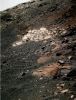
OPP-SOL1615-1.jpgFrom inside Victoria - Sol 1615 (Enhanced RAW Natural Colors; credits for thge additional process. and color.: Dr Gianluigi Barca - Lunexit Team)61 visitenessun commentoMareKromium
|
|
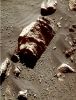
OPP-SOL1599-1~0.jpgFrom inside Victoria - Sol 1599 (True Colors; credits: Dr G. Barca)61 visitenessun commentoMareKromium
|
|

APOLLO_17_AS_17-134-20424-2.jpgfrom AS 17-134-20424 (HR)61 visiteU.O.MareKromium
|
|

AS16-106-17256HR-2.jpgfrom AS 16-106-17256 (HR)61 visiteS.MareKromium
|
|

The_Rings-PIA10454.jpgOut of the Darkness (natural colors; credits: NASA)61 visiteCaption NASA:"Saturn's rings burst out of shadow and curve gracefully around the Planet.
Prometheus (86 Km, or 53 about miles across at its widest point) appears as a bright speck touching the inside of the narrow F-Ring. Atlas (30 Km, or approx. 19 miles across at its widest point) is also visible, faintly, upward and to the left of Prometheus, just outside the A-Ring edge. Saturn's shadow cuts across the Rings at top right.
Several dark, narrow spokes are faintly visible near the B-Ring ansa, left of center.
This view looks toward the unilluminated side of the Rings from about 13° above the Ring-Plane. Images taken using red, green and blue spectral filters were combined to create this natural color view. The images were obtained with the Cassini Spacecraft wide-angle camera on July 4, 2008 at a distance of approx. 1,2 MKM (about 775.000 miles) from Saturn.
Image scale is roughly 71 Km (about 44 miles) per pixel".MareKromium
|
|
| 25353 immagini su 2113 pagina(e) |
 |
|
|
|
|
1169 | |
|
|
|
|





