| Piú viste |

EXOGEOLOGY-001.JPGLandslide61 visiteLa forma geomorfologica visibile nella foto orbitale in esame è chiamata Conoide di Deiezione o "Alluvional Fan".
Sulla Terra, questa morfologia è provocata dal deposito di sedimenti trascinati dall’acqua lungo un pendìo e quindi deposti sul fondovalle, in corrispondenza del salto di pendenza. In effetti, quando il fluido giunge alla base del rilievo, subisce una drastica riduzione di velocità sicchè l’acqua non riesce più a trasportare la stessa quantità di solido. Comincia quindi la sedimentazione di materiale a partire dalle frazioni più grossolane e sino alle più fini, che si collocheranno in posizioni più distali rispetto alla linea di flusso.
Sul nostro Pianeta una situazione analoga a quella fotografata dalla sonda orbitale, porterebbe, su una pianura così vasta, alla formazione di un conoide molto più esteso.
Su Marte, però, questo non può accadere in ragione della differente Forza di Gravità presente ed agente sulla sua superficie.
Il campo gravimetrico di Marte è pari a circa 1/3 di quello terrestre, sicchè la velocità di discesa delle acque di ruscellamento esistenti sul Pianeta Rosso risulta (evidentemente) inferiore rispetto a quella tipica e propria della Terra. Questo fatto comporta ed evidenzia un sistema dotato di minore Energia Cinetica.
La stessa capacità erosiva del ruscellamento risulta inferiore ed il sedimento giunto al piede del pendìo tenderà a depositarsi sempre nelle sue immediate vicinanze.
Un altro fattore determinante della forma di questo Conoide Marziano potrebbe dipendere dalle caratteristiche geomeccaniche del terreno sul quale esso si è creato e quindi, in definitiva, dalla sua composizione (attualmente non nota). La presenza di numerosi crateri da impatto sulla superfice del Conoide ci dimostra, quindi ed in conclusione, che il processo geomorfologico generante è ormai fermo da moltissimo tempo.MareKromium
|
|

Craters-Unnamed_Crater.gifThawing (GIF-Movie; credits for the additional process.: Mars Unearthed)61 visitenessun commentoMareKromium
|
|
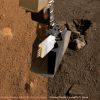
PHOE-SOL049-PIA10963-comp.jpgPhoenix Conductivity Probe - Sol 49 (credits: NASA/JPL/Univ. of Arizona - Sx - and Dr Barca & Lunexit - Dx)61 visiteCaption NASA:"This image taken by the Surface Stereo Imager on Sol 49, or the 49th Martian Day of the mission (July 14, 2008), shows Thermal and Electrical Conductivity Probe on NASA's Phoenix Mars Lander's Robotic Arm". MareKromium
|
|

The_Milky_Way-CN.jpgInfinite Reflections...61 visitenessun commentoMareKromium
|
|

EROS-GIFMovie-051.gif433-Eros: features in motion! (GIF-Movie; credits: Dr G. Barca)61 visitenessun commentoMareKromium
|
|
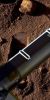
PHOE-SOL069-MF.jpgLooking at the "Trench" - Sol 69 (Superdefinition and natural colors; credits: Dr M. Faccin)61 visitenessun commentoMareKromium
|
|
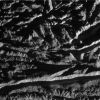
Enceladus-N00118363.jpgThe Unbelievable Surface of Enceladus, from about 1500 Km!61 visiteCaption NASA:"Caption NASA:"N00118365.jpg was taken on August 11, 2008 and received on Earth August 12, 2008. The camera was pointing toward ENCELADUS that, at the time, was approximately 1564 Km away.
The image was taken using the CL1 and CL2 filters and it has not been validated or calibrated".
Nota Lunexit: osservate come l'avvicinarsi alla Linea del Terminatore rende le immagini straordinariamente affilate e dense di profondità...MareKromium
|
|
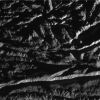
Enceladus-PIA11106.jpgCairo Sulcus61 visiteCaption NASA:"This image is the 3rd skeet-shoot image taken during Cassini's very close flyby of Enceladus on Aug. 11, 2008.
Cairo Sulcus is crossing the southern part of the image. The terrain is littered with blocks of ice.
The image was taken with the Cassini Spacecraft narrow-angle camera on Aug. 11, 2008, a distance of approx. 2446 Km (such as about 1396 miles) above the surface of Enceladus.
Image scale is approximately 18 meters (59 feet) per pixel". MareKromium
|
|

Enceladus-PIA11114.jpgBaghdad and Cairo Sulci on Enceladus (possible True Colors; credits: Lunexit)61 visiteCaption NASA:"Cassini shot past the surface of Saturn's moon Enceladus on Aug. 11, 2008, acquiring a set of 7 HR images targeting known hot spot locations on the moon's "Tiger Stripe" fractures, or Sulci.
Five of those images are presented in this mosaic.
Features on Enceladus are named for characters and places from "The Arabian Nights", and the four most prominent Sulci are named Alexandria, Cairo, Baghdad and Damascus. Here, Baghdad Sulcus runs across the top mosaic tile, from lower left to upper right. Cairo Sulcus runs from left to right just beneath the center tile.
One highly anticipated result of this flyby was to pinpoint previously identified source locations for the jets that blast icy particles, water vapor and trace organics into space.
The yellow circles indicate the Jets' Source Locations I and V, as identified in PIA08385" .
Scientists are using these new images to study geologic activity associated with the sulci, and effects on the surrounding terrain. This information, coupled with observations by Cassini's other instruments, may answer the question of whether reservoirs of liquid water exist beneath the surface.
The mosaic consists of five images taken with the clear spectral filters on Cassini's narrow-angle camera. The view is an orthographic projection with an image scale of 14,5 meters (47,5 feet) per pixel. The area shown here is centered on 81,6° South Latitude and 56,5° West Longitude. The original images ranged in resolution from 10 to 24 meters (33 to 79 feet) per pixel and were taken at distances ranging from 1288 to 3600 Km (such as from about 800 to approx. 2237 miles) from Enceladus".MareKromium
|
|
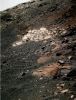
OPP-SOL1615-1.jpgFrom inside Victoria - Sol 1615 (Enhanced RAW Natural Colors; credits for thge additional process. and color.: Dr Gianluigi Barca - Lunexit Team)61 visitenessun commentoMareKromium
|
|
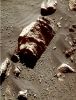
OPP-SOL1599-1~0.jpgFrom inside Victoria - Sol 1599 (True Colors; credits: Dr G. Barca)61 visitenessun commentoMareKromium
|
|

APOLLO_17_AS_17-134-20424-2.jpgfrom AS 17-134-20424 (HR)61 visiteU.O.MareKromium
|
|
| 25353 immagini su 2113 pagina(e) |
 |
|
|
|
|
1168 | |
|
|
|
|





