| Piú viste |
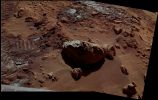
SOL165-MF-LXT.jpgWhite and Blue Pebbles near Spirit - Sol 165 (Natural Colors; credits: Dr M. Faccin & Lunexit)61 visitenessun commentoMareKromium
|
|
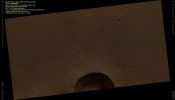
ESP_014262_1510_RED_abrowse.jpgEjecta Blanket - West Side of Zumba Crater (Natural Colors; credits: Lunexit)61 visitenessun commentoMareKromium
|
|
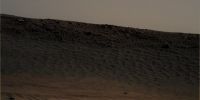
SOL079-GB-LXT-00.jpgOn the Edge of Bonneville Crater - Sol 79 (Absolute Natural Colors; credits for the additional process. and color.: Dr G. Barca)61 visitenessun commentoMareKromium
|
|

Craters-Schiaparelli_Crater-Layers-02.gifLayers in Schiaparelli Crater (Natural Colors; credits: Lunexit)61 visiteDa "NASA - Picture of the Day", del giorno 29 Novembre 2009:"Is this a picture of Mars or Earth?
Oddly enough, it is a picture of Mars. What may appear to some as a terrestrial coastline is in fact a formation of ancient layered hills and wind-blown sand on Mars.
The above-pictured region spans about 3 Km in Schiaparelli Crater. What created the layers of sediment is still a topic of research. Viable hypotheses include ancient epochs of deposit either from running water or wind-blown sand. Winds and sandstorms have smoothed and eroded the structures more recently.
The "water" that appears near the bottom is actually dark colored sand. The image was taken with the Mars Global Surveyor Spacecraft that operated around Mars from 1996-2006 and returned over 200.000 images".MareKromium
|
|

NGC-2237~0.jpgNGC 2237 - The "Rosette Nebula"61 visite"...Anulis nostris plusquam animis creditur..."
(Seneca)
"...Si presta più fede alle forme di quanta non se ne dia alle intenzioni..." (detto riferito alla prassi di autenticare i contratti apponendo un sigillo che recava l'impronta degli anelli dei contraenti - trad. libera)MareKromium
|
|
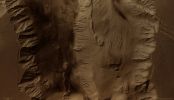
Chasmas-Candor_Chasma.jpgCandor Chasma (Natural Colors; credits: Lunexit)61 visitenessun commentoMareKromium
|
|

NGC-4710-HST.jpgNGC 4710 - Spiral Galaxy61 visite"...If you indeed cry out for insight,
And raise your voice for understanding,
Then you will find the Knowledge of God..."
Proverbs - 2:3, 5MareKromium
|
|
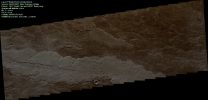
Volcanic_Features-Lava_Flows-Arsia_Mons-20091201a.jpgLava Flows (False Colors; credits: Lunexit)61 visitenessun commentoMareKromium
|
|

IC-1795.jpgIC 1795 - Star Forming Region61 visite"...Come away to a deserted place, all by yourselves, and rest a while..."
- Mark 6:31MareKromium
|
|

OPP-SOL002-1P128373299EFF0200P2211L2M1.jpgEagle's Crater Rim and Greenish Sky - Sol 2 (Natural Colors; credits: Lunexit)61 visitenessun commentoMareKromium
|
|
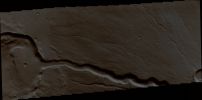
Volcanoes-CerauniusTholus-20091210a.jpgDeep Channel in the N/W Flank of Ceraunius Tholus (False Colors; credits: Lunexit)61 visiteThis VIS image shows part of the North/Western Flank of Ceraunius Tholus, one of the smaller Volcanoes in the Tharsis Region.
Several Channels dissect the Flank of the Volcano, including a larger channel that deposited material in Rahe Crater.
Coord.: 24,6° North Lat. and 262,3° East Long.MareKromium
|
|
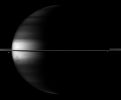
Saturn-PIA11649.jpgOut of the Darkness...61 visiteCaption NASA:"Dramatic differences between dark and light embellish this Cassini Spacecraft image of Saturn, its rings and its moons Dione and Enceladus.
Saturn's Northern and Southern Latitudes appear dark in this image because of the camera filter used. This view uses a spectral filter sensitive to absorption of certain wavelengths of light by Methane in Saturn's Atmosphere. The cloud tops in the Northern and Southern Latitudes are at a slightly greater depth than in the Equatorial Region, and are underneath a layer of Methane. This means that light travels along a longer path compared to the Equatorial Region as it enters the Atmosphere, reflects off the cloud tops, and returns through the Upper Atmosphere to enter the camera.
The light at Near-InfraRed wavelengths thus passes through more light-absorbing Methane at the Northern and Southern Latitudes than at the Equator, and so these Latitudes appear darker.
Dione (approx 1123 Km, or about 698 miles across) can be seen on the left of the image. Enceladus (approx. 504 Km, or about 313 miles across) is visible on the right.
This view looks toward the Northern, sunlit side of the Rings from just above the Ring-Plane.
The image was taken with the Cassini Spacecraft wide-angle camera on Oct. 21, 2009 using a spectral filter sensitive to wavelengths of Near-InfraRed Light centered at 890 nanometers. The view was obtained at a distance of approx. 2,5 MKM (such as about 1,6 MMs) from Saturn and at a Sun-Saturn-Spacecraft, or Phase, Angle of 104°.
Image scale is roughly 143 KM (such as about 89 miles) per pixel".MareKromium
|
|
| 25353 immagini su 2113 pagina(e) |
 |
|
|
|
|
1165 | |
|
|
|
|





