| Piú viste |

M-101-SST.jpgM 101 - Spiral Galaxy (a.k.a.: The "Pinwheel Galaxy")61 visite"...He brought him outside and said, "Look toward Haeven and count the Stars, if you are able to count them"..."
- Genesis 15:5MareKromium
|
|

The_Milky_Way-CN.jpgInfinite Reflections...61 visitenessun commentoMareKromium
|
|

Titan-PIA11001.jpgEthane Lake on Titan61 visiteNASA scientists have concluded that at least one of the large lakes observed on Saturn's moon Titan contains liquid hydrocarbons, and have positively identified the presence of ethane. This makes Titan the only body in our solar system beyond Earth known to have liquid on its surface.
Scientists made the discovery using data from an instrument aboard the Cassini spacecraft. The instrument identified chemically different materials based on the way they absorb and reflect infrared light. Before Cassini, scientists thought Titan would have global oceans of methane, ethane and other light hydrocarbons. More than 40 close flybys of Titan by Cassini show no such global oceans exist, but hundreds of dark, lake-like features are present. Until now, it was not known whether these features were liquid or simply dark, solid material.
"This is the first observation that really pins down that Titan has a surface lake filled with liquid," said Bob Brown of the University of Arizona, Tucson. Brown is the team leader of Cassini's visual and mapping instrument. The results will be published in the July 31 issue of the journal Nature.
Ethane and several other simple hydrocarbons have been identified in Titan's atmosphere, which consists of 95 percent nitrogen, with methane making up the other fiver percent. Ethane and other hydrocarbons are products from atmospheric chemistry caused by the breakdown of methane by sunlight.
Some of the hydrocarbons react further and form fine aerosol particles. All of these things in Titan's atmosphere make detecting and identifying materials on the surface difficult, because these particles form a ubiquitous hydrocarbon haze that hinders the view. Liquid ethane was identified using a technique that removed the interference from the atmospheric hydrocarbons.
The visual and mapping instrument observed a lake, Ontario Lacus, in Titan's south polar region during a close Cassini flyby in December 2007. The lake is roughly 20,000 square kilometers (7,800 square miles) in area, slightly larger than North America's Lake Ontario.
"Detection of liquid ethane confirms a long-held idea that lakes and seas filled with methane and ethane exist on Titan," said Larry Soderblom, a Cassini interdisciplinary scientist with the U.S. Geological Survey in Flagstaff, Ariz. "The fact we could detect the ethane spectral signatures of the lake even when it was so dimly illuminated, and at a slanted viewing path through Titan's atmosphere, raises expectations for exciting future lake discoveries by our instrument."
The ethane is in a liquid solution with methane, other hydrocarbons and nitrogen. At Titan's surface temperatures, approximately 300 degrees Fahrenheit below zero, these substances can exist as both liquid and gas. Titan shows overwhelming evidence of evaporation, rain, and fluid-carved channels draining into what, in this case, is a liquid hydrocarbon lake.
Earth has a hydrological cycle based on water and Titan has a cycle based on methane. Scientists ruled out the presence of water ice, ammonia, ammonia hydrate and carbon dioxide in Ontario Lacus. The observations also suggest the lake is evaporating. It is ringed by a dark beach, where the black lake merges with the bright shoreline. Cassini also observed a shelf and beach being exposed as the lake evaporates. "During the next few years, the vast array of lakes and seas on Titan's north pole mapped with Cassini's radar instrument will emerge from polar darkness into sunlight, giving the infrared instrument rich opportunities to watch for seasonal changes of Titan's lakes," Soderblom said.
More information is available at: http://www.nasa.gov/cassini, http://saturn.jpl.nasa.gov and http://wwwvims.lpl.arizona.edu .
MareKromium
|
|
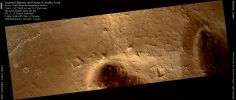
Psp_008982_1965_red.jpgLayered Deposits in Arabia Terra Region (natural colors; credits: Lunexit)61 visiteThis image shows the floor of an Unnamed Impact Crater in Arabia Terra that has Layered Deposits. There are many craters in this Region, where layering is observed.
These layers are often exposed along the sides of large isolated mounds, small knobs and mesas, and other positive relief features. In some cases, the layering is expressed as narrow sinuous ridge-like structures along crater floors.
The presence of Layered Deposits is of particular interest because these materials are not likely to be related to the impact event, but rather post-impact infill of the Crater. Modification of the Deposits has now revealed layers of material.
HiRISE and other instruments onboard the Mars Reconnaissance Orbiter may provide more clues to the origin of the these deposits.MareKromium
|
|
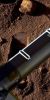
PHOE-SOL069-MF.jpgLooking at the "Trench" - Sol 69 (Superdefinition and natural colors; credits: Dr M. Faccin)61 visitenessun commentoMareKromium
|
|
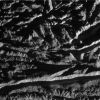
Enceladus-N00118363.jpgThe Unbelievable Surface of Enceladus, from about 1500 Km!61 visiteCaption NASA:"Caption NASA:"N00118365.jpg was taken on August 11, 2008 and received on Earth August 12, 2008. The camera was pointing toward ENCELADUS that, at the time, was approximately 1564 Km away.
The image was taken using the CL1 and CL2 filters and it has not been validated or calibrated".
Nota Lunexit: osservate come l'avvicinarsi alla Linea del Terminatore rende le immagini straordinariamente affilate e dense di profondità...MareKromium
|
|
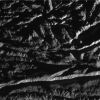
Enceladus-PIA11106.jpgCairo Sulcus61 visiteCaption NASA:"This image is the 3rd skeet-shoot image taken during Cassini's very close flyby of Enceladus on Aug. 11, 2008.
Cairo Sulcus is crossing the southern part of the image. The terrain is littered with blocks of ice.
The image was taken with the Cassini Spacecraft narrow-angle camera on Aug. 11, 2008, a distance of approx. 2446 Km (such as about 1396 miles) above the surface of Enceladus.
Image scale is approximately 18 meters (59 feet) per pixel". MareKromium
|
|

Enceladus-PIA11114.jpgBaghdad and Cairo Sulci on Enceladus (possible True Colors; credits: Lunexit)61 visiteCaption NASA:"Cassini shot past the surface of Saturn's moon Enceladus on Aug. 11, 2008, acquiring a set of 7 HR images targeting known hot spot locations on the moon's "Tiger Stripe" fractures, or Sulci.
Five of those images are presented in this mosaic.
Features on Enceladus are named for characters and places from "The Arabian Nights", and the four most prominent Sulci are named Alexandria, Cairo, Baghdad and Damascus. Here, Baghdad Sulcus runs across the top mosaic tile, from lower left to upper right. Cairo Sulcus runs from left to right just beneath the center tile.
One highly anticipated result of this flyby was to pinpoint previously identified source locations for the jets that blast icy particles, water vapor and trace organics into space.
The yellow circles indicate the Jets' Source Locations I and V, as identified in PIA08385" .
Scientists are using these new images to study geologic activity associated with the sulci, and effects on the surrounding terrain. This information, coupled with observations by Cassini's other instruments, may answer the question of whether reservoirs of liquid water exist beneath the surface.
The mosaic consists of five images taken with the clear spectral filters on Cassini's narrow-angle camera. The view is an orthographic projection with an image scale of 14,5 meters (47,5 feet) per pixel. The area shown here is centered on 81,6° South Latitude and 56,5° West Longitude. The original images ranged in resolution from 10 to 24 meters (33 to 79 feet) per pixel and were taken at distances ranging from 1288 to 3600 Km (such as from about 800 to approx. 2237 miles) from Enceladus".MareKromium
|
|
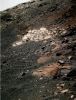
OPP-SOL1615-1.jpgFrom inside Victoria - Sol 1615 (Enhanced RAW Natural Colors; credits for thge additional process. and color.: Dr Gianluigi Barca - Lunexit Team)61 visitenessun commentoMareKromium
|
|
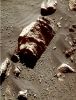
OPP-SOL1599-1~0.jpgFrom inside Victoria - Sol 1599 (True Colors; credits: Dr G. Barca)61 visitenessun commentoMareKromium
|
|

APOLLO_17_AS_17-134-20424-2.jpgfrom AS 17-134-20424 (HR)61 visiteU.O.MareKromium
|
|

AS16-106-17256HR-2.jpgfrom AS 16-106-17256 (HR)61 visiteS.MareKromium
|
|
| 25353 immagini su 2113 pagina(e) |
 |
|
|
|
|
1161 | |
|
|
|
|





