| Piú viste |

Titan-Atmosphere-N00098823.jpgThe "Multi-Layered" Atmosphere of Titan (MULTISPECTRUM - Overexposed; credits for the additional process. and color.: Lunexit)61 visiteCaption NASA:"N00098823.jpg was taken on December 20, 2007 and received on Earth December 22, 2007. The camera was pointing toward TITAN that, at the time, was approx. 186.227 Km away, and the image was taken using the CL1 and UV3 filters. This image has not been validated or calibrated".MareKromium
|
|
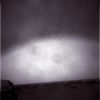
OPP-SOL1395-1.jpgLook at those grains of dust... - Sol 1395 (false colors; credits: Dr M. Faccin)61 visiteUna brillante intuizione (molto probabilmente corretta) del Dr Faccin sulla struttura fisica delle Camere di cui i MER sono dotati. Ma lasciamo che sia lui stesso a spiegare quello che ha scoperto:"...la NASA fa vedere che si ci sono nubi di polvere (intorno ai Rover) ma, osservando bene, si può notare che ci sono anche dei grani di questa polvere sugli obbiettivi.
Ora notate: alcune di queste macchie scure sono esagonali, una forma data dal diaframma. Scoperto questo, noi sappiamo che i CCD dei MER sono muniti di diaframma meccanico, al pari di una semplice camera digitale da 50 Euro.
Quanto detto si riferisce alla NavCam - che presumo sia analoga alla PanCam - la quale si distingue dalle Rear e FrontHazCam poichè esse, credo, sono ad obbiettivo fisso - simili alle webcam, tanto per intenderci...".
Allora: la NASA usa sempre "supertecnologie" da milioni di Dollari, oppure - magari qualche volta... - "tira a risparmiare"? E soprattutto: ma siamo così sicuri che ci vogliano "suprtecnologie" per "sopravvivere alle "estreme" (ma dove?!?) condizioni di Marte?
Siamo sempre più dell'idea che qualcosa non torni: complimenti e congratulazioni al Dr Faccin ed ora, se volete, la parola a Voi!...MareKromium
|
|
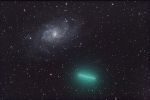
Comets-Comet_Tuttle_and_M33.jpgComet 8-P/Tuttle and M-3361 visiteCaption NASA:"This gorgeous galaxy and comet portrait was recorded on December 30th, 2007, in the skies over Hoogeveen (NL). The combined series of 60-by-60" exposures finds the lovely green coma of Comet 8P/Tuttle near its predicted conjunction with the Triangulum Galaxy.
Aligning each exposure with the stars shows the comet as a streak, slowly moving against the background stars and galaxy. An alternative composition with exposures centered on the comet, shows the background stars and galaxy as streaks.
The alluring celestial scene would also have been a rewarding one for the influential 18th Century comet hunter Charles Messier. While Messier scanned French skies for comets, he carefully cataloged positions of things which were fuzzy and comet-like in appearance but did not move against the background stars and so were definitely not comets. The Triangulum Galaxy, also known as M-33, is the 33rd object in his famous not-a-comet catalog.
The modern understanding holds that the Triangulum Galaxy is a large spiral galaxy some 3 MLY distant. Comet 8P/Tuttle, just bright enough to be visible to the unaided eye in dark, Northern Skies, is about 40 MKM (such as 2 LM - Light Minutes) away".MareKromium
|
|

as08-14-2399.JPGAS 08-14-2399 - The Dark Side of the Moon (3 - natural colors; credits: Lunexit)61 visiteImage Collection: 70mm Hasselblad
Mission: 8
Magazine: 14
Magazine Letter: B
Latitude: approx. 3,0° South
Longitude: approx: 155,0° West
Lens Focal Length: 250 mm
Description: NEAR TERMINATOR; FARSIDE
Film Type: SO-368
Film Width: 70 mm
Film Color: colorMareKromium
|
|

as08-14-2401.JPGAS 08-14-2401 - The Dark Side of the Moon (5 - natural colors; credits: Lunexit)61 visiteImage Collection: 70mm Hasselblad
Mission: 8
Magazine: 14
Magazine Letter: B
Latitude: approx. 3,0° South
Longitude: approx. 156,0° West
Lens Focal Length: 250 mm
Description: NEAR TERMINATOR; FARSIDE
Film Type: SO-368
Film Width: 70 mm
Film Color: colorMareKromium
|
|

OPP-SOL330-1.jpgTrash! - Sol 330 (possible natural colors; credits: Dr G. Barca)61 visitenessun commentoMareKromium
|
|

as17-162-24104.jpgAS 17-162-24104 - Sniadecki and Orlov Crater61 visiteImage Collection: 35mm Nikon
Mission: 17
Magazine: 162
Magazine Letter: SS
Revolution: 15
Latitude: 23,9° South
Longitude: 170,4° West
Lens Focal Length: 55 mm
Camera Tilt: 58°
Camera Azimuth: 230
Camera Altitude: 113 Km
Sun Elevation (on Local Horizon): 4°
Description: SNIADECKI, ORLOV
Film Width: 35 mm
Film Color: color MareKromium
|
|
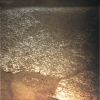
OPP-SOL1419-1P254155316EFF8884P2418R2M1.jpgPaving's Detail - Sol 1419 (MULTISPECTRUM; credits: Lunexit)61 visitenessun commentoMareKromium
|
|
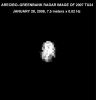
Asteroids-Asteroid_2007-TU24.jpgAsteroid 2007 TU24 (Radar View)61 visiteAsteroid 2007 TU24 passed by the Earth yesterday, posing no danger. The space rock, estimated to be about 250 mt across, coasted by just outside the orbit of Earth's Moon. The passing was not very unusual - small rocks strike Earth daily, and in 2003 a rock the size of a bus passed inside the orbit of the Moon, being detected only after passing. TU24 was notable partly because it was so large. Were TU24 to have struck land, it might have caused a magnitude 7 earthquake and left a city-sized crater. A perhaps larger danger would have occurred were TU24 to have struck the ocean and raised a large tsunami.
This radar image was taken 2 days ago. The Arecibo Radio Telescope in Puerto Rico broadcast radar that was reflected by the asteroid and then recorded by the Byrd Radio Telescope in Green Bank, West Virginia. The resulting image shows TU24 to have an oblong and irregular shape. TU24 was discovered only three months ago, indicating that other potentially hazardous asteroids might lurk in our Solar System currently undetected. Objects like TU24 are hard to detect because they are so faint and move so fast. Humanity's ability to scan the sky to detect, catalog, and analyze such objects has increased notably in recent years.
MareKromium
|
|
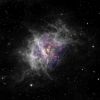
Westerlund-2.jpgRCW 49 and young Star Cluster Westerlund-261 visite"...io sono, per attitudine, un perfezionista, ma sono consapevole che la perfezione non c'è nè ci sarà mai in questo Mondo.
Dunque, una volta abbandonati i sogni di fanciullo, ho scelto di restare razionale e, piuttosto che cercare una perfezione impossibile, preferisco lavorare per raggiungere un'approssimazione sensata..."
Paolo C. FiengaMareKromium
|
|

M-031~0.jpgM 31 - The Beautiful "Andromeda Galaxy"61 visiteNella realtà di Lunar Explorer ci sono Persone i cui nomi non vengono mai nominati ma alle quali, per vari motivi, dobbiamo un ringraziamento, sia esso per un aiuto, un sorriso od un dolce ricordo.
Una di queste Persone è la nostra Cara Amica Anna che, grazie alla sua ospitalità, ha donato allo Staff LunExIt una bellissima permanenza in quel di Albissola, durante le nostre due Conventions estive.
Qualche ora di serena compagnìa il cui ricordo ancora ci allieta.
Ieri, è mancato il Papà di Anna.
Con la forza di un sorriso mi ha ricordato che, nella Sua Famiglia, il soprannome del caro Papà fosse Giove, un nome che ben si adatta per essere ricordato nel Cielo, tra le Stelle e l’Infinito.
Lo Staff LunExIt (Direzione Generale), i Soci ed il Presidente, con i Suoi Cari, si uniscono al dolore di Anna, ricordandoLe - e ricordando a loro stessi - che, come disse il Grande Ugo Foscolo, "...Sol chi non lascia eredità di affetti, poca gioia ha dell'Urna...".
Un abbraccio ed una preghiera - Paolo C. FiengaMareKromium
|
|
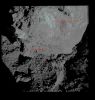
as15-86-11571~0.jpgAS 15-86-11571 - The "Lunar Pearls" of Station 2 Boulder (special processing by Lunexit)61 visiteOsservate i dettagli indicati e marcati in rosso che si trovano sulla porzione scoperta (insomma quella che una volta era la base del macigno, prima che venisse ribaltato) dello Station 2 Boulder e poi, se volete, diteci che cosa pensate che sìano; a noi è piaciuta l'idea di battezzare queste curiosissime Surface Features come "Perle Lunari", ma se Voi aveste delle idee migliori...Noi le aspettiamo!MareKromium
|
|
| 25353 immagini su 2113 pagina(e) |
 |
|
|
|
|
1155 | |
|
|
|
|





