| Piú viste |
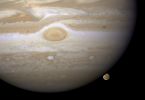
Jupiter-HST-2008-42-a-ful-001_jpg.jpgHiding... (natural colors; credits: NASA)61 visiteNASA's Hubble Space Telescope has caught Jupiter's moon Ganymede playing a game of "peek-a-boo", In this crisp Hubble image, Ganymede is shown just before it ducks behind the giant planet.
Ganymede completes an orbit around Jupiter every 7 days. Because Ganymede's orbit is tilted nearly edge-on to Earth, it routinely can be seen passing in front of and disappearing behind its giant host, only to reemerge later.
Composed of rock and ice, Ganymede is the largest moon in our Solar System. It is even larger than the planet Mercury.
But Ganymede looks like a dirty snowball next to Jupiter, the largest planet in our solar system. Jupiter is so big that only part of its Southern Hemisphere can be seen in this image.
Hubble's view is so sharp that astronomers can see features on Ganymede's surface, most notably the white impact crater, Tros, and its system of rays, bright streaks of material blasted from the crater. Tros and its ray system are roughly the width of Arizona.
The image also shows Jupiter's Great Red Spot, the large eye-shaped feature at upper left. A storm the size of two Earths, the Great Red Spot has been raging for more than 300 years. Hubble's sharp view of the gas giant planet also reveals the texture of the clouds in the Jovian Atmosphere as well as various other storms and vortices.
Astronomers use these images to study Jupiter's Upper Atmosphere. As Ganymede passes behind the giant planet, it reflects sunlight, which then passes through Jupiter's Atmosphere. Imprinted on that light is information about the gas giant's atmosphere, which yields clues about the properties of Jupiter's high-altitude haze above the cloud tops.
This color image was made from three images taken on April 9, 2007, with the Wide Field Planetary Camera 2 in red, green, and blue filters. The image shows Jupiter and Ganymede in close to natural colors.MareKromium
|
|

Jupiter-HST-2008-42-a-ful-002_jpg.jpgHiding... (natural colors; credits: NASA)61 visitenessun commentoMareKromium
|
|

Jupiter-HST-2008-42-a-ful-003_jpg.jpgHiding... (natural colors; credits: NASA)61 visitenessun commentoMareKromium
|
|

Psp_010369_2065_red.jpgScoured Crater Rim (possible True Colors; credits: Lunar Explorer Italia)61 visiteMars Local Time: 15:30 (middle afternoon)
Coord. (centered): 26,3° North Lat. and 304,3° East Long.
Spacecraft altitude: 290,2 Km (such as about 181,4 miles)
Original image scale range: 29 cm/pixel (with 1 x 1 binning) so objects ~87 cm across are resolved
Map projected scale: 25 cm/pixel
Map projection: EQUIRECTANGULAR
Emission Angle: 8,1°
Phase Angle: 57,9°
Solar Incidence Angle: 50° (meaning that the Sun is about 40° above the Local Horizon)
Solar Longitude: 140,7° (Northern Summer)
Credits: NASA/JPL/University of Arizona
Additional process. and coloring: Lunar Explorer ItaliaMareKromium
|
|

LaSuperba_parkercarboni.jpgLa Superba61 visite"...Or superbite; e via col viso altiero,
Figliuoli d'Eva, e non chinate 'l volto,
Si che veggiate il vostro mal sentiero!..."
Dante - Purg.; 12, 70 - 72MareKromium
|
|
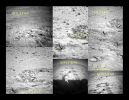
SOL1404-1763-Mosaic001.jpgUnbelievable "Pseudo-Balance" - Sol 1763 (Mosaic n. 1 - credits: Dr G. Barca)61 visiteIl frame del Sol 1763 è "piatto": anche i rilievi che caraterizzano gl immediati dintorni della roccia anomala - crepe del suolo incluse - paiono essere stati "smussati, levigati e ripuliti".
Si, certo: anche gli altri frames relativi ad altri Soles non sono "perfetti" (anzi...), però il frame del Sol 1763 è veramente "brutto"!
Sarà un effetto della bassa risoluzione del frame? Si, certo. Probabilmente è così.
Ma esiste anche un'altra possibilità (non esotica) che ci piace portare alla Vostra attenzione: ricordate quando scrivemmo che i frames MER Spirit più belli, chiari e "realistici" sono - in fondo - quelli dei primi 250/300 Soles della Missione? Dopo quei primi 300 Soles - e fatte salve alcune eccezioni - le immagini ricevute da Spirit, spessissimo, si sono rivelate non solo brutte (e sin qui va bene), ma anche "piatte", difficili (se non impossibili) da processare e colorizzare, spessissimo sovraesposte (oversaturate) e quasi sempre (panorami dell'orizzonte e MI frames a parte) del tutto insignificanti.
Insomma: immagini tanto incosistenti (tecnicamente e sostanzialmente) da indurre più di un Ricercatore a pensare ("complottismi" a parte), che si trattasse di frames "falsi".
Falsi nel senso ESA - Mars Express del termine e cioè: ricostruzioni digitali di frames RAW (in altre parole: immagini rappresentative di una realtà/visione virtualizzata di Marte, la quale è stata ottenuta da frames RAW genuini "passati attraverso il setaccio della virtualizzazione").MareKromium
|
|
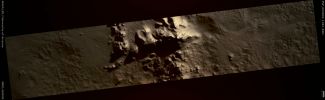
PSP_009849_1485_RED.jpgCentral Uplift and Impact Melt in Unnammed Crater in Hesperia Region (possible True Colors; credits: Lunar Explorer Italia)61 visiteMars Local Time: 15:38 (middle afternoon)
Coord. (centered): 31,3° South Lat. and 108,7° East Long.
Spacecraft altitude: 253,2 Km (such as about 158,3 miles)
Original image scale range: 50,7 cm/pixel (with 1 x 1 binning) so objects ~1,52 mt across are resolved
Map projected scale: 50 cm/pixel
Map projection: EQUIRECTANGULAR
Emission Angle: 0,4°
Phase Angle: 74,6°
Solar Incidence Angle: 74° (meaning that the Sun is about 16° above the Local Horizon)
Solar Longitude: 121,1° (Northern Summer)
Credits: NASA/JPL/University of Arizona
Additional process. and coloring: Lunar Explorer ItaliaMareKromium
|
|

PSP_009863_1465_RED.jpgPotentially Well-Preserved Flow-Ejecta Crater in Northeastern Hellas Planitia (possible True Colors; credits: Lunar Explorer Italia)61 visiteMars Local Time: 15:38 (middle afternoon)
Coord. (centered): 33,2° South Lat. and 86,6° East Long.
Spacecraft altitude: 255,2 Km (such as about 159,5 miles)
Original image scale range: 51,1 cm/pixel (with 1 x 1 binning) so objects ~1,53 mt across are resolved
Map projected scale: 50 cm/pixel
Map projection: EQUIRECTANGULAR
Emission Angle: 1,9°
Phase Angle: 76,9°
Solar Incidence Angle: 75° (meaning that the Sun is about 15° above the Local Horizon)
Solar Longitude: 121,6° (Northern Summer)
Credits: NASA/JPL/University of Arizona
Additional process. and coloring: Lunar Explorer ItaliaMareKromium
|
|
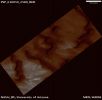
PSP_010059_2580_RED.jpgSample of North Polar Outlier (possible True Colors; credits: Lunar Explorer Italia)61 visiteMars Local Time: 14:46 (early afternoon)
Coord. (centered): 77,9° North Lat. and 113,6° East Long.
Spacecraft altitude: 318,5 Km (such as about 199,1 miles)
Original image scale range: 31,9 cm/pixel (with 1 x 1 binning) so objects ~96 cm across are resolved
Map projected scale: 25 cm/pixel
Map projection: EQUIRECTANGULAR
Emission Angle: 1,7°
Phase Angle: 60,5°
Solar Incidence Angle: 62° (meaning that the Sun is about 28° above the Local Horizon)
Solar Longitude: 128,9° (Northern Summer)
Credits: NASA/JPL/University of Arizona
Additional process. and coloring: Lunar Explorer ItaliaMareKromium
|
|

SOL293.jpgThe "Rat-Mark" - Sol 293 (possible True Colors; credits: Dr G. Barca & Lunexit)61 visitenessun commentoMareKromium
|
|

APOLLO_15_-_AS_15-95-12954.jpgAS 15-95-12954 - Rimae Prinz II (possible True Colors; credits: Lunar Explorer Italia)61 visiteImage Collection: 70mm Hasselblad
Mission: 15
Magazine: 95
Magazine Letter: RR
Latitude: approx. 26,5° North
Longitude: approx. 43,5° West
Film Type: 3401
Film Width: 70 mm
Film Color: black & white
Index Map: http://www.lpi.usra.edu/resources/mapcatalog/apolloindex/apollo15/as15indexmap08/
Feature(s): RIMAE PRINZ II
Nota Lunexit: l'Apollo Image Atlas (curato dal L&PI) rubrica questo frame con il seriale 12951 - ovviamente commettendo un errore - ed attribuendo il seriale 12954 ad una (splendida) veduta del Cratere Aristarco. Insomma, anche i "Grandi" (come quelli che lavorano al Lunar and Planetary Institute) sbagliano...MareKromium
|
|

SOL067-2N132320012EFF1800P1816R0M1.jpgOn the edge of Bonneville... - Sol 67 (Natural Colors; credits: Lunar Explorer Italia)61 visitenessun commentoMareKromium
|
|
| 25353 immagini su 2113 pagina(e) |
 |
|
|
|
|
1150 | |
|
|
|
|





