| Piú viste |
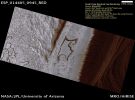
ESP_014405_0945_RED_abrowse.jpgSouth Polar Residual Cap Monitoring (Natural Colors; credits: Lunexit)61 visitenessun commentoMareKromium
|
|
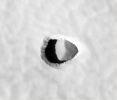
ESP_014380_1775_RED_abrowse-01.jpgExtremely Unusually-looking Skylight (SuperEDM n.1 - credits: Dr G. Barca)61 visitenessun commentoMareKromium
|
|
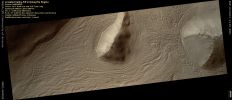
ESP_014307_2130_RED_abrowse.jpgLineated Valley-Fill in Nilosyrtis Region (Natural Colors; credits: Lunexit)61 visitenessun commentoMareKromium
|
|
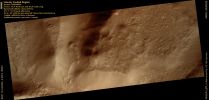
ESP_014306_1905_RED_abrowse.jpgHeavily Faulted Region (Natural Colors; credits: Lunexit)61 visitenessun commentoMareKromium
|
|
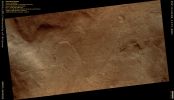
ESP_014298_1375_RED_abrowse.jpgNereidum Montes (Natural Colors; credits: Lunexit)61 visitenessun commentoMareKromium
|
|

ESP_014284_2045_RED_abrowse.jpgUnnamed Crater in Mawrth Vallis Region (Natural Colors; credits: Lunexit)61 visitenessun commentoMareKromium
|
|

Titan-PIA11622-a.jpgTitan's Atmospheric Layers (Natural Colors; credits: Lunexit)61 visitenessun commentoMareKromium
|
|
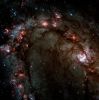
M-083-6.jpgIn the heart of M 83 (additional color process. by Lunexit)61 visite"...Il Mondo può benissimo fare a meno della Letteratura. Ma ancor di più può fare a meno dell'uomo..."
J.P. SartreMareKromium
|
|
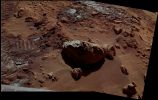
SOL165-MF-LXT.jpgWhite and Blue Pebbles near Spirit - Sol 165 (Natural Colors; credits: Dr M. Faccin & Lunexit)61 visitenessun commentoMareKromium
|
|
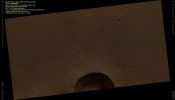
ESP_014262_1510_RED_abrowse.jpgEjecta Blanket - West Side of Zumba Crater (Natural Colors; credits: Lunexit)61 visitenessun commentoMareKromium
|
|
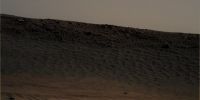
SOL079-GB-LXT-00.jpgOn the Edge of Bonneville Crater - Sol 79 (Absolute Natural Colors; credits for the additional process. and color.: Dr G. Barca)61 visitenessun commentoMareKromium
|
|

ESP_014261_0930_RED_abrowse.jpgSouth Polar Residual Cap Monitoring (Natural Colors; credits: Lunexit)61 visiteThis HiRISE image is of a portion of Mars' South Polar Residual Ice Cap. Like Earth, Mars has concentrations of water ice at both Poles.
Because Mars is so much colder, however, the seasonal ice that gets deposited at high latitudes in the Winter and is removed in the Spring (generally analogous to winter-time snow on Earth) is actually Carbon Dioxide Ice. Around the South Pole there are areas of this CO2 ice that do not disappear every Spring, but rather survive Winter after Winter. This persistent Carbon Dioxide Ice is called "South Polar Residual Cap", and is what we are looking at in this HiRISE image.
Relatively high-standing smooth material is broken up by semi-circular depressions and linear, branching troughs that make a pattern resembling those of your fingerprints. The high-standing areas are thicknesses of several meters of CO2 Ice.
The depressions and troughs are thought to be caused by the removal of Carbon Dioxide Ice by Sublimation (the change of a material from solid directly to gas). HiRISE is observing this CO2 Terrain to try to determine how these patterns develop and how fast the depressions and troughs grow.
While the South Polar Residual Cap as a whole is present every year, there are certainly changes taking place within it. With the high resolution of HiRISE, we intend to measure the amount of expansion of the depressions over multiple Mars years.
Knowing the amount of Carbon Dioxide removed can give us an idea of the atmospheric, weather, and climate conditions over the course of a year.
In addition, looking for where CO2 Ice might be being deposited on top of this terrain may help us understand if there is any net loss or accumulation of the CO2 Ice over time, which would be a good indicator of whether Mars' climate is in the process of changing, or not. (Written by: Patrick Russell)MareKromium
|
|
| 25353 immagini su 2113 pagina(e) |
 |
|
|
|
|
1149 | |
|
|
|
|





