| Piú viste |
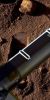
PHOE-SOL069-MF.jpgLooking at the "Trench" - Sol 69 (Superdefinition and natural colors; credits: Dr M. Faccin)61 visitenessun commentoMareKromium
|
|
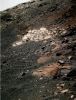
OPP-SOL1615-1.jpgFrom inside Victoria - Sol 1615 (Enhanced RAW Natural Colors; credits for thge additional process. and color.: Dr Gianluigi Barca - Lunexit Team)61 visitenessun commentoMareKromium
|
|
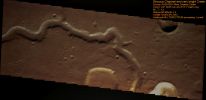
Channels-Unnamed_Channel-20071213a~0.jpgUnnamed Channel (Natural Colors/Tri-Chromatic Version; credits: Dr Paolo C. Fienga - Lunexit Team)61 visitenessun commentoMareKromium
|
|
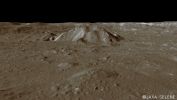
Kaguya-032-tc_012_e_l.jpgTycho: the Central Peak (perspective view - natural colors; credits: Lunexit)61 visitenessun commentoMareKromium
|
|

APOLLO_15_AS_15-87-11856-2.jpgfrom AS 15-87-11856 (HR)61 visiteL.F.MareKromium
|
|

APOLLO_15_AS_15-95-12953-1.jpgfrom AS 15-95-12953 (HR)61 visiteD.O.F. (dark spots)MareKromium
|
|

APOLLO_15_AS_15-95-12953.jpgAS 15-95-12953 - Prinz "A"61 visiteCoord.: 26,5° North Lat. and 44,0° West Long.MareKromium
|
|

Panoramic-AS11-40-5888-5891-2.jpgFrom AS 11-40-5888 until 5891 (Processed in possible True Colors - Unnamed double-crater)61 visitenessun commentoMareKromium
|
|

Panoramic-AS17-143-21837-21849-2.jpgFrom AS 17-143-21837 until 21849 (EVA-3; Station 9)61 visitenessun commentoMareKromium
|
|
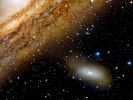
M-110.jpgM 110 - Satellite of the Andromeda Galaxy61 visite"...Lo Stato di Hegel si basa non sulla violenza e la forza, ma sulla Rule of Law (...) anche se è diventato un essere mitologico che riunisce in sé Potere e Sapienza e che, insieme alla possibilità della contraddizione, toglie al singolo la Libertà, la quale è l'Origine del Pensiero..."
M. Riedel - "Dialettica delle Istituzioni"MareKromium
|
|
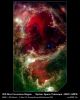
W5-SST.jpgW 5 - Stellar "Nursery"61 visiteGenerations of stars can be seen in this new infrared portrait from NASA's Spitzer Space Telescope. In this wispy star-forming region, called W5, the oldest stars can be seen as blue dots in the centers of the two hollow cavities (other blue dots are background and foreground stars not associated with the region). Younger stars line the rims of the cavities, and some can be seen as pink dots at the tips of the elephant-trunk-like pillars. The white knotty areas are where the youngest stars are forming. Red shows heated dust that pervades the region's cavities, while green highlights dense clouds.
W5 spans an area of sky equivalent to four full moons and is about 6500 Light-Years away in the constellation Cassiopeia. The Spitzer picture was taken over a period of 24 hours.
Like other massive star-forming regions, such as Orion and Carina, W5 contains large cavities that were carved out by radiation and winds from the region's most massive stars. According to the theory of triggered star-formation, the carving out of these cavities pushes gas together, causing it to ignite into successive generations of new stars.
This image contains some of the best evidence yet for the triggered star-formation theory. Scientists analyzing the photo have been able to show that the ages of the stars become progressively and systematically younger with distance from the center of the cavities.
This is a three-color composite showing infrared observations from two Spitzer instruments. Blue represents 3,6-micron light and green shows light of 8 microns, both captured by Spitzer's infrared array camera. Red is 24-micron light detected by Spitzer's multiband imaging photometer.MareKromium
|
|

SOL489-MF.jpgSunset - Sol 489 (True Colors; credits: Dr M. Faccin)61 visite...Capolavoro!...MareKromium
|
|
| 25353 immagini su 2113 pagina(e) |
 |
|
|
|
|
1147 | |
|
|
|
|





