| Piú viste |
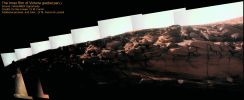
OPP-SOL1570-Panorama.jpgPartial Panorama: the Inner Rim of Victoria Crater - Sol 1570 (credits: Dr M. Faccin & Lunexit)61 visitenessun commentoMareKromium
|
|
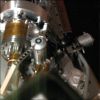
PHOE-SOL035-lg8733-8734-8735.jpgMechanical Components - Sol 35 (natural colors; credits: Dr G. Barca)61 visitenessun commentoMareKromium
|
|
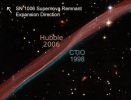
SN-1006-PIA10926.jpgStars and a Stripe in Celestial Fireworks61 visiteA delicate ribbon of gas floats eerily in our galaxy. A contrail from an alien spaceship? A jet from a black-hole? Actually this image, taken by NASA's Hubble Space Telescope, is a very thin section of a supernova remnant caused by a stellar explosion that occurred more than 1,000 years ago.
On or around May 1, 1006 A.D., observers from Africa to Europe to the Far East witnessed and recorded the arrival of light from what is now called SN 1006, a tremendous supernova explosion caused by the final death throes of a white dwarf star nearly 7,000 light-years away. The supernova was probably the brightest star ever seen by humans, and surpassed Venus as the brightest object in the night time sky, only to be surpassed by the moon. It was visible even during the day for weeks, and remained visible to the naked eye for at least two and a half years before fading away.
It wasn't until the mid-1960s that radio astronomers first detected a nearly circular ring of material at the recorded position of the supernova. The ring was almost 30 arcminutes across, the same angular diameter as the full moon. The size of the remnant implied that the blast wave from the supernova had expanded at nearly 20 million miles per hour over the nearly 1,000 years since the explosion occurred.
In 1976, the first detection of exceedingly faint optical emission of the supernova remnant was reported, but only for a filament located on the northwest edge of the radio ring. A tiny portion of this filament is revealed in detail by the Hubble observation. The twisting ribbon of light seen by Hubble corresponds to locations where the expanding blast wave from the supernova is now sweeping into very tenuous surrounding gas.
The hydrogen gas heated by this fast shock wave emits radiation in visible light. Hence, the optical emission provides astronomers with a detailed "snapshot" of the actual position and geometry of the shock front at any given time. Bright edges within the ribbon correspond to places where the shock wave is seen exactly edge on to our line of sight.
Today we know that SN 1006 has a diameter of nearly 60 light-years, and it is still expanding at roughly 6 million miles per hour. Even at this tremendous speed, however, it takes observations typically separated by years to see significant outward motion of the shock wave against the grid of background stars. In the Hubble image as displayed, the supernova would have occurred far off the lower right corner of the image, and the motion would be toward the upper left.
SN 1006 resides within our Milky Way Galaxy. Located more than 14 degrees off the plane of the galaxy's disk, there is relatively little confusion with other foreground and background objects in the field when trying to study this object. In the Hubble image, many background galaxies (orange extended objects) far off in the distant universe can be seen dotting the image. Most of the white dots are foreground or background stars in our Milky Way galaxy.
This image is a composite of hydrogen-light observations taken with Hubble's Advanced Camera for Surveys in February 2006 and Wide Field Planetary Camera 2 observations in blue, yellow-green, and near-infrared light taken in April 2008. The supernova remnant, visible only in the hydrogen-light filter was assigned a red hue in the Heritage color image.
For images and more information about SN 1006, visit:
http://hubblesite.org/news/2008/22
http://heritage.stsci.edu/2008/22
For additional information, contact:
Ray Villard Space Telescope Science Institute, Baltimore, Md. 410-338-4514 villard@stsci.edu
William Blair Johns Hopkins University, Baltimore, Md. 410-516-8447 wpb@pha.jhu.edu
MareKromium
|
|

Janus-PIA10417-1.JPGRugged Janus (Saturated Natural Colors; credits for the additional process. and color.: Dr Paolo C. Fienga - Lunexit Team)61 visiteCaption NASA:"Craters large and small cover the rugged surface of Saturn's moon Janus.
This view looks toward the Southern Hemisphere of Janus (about 179 Km, or approx. 111 miles across at its widest point). The moon's South Pole is at center.
The image was taken with the Cassini Spacecraft narrow-angle camera on May 26, 2008 using a spectral filter sensitive to wavelengths of IR light centered at 930 nanometers. The view was acquired at a distance of approx. 186.000 Km (such as about 115.000 miles) from Janus and at a Sun-Janus-Spacecraft, or Phase, angle of 83°.
Image scale is roughly 1 Km (about 0,6 miles) per pixel".MareKromium
|
|

PHOE-SOL038-AudioSignal-3.wavMartian Winds... - Sol 38 (File Audio; credits: Dr M. Faccin)61 visiteIl sospetto che i frames NASA in arrivo da Marte potessero contenere un retro-segnale di qualche tipo era forte già da molto tempo. Con calma - ed usando una grande attenzione - siamo riusciti ad isolare non solo una porzione del retro-segnale contenuto nei frames NASA, ma anche a "ripulirlo" e, in parte, a "decodificarlo".
In questo prodotto Audio, realizzato dal sempre eccezionale Dr Marco Faccin, un probabile "Vento Marziano", catturato dal microfono di cui è dotato il Lander Phoenix e quindi trasmesso a Terra come "allegato semi-nascosto" delle immagini di Vastitas Borealis.
Fantascienza? Scherzo? Special FX? Ascoltate e giudicate Voi.
Noi possiamo solo dirVi che non è nostra intenzione prendere in giro nessuno e che il microfono di cui è dotato Phoenix non ce lo siamo inventato (vedere la relativa immagine nella Galleria dedicata a Phoenix). Ciò premesso, dato che "esso" esiste, allora dovrà pur servire a qualcosa...MareKromium
|
|
PHOE-SOL038-AudioSignal-2.wmvPossible "Audio Signals" from Vastitas Borealis - Sol 38 (RAW Data - credits: Dr M. Faccin)61 visiteCoraggio: avete qualche commento da fare? Siamo (DAVVERO!) "tutto orecchi"...MareKromium
|
|
PHOE-SOL038-AudioSignal-4.mp3Martian Winds... - Sol 38 (File Audio - Full Process.; credits: Dr M. Faccin)61 visiteSolo da "ascoltare": quasi un minuto e mezzo di "Vento" che, a tratti, sembra soffiare più intensamente e che poi, improvvisamente, si calma.
I mini-disturbi di fondo che sentite di quando in quando potrebbero essere sia del (autentico) "rumore" (noise), sia dei corpuscoli di polvere che vanno ad impattare il microfono.
Comunque sia: un audio - a nostro parere - da "pelle d'oca"...
Un GRANDISSIMO COMPLIMENTO al GRANDE Marco Faccin, da parte di TUTTI!MareKromium
|
|

OPP-SOL1571-1P267654659ESF90B0P2266L2M1.jpgLooking for "Something"?!? - Sol 1571 (MULTISPECTRUM; credits: Lunexit)61 visitenessun commentoMareKromium
|
|

OPP-SOL1577-1P268181742ESF90B0P2536R2M1.jpgThe Inner Rim of Victoria - Sol 1577 (MULTISPECTRUM; credits: Lunexit)61 visitenessun commentoMareKromium
|
|
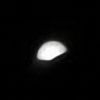
OPP-SOL1583-1P268731057ESF90B2P2633L8M1.jpgPartial Eclipse - Sol 158361 visitenessun commentoMareKromium
|
|

OPP-SOL1580-1P268466569ESF90B0P2271L1M2.jpgLooking up! - Sol 1580 (MULTISPECTRUM; credits: Lunexit)61 visitenessun commentoMareKromium
|
|

EXOGEOLOGY-001.JPGLandslide61 visiteLa forma geomorfologica visibile nella foto orbitale in esame è chiamata Conoide di Deiezione o "Alluvional Fan".
Sulla Terra, questa morfologia è provocata dal deposito di sedimenti trascinati dall’acqua lungo un pendìo e quindi deposti sul fondovalle, in corrispondenza del salto di pendenza. In effetti, quando il fluido giunge alla base del rilievo, subisce una drastica riduzione di velocità sicchè l’acqua non riesce più a trasportare la stessa quantità di solido. Comincia quindi la sedimentazione di materiale a partire dalle frazioni più grossolane e sino alle più fini, che si collocheranno in posizioni più distali rispetto alla linea di flusso.
Sul nostro Pianeta una situazione analoga a quella fotografata dalla sonda orbitale, porterebbe, su una pianura così vasta, alla formazione di un conoide molto più esteso.
Su Marte, però, questo non può accadere in ragione della differente Forza di Gravità presente ed agente sulla sua superficie.
Il campo gravimetrico di Marte è pari a circa 1/3 di quello terrestre, sicchè la velocità di discesa delle acque di ruscellamento esistenti sul Pianeta Rosso risulta (evidentemente) inferiore rispetto a quella tipica e propria della Terra. Questo fatto comporta ed evidenzia un sistema dotato di minore Energia Cinetica.
La stessa capacità erosiva del ruscellamento risulta inferiore ed il sedimento giunto al piede del pendìo tenderà a depositarsi sempre nelle sue immediate vicinanze.
Un altro fattore determinante della forma di questo Conoide Marziano potrebbe dipendere dalle caratteristiche geomeccaniche del terreno sul quale esso si è creato e quindi, in definitiva, dalla sua composizione (attualmente non nota). La presenza di numerosi crateri da impatto sulla superfice del Conoide ci dimostra, quindi ed in conclusione, che il processo geomorfologico generante è ormai fermo da moltissimo tempo.MareKromium
|
|
| 25353 immagini su 2113 pagina(e) |
 |
|
|
|
|
1145 | |
|
|
|
|





