| Piú viste |
as16-131-20165.JPGAS 16-131-20165 - The Moon in UltraViolet61 visitenessun commentoMareKromium
|
|

Titan-Atmosphere-N00098823.jpgThe "Multi-Layered" Atmosphere of Titan (MULTISPECTRUM - Overexposed; credits for the additional process. and color.: Lunexit)61 visiteCaption NASA:"N00098823.jpg was taken on December 20, 2007 and received on Earth December 22, 2007. The camera was pointing toward TITAN that, at the time, was approx. 186.227 Km away, and the image was taken using the CL1 and UV3 filters. This image has not been validated or calibrated".MareKromium
|
|
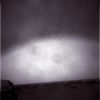
OPP-SOL1395-1.jpgLook at those grains of dust... - Sol 1395 (false colors; credits: Dr M. Faccin)61 visiteUna brillante intuizione (molto probabilmente corretta) del Dr Faccin sulla struttura fisica delle Camere di cui i MER sono dotati. Ma lasciamo che sia lui stesso a spiegare quello che ha scoperto:"...la NASA fa vedere che si ci sono nubi di polvere (intorno ai Rover) ma, osservando bene, si può notare che ci sono anche dei grani di questa polvere sugli obbiettivi.
Ora notate: alcune di queste macchie scure sono esagonali, una forma data dal diaframma. Scoperto questo, noi sappiamo che i CCD dei MER sono muniti di diaframma meccanico, al pari di una semplice camera digitale da 50 Euro.
Quanto detto si riferisce alla NavCam - che presumo sia analoga alla PanCam - la quale si distingue dalle Rear e FrontHazCam poichè esse, credo, sono ad obbiettivo fisso - simili alle webcam, tanto per intenderci...".
Allora: la NASA usa sempre "supertecnologie" da milioni di Dollari, oppure - magari qualche volta... - "tira a risparmiare"? E soprattutto: ma siamo così sicuri che ci vogliano "suprtecnologie" per "sopravvivere alle "estreme" (ma dove?!?) condizioni di Marte?
Siamo sempre più dell'idea che qualcosa non torni: complimenti e congratulazioni al Dr Faccin ed ora, se volete, la parola a Voi!...MareKromium
|
|
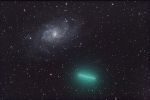
Comets-Comet_Tuttle_and_M33.jpgComet 8-P/Tuttle and M-3361 visiteCaption NASA:"This gorgeous galaxy and comet portrait was recorded on December 30th, 2007, in the skies over Hoogeveen (NL). The combined series of 60-by-60" exposures finds the lovely green coma of Comet 8P/Tuttle near its predicted conjunction with the Triangulum Galaxy.
Aligning each exposure with the stars shows the comet as a streak, slowly moving against the background stars and galaxy. An alternative composition with exposures centered on the comet, shows the background stars and galaxy as streaks.
The alluring celestial scene would also have been a rewarding one for the influential 18th Century comet hunter Charles Messier. While Messier scanned French skies for comets, he carefully cataloged positions of things which were fuzzy and comet-like in appearance but did not move against the background stars and so were definitely not comets. The Triangulum Galaxy, also known as M-33, is the 33rd object in his famous not-a-comet catalog.
The modern understanding holds that the Triangulum Galaxy is a large spiral galaxy some 3 MLY distant. Comet 8P/Tuttle, just bright enough to be visible to the unaided eye in dark, Northern Skies, is about 40 MKM (such as 2 LM - Light Minutes) away".MareKromium
|
|

as08-14-2401.JPGAS 08-14-2401 - The Dark Side of the Moon (5 - natural colors; credits: Lunexit)61 visiteImage Collection: 70mm Hasselblad
Mission: 8
Magazine: 14
Magazine Letter: B
Latitude: approx. 3,0° South
Longitude: approx. 156,0° West
Lens Focal Length: 250 mm
Description: NEAR TERMINATOR; FARSIDE
Film Type: SO-368
Film Width: 70 mm
Film Color: colorMareKromium
|
|

OPP-SOL330-1.jpgTrash! - Sol 330 (possible natural colors; credits: Dr G. Barca)61 visitenessun commentoMareKromium
|
|

Craters-Reynolds_Crater-20080115a-PCF-LXTT.jpgDunefield inside Reynolds Crater (Natural Colors; credits for the additional process. and color.: Dr Paolo C. Fienga - Lunexit Team)61 visiteCaption NASA:"These interesting dune-forms are located on the margin of Remnant Polar Deposits on the floor of Reynolds Crater".
Coord.: 74,3° South Lat. and 199,9° East Long.MareKromium
|
|
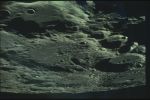
as17-162-24105.jpgAS 17-162-24105 - Orlov Crater61 visiteImage Collection: 35mm Nikon
Mission: 17
Magazine: 162
Magazine Letter: SS
Revolution: 15
Latitude: 23,1° South
Longitude: 174,4° West
Lens Focal Length: 55 mm
Camera Tilt: 60°
Camera Azimuth: 239
Camera Altitude: 114 Km
Sun Elevation (on Local Horizon): 8°
Description: ORLOV
Film Width: 35 mm
Film Color: colorMareKromium
|
|
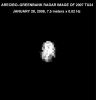
Asteroids-Asteroid_2007-TU24.jpgAsteroid 2007 TU24 (Radar View)61 visiteAsteroid 2007 TU24 passed by the Earth yesterday, posing no danger. The space rock, estimated to be about 250 mt across, coasted by just outside the orbit of Earth's Moon. The passing was not very unusual - small rocks strike Earth daily, and in 2003 a rock the size of a bus passed inside the orbit of the Moon, being detected only after passing. TU24 was notable partly because it was so large. Were TU24 to have struck land, it might have caused a magnitude 7 earthquake and left a city-sized crater. A perhaps larger danger would have occurred were TU24 to have struck the ocean and raised a large tsunami.
This radar image was taken 2 days ago. The Arecibo Radio Telescope in Puerto Rico broadcast radar that was reflected by the asteroid and then recorded by the Byrd Radio Telescope in Green Bank, West Virginia. The resulting image shows TU24 to have an oblong and irregular shape. TU24 was discovered only three months ago, indicating that other potentially hazardous asteroids might lurk in our Solar System currently undetected. Objects like TU24 are hard to detect because they are so faint and move so fast. Humanity's ability to scan the sky to detect, catalog, and analyze such objects has increased notably in recent years.
MareKromium
|
|

BLG-109.jpgBLG-109: A Distant Version of our own Solar System61 visiteCaption NASA:"How common are planetary systems like our own?
Perhaps quite common, as the first system of planets like our own Solar System has been discovered using a newly adapted technique that, so far, has probed only six planetary systems.
The technique, called "Gravitational Microlensing", looks for telling brightness changes in measured starlight when a foreground star with planets chances almost directly in front of a more distant star. The distant star's light is slightly deflected in predictable ways by the gravity of the closer system.
Recently a detailed analysis of Microlensing System OGLE-2006-BLG-109 has related brightness variations to two planets that are similar to Jupiter and Saturn of our own Solar System. This discovery carries the tantalizing implication that interior planets, possibly including Earth-like planets, might also be common.
Pictured above is an artistic conception of how the BLG-109 planetary system might look".MareKromium
|
|
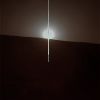
OPP-SOL1329-1N246187052EDN8788P1550L0M1.jpgDark Sunset - Sol 1329 (MULTISPECTRUM; credits: Lunexit)61 visitenessun commentoMareKromium
|
|
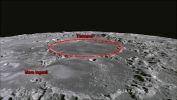
Kaguya-022-hdtv_004_3c.jpgSome Lunar Geography from Kaguya: Thomson Crater and Mare Ingenii (FarSide)61 visiteMare Ingenii - Coord.: 33,7° South Lat. and 163,5° East Long; Total length: about 318 Km
Thomson Crater - Coord.: 32,7° South Lat. and 166,2° East Long.; Diam.: about 112 Km
MareKromium
|
|
| 25353 immagini su 2113 pagina(e) |
 |
|
|
|
|
1142 | |
|
|
|
|





