| Piú viste |
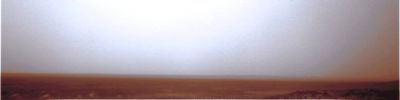
SOL1260-2N238218747ESFAUCMP1561L0M1.jpgDust and fog over Gusev Crater - Sol 126061 visitenessun commentoMareKromium
|
|

Enceladus-N00086998.jpgSpace Encounter: Enceladus and Tethys (7)61 visiteNota: invitiamo il Lettore ad osservare con attenzione il margine Sx (Dx di chi guarda) del Corpo Celeste Maggiore, circa ad ore 3. A nostro parere, anche se la definizione del frame non è certo ottima, si riesce ad intravedere il cratere Penelope.MareKromium
|
|

A-Phoenix-003B.jpgThe Landing Phase: inside the Martian Atmosphere (Entry Phase)61 visitenessun commentoMareKromium
|
|

TRA_000827_1875_RED_browse-2.jpgCerberus' River (Extremely Saturated Natural Colors; credits for the additional process. and color.: Dr Gianluigi Barca - Lunexit Team)61 visitenessun commentoMareKromium
|
|

North_Polar_Features-Dunes-MGS-06.jpgNorth Polar Dunes (Natural Colors; credits for the additional process. and color.: Dr Paolo C. Fienga - Lunexit Team)61 visiteCaption NASA originale:"This MGS-MOC image shows dunes in the North Polar Region of Mars. In this scene, the dunes and the plain on which the dunes reside, are at least in part covered by a bright CO2 frost. Dark spots indicate areas where the frost has begun to change, either by subliming away to expose dark sand, changing to a coarser particle size, or both. The winds responsible for the formation of these dunes blew from the South-West toward the North-East.
Location near: 76,3° North; 261,2° West
Image width: ~3 Km (~1,9 mi)
Illumination from: lower left
Season: Northern SpringMareKromium
|
|
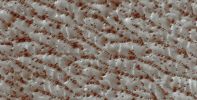
North_Polar_Features-Dunes-MGS-11.jpgDefrosting North Polar Dunes (Natural Colors; credits for the additional process. and color.: Dr Paolo C. Fienga - Lunexit Team)61 visitenessun commentoMareKromium
|
|

PIA09956.jpgCosmic "Merger"61 visiteThis artist's concept shows what the night sky might look like from a hypothetical planet around a star tossed out of an ongoing four-way collision between big galaxies (yellow blobs). NASA's SST spotted this "quadruple merger" of galaxies within a larger cluster of galaxies located nearly 5 BLY away.
Though the galaxies appear intact, gravitational disturbances have caused them to stretch and twist, flinging billions of stars into space -- nearly three times as many stars as are in our Milky Way galaxy. The tossed stars are visible in the large plume emanating from the central, largest galaxy. If any of these stars have planets, their night skies would be filled with the monstrous merger, along with other galaxies in the cluster (smaller, bluish blobs).
This cosmic smash-up is the largest known merger between galaxies of a similar size. While three of the galaxies are about the size of our Milky Way galaxy, the fourth (center of image) is three times as big.
All four of the galaxies, as well as most other galaxies in the huge cluster, are blob-shaped ellipticals instead of spirals like the Milky Way.
Ultimately, in about one hundred million years or so, the four galaxies will unite into one. About half of the stars kicked out during the merger will fall back and join the new galaxy, making it one of the biggest galaxies in the universe.MareKromium
|
|
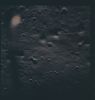
APOLLO_15_AS_15-96-13064.JPGAS 15-96-13064 - EVA Floodlight near Herodotus "H" and Vallis Schroteri (2)61 visiteImage Collection: 70mm Hasselblad
Mission: 15
Magazine: 96
Magazine Letter: Q
Latitude: 26° North
Longitude: 51° West
Description: EVA FLOODLIGHT
Film Type: SO-368
Film Width: 70 mm
Film Color: colorMareKromium
|
|
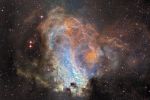
M-017-0.jpgM 17 - The "Omega Nebula"61 visite"...Una differenza tra Scienza e Fantascienza? Io direi che mentre la Scienza è la disciplina della certezza, la Fantascienza è la disciplina del dubbio..."
(anonimo)MareKromium
|
|

PSP_003252_1425_RED_browse-01.jpgBright Gully Deposit in Terra Sirenum (the "crater" - close-up; false colors)61 visiteAs seen in the context image and here, the appearance of the crater wall differs between the Northern and Southern Sides. On the Northern Pole-Facing Side Walls, prominent gullies with channels and aprons are apparent, with many of these having valley-like alcoves near their tops. The morphology of the gullies is consistent with formation by a fluid, most likely water.
On the pole-facing slopes, ground ice or aquifers may be more stable, being subjected to less heating from sunlight compared to equator-facing slopes.
In contrast, the Southern, Equator-Facing Walls are dominated by rocky debris flows that lack prominent channels.MareKromium
|
|
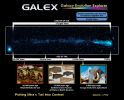
Mira-PIA09958-0.jpgMira soars through the Sky!61 visiteNew ultraviolet images from NASA's Galaxy Evolution Explorer shows a speeding star that is leaving an enormous trail of "seeds" for new solar systems. The star, named Mira (pronounced my-rah) after the latin word for "wonderful," is shedding material that will be recycled into new stars, planets and possibly even life as it hurls through our galaxy.
In figure 1, the upper panel shows Mira's full, comet-like tail as seen only in shorter, or "far" ultraviolet wavelengths, while the lower panel is a combined view showing both far and longer, or "near" ultraviolet wavelengths. The close-up picture at bottom gives a better look at Mira itself, which appears as a pinkish dot, and is moving from left to right in this view. Shed material appears in light blue. The dots in the picture are stars and distant galaxies. The large blue dot on the left side of the upper panel, and the large yellow dot in the lower panel, are both stars that are closer to us than Mira.
The Galaxy Evolution Explorer discovered the strange tail during part of its routine survey of the entire sky at ultraviolet wavelengths. When astronomers first saw the picture, they were shocked because Mira has been studied for over 400 years yet nothing like this has ever been documented before.
Mira's comet-like tail stretches a startling 13 light-years across the sky. For comparison, the nearest star to our sun, Proxima Centauri, is only about 4 light-years away. Mira's tail also tells a tale of its history -- the material making it up has been slowly blown off over time, with the oldest material at the end of the tail being released about 30,000 years ago (figure 2).
Mira is a highly evolved, "red giant" star near the end of its life. Technically, it is called an asymptotic giant branch star. It is red in color and bloated; for example, if a red giant were to replace our sun, it would engulf everything out to the orbit of Mars. Our sun will mature into a red giant in about 5 billion years.
Like other red giants, Mira will lose a large fraction of its mass in the form of gas and dust. In fact, Mira ejects the equivalent of the Earth's mass every 10 years. It has released enough material over the past 30,000 years to seed at least 3,000 Earth-sized planets or 9 Jupiter-sized ones.
While most stars travel along together around the disk of our Milky Way, Mira is charging through it. Because Mira is not moving with the "pack," it is moving much faster relative to the ambient gas in our section of the Milky Way. It is zipping along at 130 kilometers per second, or 291,000 miles per hour, relative to this gas.
Mira's breakneck speed together with its outflow of material are responsible for its unique glowing tail. Images from the Galaxy Evolution Explorer show a large build-up of gas, or bow shock, in front of the star, similar to water piling up in front of a speeding boat. Scientists now know that hot gas in this bow shock mixes with the cooler, hydrogen gas being shed from Mira, causing it to heat up as it swirls back into a turbulent wake. As the hydrogen gas loses energy, it fluoresces with ultraviolet light, which the Galaxy Evolution Explorer can detect.
Mira, also known as Mira A, is not alone in its travels through space. It has a distant companion star called Mira B that is thought to be the burnt-out, dead core of a star, called a white dwarf. Mira A and B circle around each other slowly, making one orbit about every 500 years. Astronomers believe that Mira B has no effect on Mira's tail.
Mira is also what's called a pulsating variable star. It dims and brightens by a factor of 1,500 every 332 days, and will become bright enough to see with the naked eye in mid-November 2007. Because it was the first variable star with a regular period ever discovered, other stars of this type are often referred to as "Miras."
Mira is located 350 light-years from Earth in the constellation Cetus, otherwise known as the whale. Coincidentally, Mira and its "whale of a tail" can be found in the tail of the whale constellation.
These images were between November 18 and December 15, 2006.
MareKromium
|
|

ZZ-ZZ-Horizon-Columbia5.jpgApproaching the Hills (natural colors - according to NASA)61 visitenessun commentoMareKromium
|
|
| 25353 immagini su 2113 pagina(e) |
 |
|
|
|
|
1139 | |
|
|
|
|





