| Piú viste |
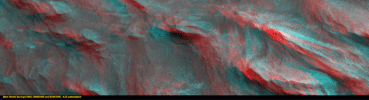
Juventae_Chasma_3D-3.gifJuventae Chasma (High-Def-3D - EDM n.2; credits: ESA)61 visitenessun commento
|
|

OPP-SOL719-1M192026048EFF64KWP2936M2M1.jpgDeep inside the "Outcrops" of Erebus Crater (2)61 visiteOvviamente si tratta, in questo caso come nel precedente, di frames ottenuti da Opportunity usando il Microscopic Imager.
I dettagli che emergono da queste - bellissime, anche se quasi sempre del tutto ininterpretabili - immagini, ci lasciano vedere delle strutture che mostrano una matrice (a nostro modesto parere, ovviamente) organica e non sedimentaria o vulcanica.
Insomma: volendo utilizzare terminologie ed elementi di comparazione di tipo "terrestre", noi diremmo che i rilievi che si vedono in questi frames (ed in tanti altri similari), potrebbero essere dei residui organici fossili assimilabili (usiamo questo paragone per aiutarVi a comprendere la nostra particolare visualizzazione) a "strutture coralline".
Si tratta di un'ipotesi azzardata?
Forse, ma non lo è certo di più dell'ipotesi NASA secondo cui questi rilievi sono delle semplici evidenze di stratificazioni sedimentarie o - addirittura - outcrops di possibile matrice ignea (vulcanica).
|
|

Craters-Unnamed_Crater_with_Windstreak.JPGCrater and Windstreak in Syrtis Major Planum (Original NASA/MGS/MSSS b/w Frame)61 visiteCaption originale:"This MGS-MOC image shows an Unnamed Crater that is approx. 2 Km in diameter in South Central Syrtis Major Planum. The image also captures a portion of the light-toned Windstreak formed in the Lee (---> lato sottovento) of the Unnamed Cater. The Windstreak is likely composed of a thin coating of Dust".
Location near: 1,9° North Lat. and 294,0° West Long.
Image width: ~3 Km (~1,9 mi)
Illumination from: upper left
Season: Northern Summer
|
|

OPP-SOL731-1P193078311EFF64LQP2444L7M1.jpgErebus Outcrop's: details (3) - Sol 73161 visitenessun commento
|
|

SOL053-3D.jpgHumphrey...in 3D! - Sol 5361 visitenessun commento
|
|

RS-Ophiuci-1.jpgNova RS-Ophiuci61 visite"...Ormai gli spazi in cui la volontà individuale può ancora esercitarsi sono così rari e angusti che il nostro buon Italiano Medio non li affida al suo padrone di turno, ma ne pretende la determinazione: almeno sul pollo decido io! esclama il nostro Signor X medio.
Bombardato da puro terrorismo mediatico, vessato da leggi e decreti come neppure in epoca carolingia, umiliato da una politica fatta da una minoranza di onnipotenti e intoccabili, straziato da un carovita che farebbe urlare di dolore un mugik, istupidito da una sistematica demolizione della libera cultura, il povero Signor X non è più in grado di progettare il suo futuro, non sa vedere oltre la fine del mese, non può più sperare in un felice avvenire per i suoi figli.
Schiavo sotto i Romani, servo della gleba nel Medioevo, operaio sottopagato nella Rivoluzione Industriale, carne da cannone in due Guerre Mondiali, burattino decerebrato sotto la dittatura fascista, carne da radiazione nella Guerra Fredda, carne da tv adesso, il povero Signor X si guarda attorno e, a fatica, esce dal torpore muto in cui lo tiene immerso, come in formalina, il padrone di turno…Esce dal torpore e comincia a temere che ci sia qualcosa che forse non va…
E non compra più il pollo che prima mangiava di gusto..."
P. Cortesi - "Chi Crede A Chi?"
|
|
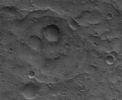
Craters-Unnamed_Crater_in_Terra_Sabaea-01.jpgBuried Crater in Terra Sabaea (Original NASA/MGS/MSSS b/w Frame)61 visiteCaption originale:"This MGS-MOC image shows a 1,5 mt (~5 feet) per pixel view of a subdued circular feature which is probably an ancient Impact Crater that was buried and only partially exhumed (a common occurrence on Mars)".
Location near: 21,9° South Lat. and 338,6° West Long.
Image width: ~3 Km (~1,9 mi)
Illumination from: upper left
Season: Southern Summer
|
|

ZX-Pluto_s System.jpgPluto's System61 visiteThis pair of NASA HST images shows the motion of Pluto's satellites between February 15th and March 2nd, 2006.
Both images were taken through a red filter (F606W) using the High Resolution Channel (HRC) of the Advanced Camera for Surveys (ACS). During this 15-day period, Pluto's newly-discovered satellite S/2005 P 2 (P2 for short) moved counterclockwise from the noon position to the 5 o'clock position, while the other newly-discovered satellite S/2005 P 1 (P1 for short) moved counterclockwise from the 1 o'clock position to the 7 o'clock position. During that same period, Pluto's much larger and closer moon, Charon, started near the 2 o'clock position, made more than two complete counterclockwise revolutions around Pluto and ended up near the 10 o' clock position. The motions of P1 and P2 confirm that these satellites are orbiting Pluto in the same plane as Charon's orbit, as expected if all the 3 moons were created during a single - and gigantic - impact event.
|
|

OPP-SOL753-1N195036916EFF64__P1784R0M1.jpgLike an island, in a Sea of Dust... (4) - Sol 75361 visitenessun commento
|
|

SOU-SOL013-1.jpgBoulder Field - Sol 1361 visiteThis enhanced color image mosaic of the area south of the lander was made using images acquired in the mid-morning of Sol 13 by the IMP camera as part of the Super-Pan data set.
At each camera frame position, a Super-Pan image contains 15 frames (6 frames for 3-color stereo and 9 more individual narrow color bands). This mammoth color and stereo data set will be used to derive high quality topographic maps of the surface and detailed shapes of rocks and other surface features, and to map subtle chemical, mineralogical, and textural variations on rocks and soils. Red, green, and blue filter images from the right eye were combined to simulate slightly amplified natural color. The rocks Squid, Ender, Hassock, and a portion of Wedge are visible in the center-right portion of the mosaic. Mermaid Dune and Bosco rock are visible in the middle-left. The foreground contains portions of the airbags and the top of the low-gain antenna on the lander.
The rim of the impact crater "Big Crater" is visible in the upper-left on the horizon.
|
|

Titan-N00055566.jpgWhat's happening on Titan? (3)61 visiteCaption NASA:"N00055566.jpg was taken on March 20, 2006 and received on Earth March 20, 2006. The camera was pointing toward Titan that, at the time, was approximately 972.794 Km away.
The image was taken using the P0 and UV3 filters".
|
|

OPP-SOL766-1N196188761EFF6600P0695R0M1.jpgPanorama (3) - Sol 76661 visiteCerchiature Rosse: sebbene l'immagine non è certo fra le più chiare e, dunque, inequivocabili diremmo che siamo in presenza di evidenti - ed inspiegabili - microdepressioni del terreno che circonda Opportunity.
|
|
| 25353 immagini su 2113 pagina(e) |
 |
|
|
|
|
1122 | |
|
|
|
|





