| Piú viste |

North_Polar_Cap-M0303936-PCF-LXTT.jpgFrame M0303936 - The North Polar Cap (Natural Colors; credits for the additional process. and color.: Dr Paolo C. Fienga - Lunexit Team)234 visitenessun commentoMareKromium
|
|

Crack_of_Unknown_Origin-ESP_022298_1555-GB-PCF-LXTT-01.jpgPossible Evidence of relatively recent Seismic Activity on Mars (credits for the Research and additional process.: Drr Gianluigi Barca and Paolo C. Fienga - Lunexit Team)234 visitenessun commentoMareKromium
|
|
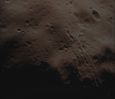
vo1_246a05-PCF-LXTT-2.jpgPhobos' "Surface Striations" - frame Viking Orbiter 1, n. 246a05 (Absolute Natural Colors; credits for the additional process. and color: Dr Paolo C. Fienga - Lunexit Team)234 visitenessun commentoMareKromium
|
|

LRO-Craters-Tycho-Central_Peak-PCF-LXTT-0.jpgTycho's Peak (Absolute Natural Colors; credits for the additional process. and color.: Dr Paolo C. Fienga - Lunexit Team)234 visiteCaption NASA:"Tycho Crater's Central Peak Complex casts a long, dark shadow near Local Sunrise in this spectacular Lunarscape. The dramatic oblique view was recorded on June 10, 2011, by the Lunar Reconnaissance Orbiter. Shown in amazing detail, boulder strewn slopes and jagged shadows appear in the highest resolution version at 1,5 meters per pixel. The rugged Complex is about 15 Km wide, formed in uplift by the giant impact that created the well-known crater about 100 MYs ago. The Summit of its Central Peak reaches approx. 2 Km above the Floor".MareKromium
|
|

ESP_024051_1365-PCF-LXTT.jpgMassif in Reull Vallis (Enhanced Absolute Natural Colors; credits for the additional process. and color.: Dr Paolo C. Fienga - Lunexit Team)234 visiteMars Local Time: 14:23 (Early Afternoon)
Coord. (centered): 43,3° South Lat. and 97,1° East Long.
Spacecraft altitude: 253,6 Km (such as about 158,5 miles)
Original image scale range: 50,7 cm/pixel (with 2 x 2 binning) so objects ~ 1 mt and 52 cm across are resolved
Map projected scale: 50 cm/pixel
Map projection: EQUIRECTANGULAR
Emission Angle: 7,4°
Sun-Mars-Spacecraft (or "Phase") Angle: 59,1°
Solar Incidence Angle: 54° (meaning that the Sun is about 36° above the Local Horizon)
Solar Longitude: 360,0° (Northern Winter)
Credits: NASA/JPL/University of Arizona
Additional process. and coloring: Dr Paolo C. Fienga - Lunar Explorer ItaliaMareKromium
|
|

ESP_024121_1870-PCF-LXTT-01.jpgUnnamed Tributary Channel leading into Ares Vallis (CTX Frame "B" - Absolute Natural Colors; credits for the additional process. and color.: Dr Paolo C. Fienga - Lunexit Team)234 visiteMars Local Time: 14:15 (Early Afternoon)
Coord. (centered): 6,8° North Lat. and 339,8° East Long.
Spacecraft altitude: 277,0 Km (such as about 173,1 miles)
Original image scale range: 55,4 cm/pixel (with 2 x 2 binning) so objects ~ 1 mt and 66 cm across are resolved
Map projected scale: 50 cm/pixel
Map projection: EQUIRECTANGULAR
Emission Angle: 5,5°
Sun-Mars-Spacecraft (or "Phase") Angle: 39,7°
Solar Incidence Angle: 34° (meaning that the Sun is about 56° above the Local Horizon)
Solar Longitude: 2,7° (Northern Spring)
Credits: NASA/JPL/University of Arizona
Additional process. and coloring: Dr Paolo C. Fienga - Lunar Explorer ItaliaMareKromium
|
|

083-Craters-Caparronia_Crater-PIA15129-PCF-LXTT.jpgCaparronia Crater and Surroundings (Natural Colors; credits for the additional process. and color.: Dr Paolo C. Fienga - Lunexit Team)234 visiteThis Dawn FC (framing camera) image is dominated by Caparronia Impact Crater. Caparronia Crater is approximately 55 Km in diameter and has a mostly fresh, irregularly shaped Rim. It also has a curved, linear mound running across most of its base. For all of these reasons Caparronia is a distinctive Crater and this is why it was chosen to name the Quadrangle in which it is situated. The smooth region around Caparronia Crater is most likely fine Impact Ejecta, which were thrown out from the Crater at the time of its formation. Other impact related features are the linear chains of small, less than 1 km wide, Secondary Craters that occur throughout the image. Some particularly distinctive Crater Chains are in the bottom part of the frame.
Secondary Crater Chains are formed when relatively large debris are ejected from an impact and skip along the Surface, much like a stone skipping across a lake. There are also some linear scars running diagonally across the image, which are due to debris scouring across the Surface.
This image is centered in Vesta's Caparronia Quadrangle and the center Latitude and Longitude of the image is 52,5° North and 149.2° East. NASA's Dawn Spacecraft obtained this image with its framing camera on October 23rd 2011. This image was taken through the camera's clear filter. The distance to the Surface of Vesta, at the time the picture was taken, was approx. 700 km and the image has a resolution of about 70 meters per pixel. This image was acquired during the HAMO (High Altitude Mapping Orbit) phase of the mission.MareKromium
|
|
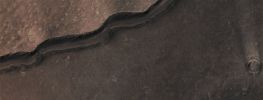
ESP_024421_1935_RED-PCF-LXTT-00.jpgArnus Vallis (CTX Frame n.1 - Enhanced Absolute Natural Colors; credits for the additoonal process. and color.: Dr Paolo C. Fienga - Lunexit Team)234 visiteMars Local Time: 14:24 (early afternoon)
Coord. (centered): 13,2° North Lat. and 70,3° East Long.
Spacecraft altitude: 274,3 Km (such as about 171,4 miles)
Original image scale range: 54,9 cm/pixel (with 2 x 2 binning) so objects ~ 1 mt and 65 cm across are resolved
Map projected scale: 50 cm/pixel
Map projection: EQUIRECTANGULAR
Emission Angle: 5,3°
Phase Angle: 31,1°
Solar Incidence Angle: 36° (meaning that the Sun is about 54° above the Local Horizon)
Solar Longitude: 14,1° (Northern Spring)
Credits: NASA/JPL/University of Arizona
Additional process. and coloring: Lunar Explorer ItaliaMareKromium
|
|

OPP-SOL468-1R169740231EFF55GVP1314L0M1-4.jpgVisions of the Martian Day - Sol 468 (4 - CSD; credits for the add. process. and color.: Dr Paolo C. Fienga) 234 visitenessun commentoMareKromium
|
|

A-A SUNFLARE.jpgA beautiful Solar Flare233 visitenessun commento
|
|

ZZ-Z-On Earth.jpgApollo 13 - Mission Overview233 visiteApollo 13 (Odyssey and Aquarius)
Saturn V
April 11-17, 1970
James A. Lovell, Jr.
John L. Swigert, Jr.
Fred W. Haise, Jr.
05 days, 22 hours, 54 minutes
Third lunar landing attempt. Mission aborted after rupture of service module oxygen tank. Classed as "successful failure" because of experience in rescuing crew. Spent upper stage successfully impacted on the Moon.
|
|
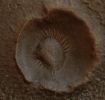
PSP_006250_2200_RED_abrowse-PCF-LXTT-1.jpgUnnamed Crater in Nilosyrtis Region (Absolute Natural Colors; credits for the additional process. and color.: Dr Paolo C. Fienga - Lunexit Team)233 visitenessun commentoMareKromium
|
|
| 25353 immagini su 2113 pagina(e) |
 |
|
|
|
|
112 | |
|
|
|
|





