| Piú viste |

ESP_011610_1825-01.jpgFresh Triplet! (edm n. 2 - Natural Colors; credits: Dr M. Faccin)62 visitenessun commentoMareKromium
|
|
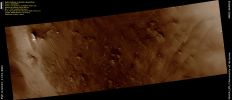
PSP_010397_1725_RED_abrowse-00.jpgLight-Toned Rock Exposures in Noctis Labyrinthus OR Salty "Outlines"? (ctx frame - Natural Colors; credits: Lunar Explorer Italia)62 visitenessun commentoMareKromium
|
|

PSP_009913_1910.jpgEchelon Fractures in Cerberus Fossae (Natural Colors; credits: Dr M. Faccin & Lunexit)62 visiteThe colors visible in this Natural Colors image result from differences in composition of the materials existing in and around the fractures (which were likely caused by the shifting of Mars Crust -----> i.e.: Tectonic Fractures) and they DO represent how it would appear to the human eye.
Note that one can make out boulders and small dunes at the bottom of these fractures and layering within the walls.
Just visible at the top of the image is well-preserved impact crater ejecta. This image is about 1,2 Km across.MareKromium
|
|

The_Rings-PIA11665.jpgSmall Object in the "B"-Ring62 visiteCaption NASA:"The Cassini Spacecraft captured this image of a small object in the outer portion of Saturn's "B"-Ring casting a shadow on the Rings as Saturn approaches its August 2009 Equinox.
This new moonlet, situated about 300 miles (approx. 480 Km), inward from the outer edge of the "B"-Ring, was found by detection of its shadow which stretches 25 miles, or about 41 Km, across the Rings.
The shadow length implies the moonlet is protruding about 660 feet, or 200 meters, above the Ring-Plane.
If the moonlet is orbiting in the same plane as the ring material surrounding it, which is likely, it must be about 1300 feet, or 400 meters, across.
This object is not attended by a Propeller feature, unlike the band of moonlets discovered in Saturn's "A"-Ring earlier by Cassini (see PIA07792 and PIA06196). The "A"-Ring moonlets, which have not been directly imaged, were found because of the propeller-like narrow gaps on either side of them that they create as they orbit within the Rings. The lack of a propeller feature surrounding the new moonlet is likely because the "B"-Ring is dense, and the ring material in a dense ring would be expected to fill in any gaps around the moonlet more quickly than in a less dense region like the mid-"A"-Ring. Also, it may simply be harder in the first place for a moonlet to create propeller-like gaps in a dense ring.
Straw-like patterns of clumping ring material are also visible along the edge of the outer "B"-Ring near the right of this image. See PIA09855 to learn more about these features.
This image and others like it (see PIA11656 and PIA11659) are only possible around the time of Saturn's Equinox which occurs every half-Saturn-year (equivalent to about 15 Earth years). The illumination geometry that accompanies Equinox lowers the Sun's angle to the Ring-Plane and causes out-of-plane structures to cast long shadows across the Rings.
This view looks toward the sunlit side of the Rings from about 42° below the Ring-Plane. Background stars are visible on the right of the image. They appear elongated by the camera's exposure time.
The image was taken in Visible Light with the Cassini Spacecraft narrow-angle camera on July 26, 2009. The view was obtained at a distance of approx. 296.000 Km (such as about 184.000 miles) from Saturn and at a Sun-Saturn-Spacecraft, or Phase, Angle of 120°.
Image scale is roughly 1 Km (4680 feet) per pixel".MareKromium
|
|

V838-Monocerotis-3D-2.gifV-838 Monocerotis62 visitenessun commentoMareKromium
|
|
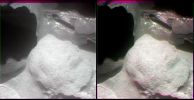
OPP-SOL1976-MI-MF.jpgDeep inside "Block Island" - Sol 1976 (Multilayer; credits: Dr M. Faccin)62 visiteUna qualità di dettaglio simile le foto NASA "pubbliche" - e scusateci per la nostra presunzione - se la possono sognare per tutta la Vita!
Grandissimi complimenti al nostro Marco Faccin ed alla sua tecnica "Multilayer" (un'altra piccola - eppure grandissima - perla esclusiva di Lunexit, assieme alla colorizzazione Multispectrum ed alla Superdefinizone Tridimensionale in b/w e colors).MareKromium
|
|

Titan-Regions-Senkyo_Region-PIA11577-01.jpgLight and dark Surface Features of Senkyo62 visiteCaption NASA:"The Cassini Spacecraft peers through the hazy Atmosphere of Titan for a close view of light and dark Terrain on Saturn's largest moon.
This view is centered on Terrain at 28° South Lat. and 334° West Long. and shows a small part of the albedo feature named Senkyo on the Trailing Hemisphere of Titan.
The image was taken with the Cassini Spacecraft narrow-angle camera on July 9, 2009 using a spectral filter sensitive to wavelengths of Near-InfraRed Light centered at 938 nanometers. The view was obtained at a distance of approx. 251.000 Km (such as about 156.000 miles) from Titan and at a Sun-Titan-Spacecraft, or Phase, Angle of 27°.
Image scale is about 1 Km (3281 feet) per pixel".MareKromium
|
|

Omega_Centauri-HST.jpgThe Center of Omega Centauri62 visite"...Feliciter sapit qui periculo alieno sapit..."
(Binder)
"...Realmente saggio è colui che apprende dall'esperienza altrui..." (trad. libera)MareKromium
|
|

NGC-6888~1.jpgNGC 6888 - The "Crescent Nebula"62 visite"...Nemo unquam imperium flagitio quaesitum bonis artibus exercuit..."
(Tacito)
"...Nessuno ha mai esercitato bene il potere che acquisì malamente (con frode o violenza)..."MareKromium
|
|
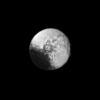
Japetus-PIA11608.jpgJapetus, from far away...62 visiteCaption NASA:"The Cassini spacecraft captures a far-off view of the two-toned surface of Saturn's moon Japetus. Scientists continue to investigate the nature of this moon's Surface. See also PIA08384 to learn more.
This view looks toward the Saturn-facing side of Japetus. North on Japetus is up and rotated 45° to the left. Scale in the original image was about 22 Km (approx. 14 miles) per pixel. The image has been magnified by a factor of three and contrast-enhanced to aid visibility.
The image was taken in visible light with the Cassini Spacecraft narrow-angle camera on Sept. 24, 2009. The view was obtained at a distance of approx. 3,7 MKM (such as about 2,3 MMs) from Japetus and at a Sun-Japetus-Spacecraft, or Phase, Angle of 12°".MareKromium
|
|

ESP_014418_0930_RED_abrowse.jpgSouth Polar Residual Cap Monitoring (Natural Colors; credits: Lunexit)62 visitenessun commentoMareKromium
|
|

ESP_014284_2045_RED_abrowse.jpgUnnamed Crater in Mawrth Vallis Region (Natural Colors; credits: Lunexit)62 visitenessun commentoMareKromium
|
|
| 25353 immagini su 2113 pagina(e) |
 |
|
|
|
|
1117 | |
|
|
|
|





