| Piú viste |
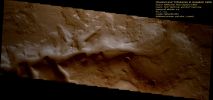
Channels-Unnamed_Channel_in_Auqakuh_Vallis.jpgUnnamed Channel in Auqakuh Vallis (Natural Colors/Tri-Chromatic Version; credits: Dr Paolo C. Fienga - Lunexit Team)62 visiteCaption NASA:"This VIS image shows a small portion of Auqakuh Vallis. Several tributaries enter the main channel in the center and upper portions of the image".MareKromium
|
|

APOLLO_15_AS_15-95-12953.jpgAS 15-95-12953 - Prinz "A"62 visiteCoord.: 26,5° North Lat. and 44,0° West Long.MareKromium
|
|
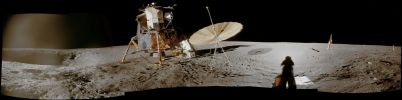
Panoramic-AS12-47-6982-6992-2.jpgFrom AS 12-47-6982 until 6992 (Surveyor Crater and Landing Site)62 visitenessun commentoMareKromium
|
|

Panoramic-AS17-140-21491-21497.jpgFrom AS 17-140-21491 until 21497 (EVA-3; Station 6; East Massif and Bear Mountain)62 visitenessun commentoMareKromium
|
|
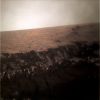
OPP-SOL1487-03.jpgBeautiful Victoria... (3) - Sol 1487 (natural colors; credits: Dr G. Barca)62 visitenessun commentoMareKromium
|
|

Mimas-PIA10467.jpgHol(e)y Mimas! (natural colors; credits: Lunexit)62 visiteCaption NASA:"The sun's low angle near the Terminator throws the craters of Mimas into stark relief.
This view looks toward high Northern Latitudes on Mimas (approx. 396 Km, or about 246 miles across) from a position 72° North of the moon's Equator. The North Pole is in darkness at center.
The image was taken in visible green light with the Cassini Spacecraft narrow-angle camera on Aug. 4, 2008. The view was obtained at a distance of approx. 153.000 Km (such as about 95.000 miles) from Mimas and at a Phase Angle of 106°.
Image scale is 918 meters (3011 feet) per pixel".MareKromium
|
|
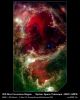
W5-SST.jpgW 5 - Stellar "Nursery"62 visiteGenerations of stars can be seen in this new infrared portrait from NASA's Spitzer Space Telescope. In this wispy star-forming region, called W5, the oldest stars can be seen as blue dots in the centers of the two hollow cavities (other blue dots are background and foreground stars not associated with the region). Younger stars line the rims of the cavities, and some can be seen as pink dots at the tips of the elephant-trunk-like pillars. The white knotty areas are where the youngest stars are forming. Red shows heated dust that pervades the region's cavities, while green highlights dense clouds.
W5 spans an area of sky equivalent to four full moons and is about 6500 Light-Years away in the constellation Cassiopeia. The Spitzer picture was taken over a period of 24 hours.
Like other massive star-forming regions, such as Orion and Carina, W5 contains large cavities that were carved out by radiation and winds from the region's most massive stars. According to the theory of triggered star-formation, the carving out of these cavities pushes gas together, causing it to ignite into successive generations of new stars.
This image contains some of the best evidence yet for the triggered star-formation theory. Scientists analyzing the photo have been able to show that the ages of the stars become progressively and systematically younger with distance from the center of the cavities.
This is a three-color composite showing infrared observations from two Spitzer instruments. Blue represents 3,6-micron light and green shows light of 8 microns, both captured by Spitzer's infrared array camera. Red is 24-micron light detected by Spitzer's multiband imaging photometer.MareKromium
|
|
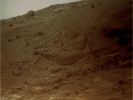
OPP-SOL1500-1.jpgLooking Up - Sol 1500 (True Colors; credits: Dr G. Barca)62 visitenessun commentoMareKromium
|
|
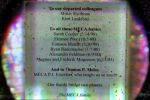
PHOE-SOL111-NASA-PIA11193.jpgIn Loving Memory...Six days after Lunexit! - Sol 111 (false colors; credits: NASA)62 visiteCome previsto dal Dr Faccin, ecco che - sebbene con 6 giorni di ritardo - è arrivata sul NASA Planetary Photojournal la scopiazzatura del frame da noi costruito in colori naturali e pubblicato il 18 Settembre u.s.
L'abbiamo detto un pò di volte, e lo ripetiamo: SIAMO ONORATI! Ma se, di quando in quando, la NASA desse a Lunexit quello che è di Lunexit...SAREMMO PIU' CONTENTI.
Null'altro da dire, purtroppo.MareKromium
|
|

SOU-SOL018-PresidentialPanorama-00.jpgPresidential Panorama - Full Daylight -, Part I - Sol 18 (possible True Colors; credits: Dr G. Barca & Lunexit)62 visitenessun commentoMareKromium
|
|
OPP-SOL1666-1P276097674EFF90__P2357L2M1.jpgFarewell Victoria! - Sol 1666 (possible True Colors; credits: Lunexit)62 visitenessun commentoMareKromium
|
|
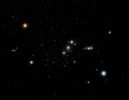
M-042-94.jpgOrion's Region62 visite"...Anulis nostris plusquam Animis creditur..."
(Seneca)
"...Si crede di più agli anelli che ai cuori..." (ossìa: si presta più attenzione - rectius: si crede di più - ai simboli materiali di quanta se ne presti alle reali intenzioni)MareKromium
|
|
| 25353 immagini su 2113 pagina(e) |
 |
|
|
|
|
1115 | |
|
|
|
|





