| Piú viste |
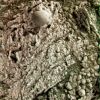
OPP-SOL144-1.jpgA fresh "Mushroom" with fresh "Moss" - Sol 144 (Superdefinition; credits: Dr G. Barca)62 visitenessun commentoMareKromium
|
|

PIA10711.jpgGhostly Ring62 visite"...L'Artista non procede affatto come un Ricercatore: egli non agisce empiricamente in nessuna maniera.
L'Artista dà una testimonianza sulla Verità, sulla sua Verità del mondo.
L'Artista deve essere certo che egli e la sua creazione rispondono alla Verità..."
Andrej TarkovskijMareKromium
|
|
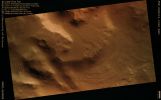
PSP_008233_1920_RED_abrowse.jpgCrater Floor Fan (MULTISPECTRUM; credits: Lunexit)62 visiteThis image shows a Fan of material deposited on the floor of a large Impact Crater.
The material was transported into the Crater through a valley, likely by running water. The end of the valley is visible in the West (lower) part of the image. Arcuate steps visible in the East are probably due to layers of different strength or cohesion; these suggest variations in the flow conditions.
A faint Trough is carved into the upper surface of the Fan. This could have been cut by the last water to flow across the surface. If the channel was flowing into a lake, this might indicate a drop in lake level, leading to erosion.
The surface of the Fan has many small dark spots, particularly on the upper tier.
The largest spots, most commonly around impact craters, are big enough to show that these are boulders.
If these boulders are original and not due to the hardening of fan sediments into rock, it suggests that the flows which deposited the Fan were relatively energetic events able to carry rocks across several feet.MareKromium
|
|

PHOE-SOL017-Panorama-1.jpgVastitas Borealis - Sol 17 (Superdefinition and Natural Colors; credits: Dr Marco Faccin)62 visitenessun commentoMareKromium
|
|
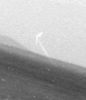
SOL454-2P166670541EFFA9BGP2403L7M1-2.jpgRays of Light or just a "Digital Artifact"? - Sol 454 (extra-detail mgnf; credits: Dr G. Barca)62 visiteIl frame, osservato ad elevata magnificazione, mostra un quantitativo impressionante di vizi e quindi, anche se una risposta che sia "certa al 100%" è ovviamente impossibile darla, noi riteniamo che il doppio "Raggio di Luce" sia solo un difetto dell'immagine.
Comunque Complimenti al Dr Barca per l'attenzione e l'"occhio"!MareKromium
|
|

OPP-SOL1559-1N266591168EFF9000P0632L0M1-1.jpgDark Days over Victoria... - Sol 1559 (2 - natural colors; credits: Lunexit)62 visitenessun commentoMareKromium
|
|

The_Missing_Matter.jpgWhat is "missing" in the Universe?62 visiteIn the May 20, 2008, issue of The Astrophysical Journal, Charles Danforth and Mike Shull (University of Colorado, Boulder) report on NASA's Hubble Space Telescope and NASA's Far Ultraviolet Spectroscopic Explorer (FUSE) observations taken along sight-lines to 28 quasars. Their analysis represents the most detailed observations to date of how the intergalactic medium looks within about 4 Billion Light-Years of Earth.
The astronomers say they have definitively found about half of the missing normal matter, called "Baryons", in the space between the galaxies.
This illustration shows how the Hubble Space Telescope searches for missing Baryons, by looking at the light from quasars several Billion Light-Years away. Imprinted on that light are the spectral fingerprints of the missing ordinary matter that absorbs the light at specific frequencies (shown in the colorful spectra at right).
The missing Baryonic Matter helps trace out the structure of intergalactic space, called the "Cosmic Web".MareKromium
|
|
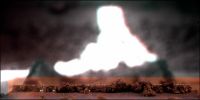
PHOE-SOL025-lg_7048.jpgCheck the "Sand"! - Sol 25 (Superdefinition; credits: Dr M. Faccin)62 visitenessun commentoMareKromium
|
|

PHOE-SOL029-Wind1.gifMartian Winds... - Sol 29 (GIF-Movie; credits: Dr G. Barca)62 visitenessun commentoMareKromium
|
|

M-027-5.jpgM 27 - The "Dumbbell Nebula"62 visite"...Vitium omne semper habet patrocinium suum..."
(P. Siro)
"...Ogni vizio, in fondo, trova sempre la sua scusante..." (trad. libera)MareKromium
|
|
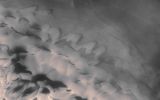
PSP_008426_2595_RED_abrowse-01.jpgPolygons, Crater Layers, and Defrosting Dunes (edm n. 1 - MULTISPECTRUM-2; credits: Lunexit)62 visiteThe dune morphology in this image is complex. Because of the presence of the ice, it is difficult to determine all of the dune types. These jumbled dunes may result from erosion of the layers within the crater walls that act as a dune source. However, two common types of dunes can be classified: the outer ring of the dune field is composed of chains of Barchan Dunes whereas the central area of the field contains transverse dunes.
Barchans are characterized by their crescent-shape with steep horns in the downwind direction. The transverse dunes have asymmetric, nearly parallel ridges and are oriented perpendicular to the wind direction.MareKromium
|
|
PSP_008189_2930_RED_abrowse.jpgFrost in Vastitas Borealis (MULTISPECTRUM; credits: Lunexit)62 visitenessun commentoMareKromium
|
|
| 25353 immagini su 2113 pagina(e) |
 |
|
|
|
|
1114 | |
|
|
|
|





