| Piú viste |
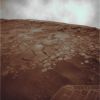
OPP-SOL1298-1N243420226EFF86L0P1909L0M1-1.jpgOn the edge of Victoria - Sol 1298 (interpret. n. 1 - possible natural colors; dominant: grey - brown/yellow; elab. Lunexit)62 visitenessun commentoMareKromium
|
|

Z-109-The_Moon-PlaskettCrater.jpgCrater Plaskett & Companions62 visiteCaption ESA:"Plaskett crater is the bottom crater in this mosaic built with images taken by the Advanced Moon Imaging Experiment (AMIE) on board ESA's SMART-1 spacecraft. Plaskett and its two Companion Craters sit near the Moon’s North Pole.
The shadow lengths can be used to calculate the height of surface features.
Data like this can be turned into virtual simulations of the surface to help engineers design suitable landers. From its rim, the full Earth would graze just above the horizon for only a few days per month. However some areas within the Crater never see the Earth.
Rozhdestvenskiy is a large lunar crater of about 177 Km of diameter at it is centered at 85,2° North and 155,4° West (just above Plaskett).
Its northern rim is just 60 Km from the North Pole".MareKromium
|
|

Jupiter-Clouds_NewHorizons_big.jpgJupiter's Clouds (from New Horizon) - HR62 visiteCaption NASA:"The New Horizons Spacecraft took some stunning images of Jupiter earlier this year while on the way out to Pluto. Famous for its Great Red Spot, Jupiter is also known for its regular, equatorial cloud bands, visible through even modest sized telescopes. The above image was taken near Jupiter's Terminator, and shows that the Jovian giant possibly has the widest diversity of cloud patterns in our Solar System. On the far left are clouds closest to Jupiter's South Pole.
Here turbulent whirlpools and swirls are seen in a dark region, dubbed a belt, that rings the Planet.
Even light colored regions, called zones, show tremendous structure, complete with complex wave patterns. The energy that drives these waves likely comes from below. New Horizons is the fastest space probe ever launched, and is zipping through the Solar System on track to reach Pluto in 2015".MareKromium
|
|
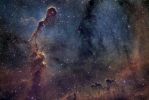
IC-1396.jpgThe "Elephant's Trunk Nebula" in IC 139662 visite"...Quando c'è da criticare e da sputare sentenze, si è sempre in grande compagnia; quando c'è da creare o difendere qualcosa, si è quasi sempre da soli..."
(antico detto popolare)MareKromium
|
|
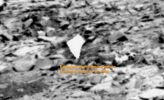
SOL1352-2P246395581EFFAVPBP2407L7M1-2.jpgExtremely "High-Albedo" Surface Feature (possible Surface Anomaly; extra-detail mgnf n. 1)62 visiteQuesto extra-detail mgnf del curioso (e luminoso) rilievo superficiale non è idoneo a chiarire - purtroppo - la reale natura dell'oggetto, ma la sensazione che si tratti di qualcosa di sottile, ricurvo e (forse) di matrice metallica esiste.
Purtroppo le nostre riflessioni devono fermarsi qui: il resto (ammesso che ci sia altro su cui soffermarsi) è rimesso al Vostro prudente apprezzamento.
Complimenti - una volta di più - al bravissimo Dr Barca!MareKromium
|
|

Comets-Comet_Holmes-TW-P17HolmesWeb3_goldman.jpgComet 17-P-Holmes and its Golden Coma62 visiteCaption NASA, da "NASA - Picture of the Day", del 3 Novembre 2007:"Surprising Comet Holmes remains easily visible as a round, fuzzy cloud in the Northern constellation Perseus. Skywatchers with telescopes, binoculars, or those that just decide to look up can enjoy the Solar System's latest prodigy as it glides about 150 MKM from Earth, beyond the orbit of Mars.
Still expanding, Holmes now appears to be about 1/3 the size of the Full Moon, and many observers report a yellowish tint to the dusty coma. A golden color does dominate this telescopic view recorded on November 1, showing variations across the coma's bright central region.
But where's the comet's tail? Like any good comet, Holmes' tail would tend to point away from the Sun. That direction is nearly along our line-of-sight behind the comet, making its tail very difficult to see". MareKromium
|
|

Dione-PIA09764.jpgThe "spiderweb like" streaks on Dione62 visiteCaption NASA:"Bright, wispy fractures streak across Dione's trailing side. Following the Voyager flybys of the early 80s, scientists considered the possibility that the streaks were bright material extruded by cryovolcanism. A quarter-century later, Cassini's close passes and sharp vision showed these features to be a system of braided canyons with bright walls.
North on Dione is up.
The image was taken in visible light with the Cassini spacecraft wide-angle camera on Sept. 30, 2007. The view was acquired at a distance of approx. 45.000 Km (such as about 28.000 miles) from Dione and at a Sun-Dione-spacecraft, or phase, angle of 36°.
Image scale is roughly 3 Km (about 2 miles) per pixel".MareKromium
|
|

SOL1366-2P247639452EFFAWCCP2414L7M1.jpgPanorama - Sol 1366 (3 - true colors; elab. Lunexit)62 visitenessun commentoMareKromium
|
|

CosmicRays.jpgCosmic Rays62 visiteWhere do Cosmic Rays come from? A major step toward answering this century old question may have just come in from the Auger Observatory Project, the world's premier Cosmic Ray Observatory. That high energy fundamental particles are barreling through the Universe has been known for about a century.
Because ultra high energy cosmic rays are so rare and because their extrapolated directions are so imprecise, no progenitor objects have ever been unambiguously implied. New results from Auger, however, indicate that 12 of 15 ultra high energy cosmic rays have sky directions statistically consistent with the positions of nearby active galactic nuclei. These galactic centers are already known to emit great amounts of light and are likely powered by large Black Holes. The Auger results also indicate that the highest energy cosmic rays are protons, since the electric charge of higher energy nuclei would force the Milky Way Galaxy's magnetic field to deflect and effectively erase progenitor source direction. MareKromium
|
|

APOLLO_10_-_AS_10-28-4012.jpgAS 10-28-4012 - Amphitheater-like Crater (MULTISPECTRUM; elab. Lunexit)62 visiteCoord.: 4,8° South Lat. and 122,5° East Long.MareKromium
|
|

SOL292-2F152297403EFF8992P1210R0M1~0.jpgFront-view of Mars at 15:48, Mars Local Time (MULTISPECTRUM- elab. Lunexit)62 visiteNessun "darkening" è stato usato per l'elaborazione in Multispectrum di questo frame Spirit. Marte un "mondo luminoso"? Nessuna certezza è ancora raggiungibile ma...Noi ne dubitiamo molto.MareKromium
|
|

OPP-SOL335-7-animation.gifMulticolored Reflections or just "something else"? (6 GIF-Movie) - Credits: Dr Gianluigi Barca62 visiteQuesto spettacolare GIF-Movie - realizzato, come dianzi dicevamo, dal nostro grandissimo Amico e Collega, il Dr Gianluigi Barca - ci mostra l'evoluzione delle Bolle di Luce nel tempo ed il loro, a nostro parere difficile da negare, "movimento" attorno all'Heat-Shield.
Se osservate con attenzione, noterete anche delle minuscole "scintille" che, di quando in quando, paiono accendersi nei pressi della superficie, vicino all'Heat-Shield e che poi, negli ultimi tre frames, ci danno la sensazione di "fuggire via", sempre viaggiando rasenti la superficie di Meridiani.
La voglia di ipotizzare e speculare, credeteci, è immensa...Ma noi ci rendiamo conto che gli elementi in nostro possesso non sono definitivi. Non sono la "prova provata" di nulla. Sono solo indizi: dei piccoli - affascinanti e misteriosi (senza dubbio) - indizi che ci devono aiutare a capire che non tutto, alle volte, è come sembra ad un'occhiata superficiale. Bisogna guardare bene, riflettere meglio e poi proporre gli elementi raccolti al vaglio del Pubblico, agendo con pragmatismo, umiltà e - perchè ci vuole e perchè è parte della natura Umana - un pizzico di immaginazione. Il Futuro, forse, ci darà le risposte che cerchiamo.
E per il momento, la domanda è (tanto per cambiare...): che cosa stiamo guardando?MareKromium
|
|
| 25353 immagini su 2113 pagina(e) |
 |
|
|
|
|
1112 | |
|
|
|
|





