| |
| Piú viste |

ESP_019193_2665_RED_abrowse.jpgExposed NPLD (Absolute Natural Colors; credits for the additional process. and color.: Dr Paolo C. Fienga - Lunexit Team)62 visitenessun commentoMareKromium
|
|

OPP-SOL2417-Intrepid_Crater-2.jpgIntrepid Crater - Sol 2417 (Approximately True Colors; credits for the additonal process. and color.: Mars Exploration Rover Mission, Cornell, JPL, NASA)62 visiteCaption NASA:"The Robotic Rover Opportunity has chanced across another small crater on Mars. Pictured above is Intrepid Crater, a 20-meter across impact basin slightly larger than Nereus Crater - another small crater that Opportunity chanced across last year.
The above image is in Approximately True Color but horizontally compressed to accommodate a wide angle panorama. Intrepid Crater was named after the Lunar Module Intrepid that carried Apollo 12 Astronauts to Earth's Moon 41 years ago last month. Beyond Intrepid Crater and past long patches of the rusty Martian Desert, lie peaks from the Rim of large Endeavour Crater, visible on the horizon.
If Opportunity will be able to avoid ridged rocks and soft sand, it may reach Endeavour sometime next year. MareKromium
|
|

Dust_Devils_Tracks-Noachis_Terra-PCF-LXTT.jpgDust Devils Tracks in Noachis Terra (Absolute Natural Colors; credits for the additional process. and color.: Dr Paolo C. Fienga - Lunexit Team)62 visitenessun commentoMareKromium
|
|
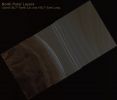
NorthernLayers-TRA_000878_2660_RED.jpgNorth Polar Layered Deposits (Absolute Natural Colors; credits for the additional process. and color.: Dr Paolo C. Fienga - Lunexit Team:)62 visitenessun commentoMareKromium
|
|
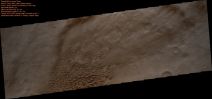
Dunes-Aonia_Terra-PIA13839-PCF-LXTT.jpgDunefield in Aonia Terra (Absolute Natural Colors; credits for the additional process. and color.: Dr Paolo C. Fienga - Lunexit Team)62 visitenessun commentoMareKromium
|
|
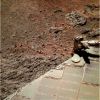
OPP-SOL2811-4-2.jpgSolar Panel and Surface - Sol 2811 (Enhanced Natural Colors; credits for the additional process. and color.: Dr Gianluigi Barca - Lunexit Team) 62 visitenessun commentoMareKromium
|
|

Volcanic_Features-Lava_Flows_in_Tharsis-PIA16335-PCF-LXTT-IPF.jpgLava Flows in Tharsis (Absolute Natural Colors; credits for the additional process. and color.: Dr Paolo C. Fienga/Lunar Explorer Italia/Italian Planetary Foundation)62 visiteOrbit Number: 48151
Latitude (centered): 11,2222° North
Longitude (East): 279,398°
Instrument: VIS
Captured: October, 21st, 2012MareKromium
|
|

Channels-Marte_Vallis-Streamlined_Islands-PIA16507-PCF-LXTT-IPF.jpgStreamlined Island in Marte Vallis (Absolute Natural Colors; credits for the additional process. and color.: Dr Paolo C. Fienga - Lunar Explorer Italia/Italian Planetary Foundation)62 visiteToday's APOD is a frame taken by the NASA - Mars Odyssey Orbiter which shows us a so-called "Streamlined Island" that formed in the Northern Channel known as Marte Vallis. This Martian Channel is about 185 Km long and it has been identified as an Outflow Channel, carved in a quite distant geological past by the action of catastrophic releases of Water from Aquifers existing beneath the Martian Surface.
Orbit Number: 47605
Latitude: 12,4105° North
Longitude: 182,426° East
Instrument: VIS
Captured: September, 6th, 2012
This frame (which is an Original Mars Odyssey Orbiter b/w frame published on the NASA - Planetary Photojournal with the ID n. PIA 16507) has been additionally processed and then colorized in Absolute Natural Colors (such as the colors that a human eye would actually perceive if someone were onboard the NASA - Mars Odyssey Orbiter and then looked down, towards the Surface of Mars), by using an original technique created - and, in time, dramatically improved - by the Lunar Explorer Italia Team.MareKromium
|
|

ZZ-Mercury-Craters-Tolstoj_Basin-PIA16663-PCF-LXTT-IPF.jpgTolstoj Basin and Surroundings (Absolute Natural Colors; credits for the additional process. and color.: Dr Paolo C. Fienga/Lunar Explorer Italia/Italian Planetary Foundation)62 visiteThis image of the Limb of the Planet Mercury shows, among other fascinating Surface Features, the location of the Impact Basin Tolstoj (approximately 350 Km - such as about 217,35 miles - in diameter). The interior of Tolstoj is filled with smooth Plains while the exterior is largely made of the so-called Low Reflectivity Material (or LRO, for short). Just to give to our Readers an idea of the real dimensions and proportions of what is visible on this part of Mercury, you have to consider that today's frame is approx. 2770 Km (such as about 1720,17 miles) across.
Date acquired: February 12th, 2013
Image Mission Elapsed Time (MET): 212797716
Image ID: 202274
Instrument: Wide Angle Camera (WAC) of the Mercury Dual Imaging System (MDIS)
Center Latitude: 8,04° South
Center Longitude: 200,07° East
Solar Incidence Angle: 60,1° (meaning that the Sun, at the time that the picture was taken, was about 29,9° above the imaged Local Mercurian Horizon)
Emission Angle: 48,1°
Sun-Mercury-Messenger (or "Phase") Angle: 96,8°
This picture (which is an Original NASA - MESSENGER Spacecraft's b/w Map-Projected frame published on the NASA - Planetary Photojournal with the ID n. PIA 16663) has been additionally processed, contrast enhanced, magnified and then colorized in Absolute Natural Colors (such as the colors that a human eye would actually perceive if someone were onboard the NASA - MESSENGER Spacecraft and then looked down, towards the Surface of Mercury), by using an original technique created - and, in time, dramatically improved - by the Lunar Explorer Italia Team. Different colors, as well as different shades of the same color, mean, among other things, the existence of different Elements (Minerals) present on the Surface of Mercury, each having a different Albedo (---> Reflectivity) and Chemical Composition.MareKromium
|
|

Chasma-Ophir_Chasma-PSP_007535_1755-PCF-LXTT-IPF.jpgFeatures of Ophir Chasma (CTX Frame - Absolute Natural Colors; credits for the additional process. and color.: Dr Paolo C. Fienga/Lunar Explorer Italia/Italian Planetary Foundation)62 visiteThe really huge Landslides existing along the Walls of Ophir Chasma (which is nothing else but a deep Canyon located in the Coprates Quadrangle of Mars, at about 4° South Latitude and 72,5° West Longitude. It is approx. 317 km long and it was so named after a "Classical Albedo Feature") host a variety of Geologic Surfaces and Mineralogies.
Some of them possess a variety of Hydrated Sulfate Minerals that formed, eons ago, in the presence of Partially Acidic Liquid Water. This NASA - Mars Reconnaissance Orbiter's Contextual (or "CTX", for short) Image, which is representing an ancient (possibly and approximately 3 Billion Years-old) Landslide, shows us the presence, within it, of 2 (two) very distinct Surface Albedoes, which, in fact, mark a Transition Zone from one Sulfate Mineralogy to another (a circumstance that proves beyod doubts the occurrence, in a far and distant past, of some remarkable variations in the evolution of the visible Surface).
The Upper Slopes (such as the ones located towards the North) are light-toned, and this fact is due to the concurrent abundance of Hydrated Sulfate Minerals and Bright Surface Dust. On the other hand, the Surfaces that make up the Southern Portion of the Landslide, are darker in tone, and this is due to the greater abundance of Dark Sediment that, in time, formed "Strings of Sand Drifts". In addition to the above, the underlying Units of Bedrock consist of Darker Minerals that received a lesser hydration then the Northern ones, and this further circumstance implies the occurrence of a strong (and, perhaps, sudden) change in the Ancient Aqueous Environments that formed them.
Mars Local Time: 14:52 (Early Afternoon)
Coord. (centered): 4,328° South Lat. and 288,657° East Long.
Spacecraft altitude: 271,0 Km (such as about 168,291 miles)
Original image scale range: 27,1 cm/pixel (with 1 x 1 binning) so objects ~ 81 cm across are resolved
Map projected scale: 25 cm/pixel
Map projection: EQUIRECTANGULAR
Emission Angle: 6,3°
Phase Angle: 52,7°
Solar Incidence Angle: 47° (meaning that the Sun was about 43° above the Local Horizon at the time the picture was taken)
Solar Longitude: 27,0° (Northern Spring - Southern Fall)
Credits: NASA/JPL/University of Arizona
Additional process. and coloring: Lunar Explorer Italia
This picture (which is a NASA - Original Mars Reconnaissance Orbiter b/w and NON-Map Projected frame identified by the serial n. PSP_007535_1755) has been additionally processed, magnified, contrast enhanced, Gamma corrected, and then colorized in Absolute Natural Colors (such as the colors that a human eye would actually perceive if someone were onboard the NASA - Mars Reconnaissance Orbiter and then looked down, towards the Surface of Mars), by using an original technique created - and, in time, dramatically improved - by the Lunar Explorer Italia Team.MareKromium
|
|

ZZ-Mercury-Craters-Unnamed_Crater-PIA18246-PCF-LXTT-IPF.jpgIntersecting Craters (Absolute Natural Colors - Credits for the additional process. and color.: Dr Paolo C. Fienga/Lunar Explorer Italia/Italian Planetary Foundation)62 visiteRunning diagonally though the scene (which is approx. 14 Km - such as about 8,69 miles - across), and running from the upper left (Sx) to the lower right (Dx) corner of the frame, you can see the Wall of an ancient Impact Ccrater that encompasses another Impact Crater known as Purcell. Purcell Crater and this other one (both quite large) are both pretty ancient, as evidenced by the numerous small Impact Craters that cover them, including their Walls. Furthermore, this High-Resolution Image taken by the NASA - MESSENGER Spacecraft on April, 11, 2014, also reveals how the small Impact Craters that formed on the Wall display some differences from the ones which formed on the Flat neighboring Surfaces. Frankly speaking, we, as IPF, honestly believe that the differences (mostly in shape) existing among these smaller Impact Craters that NASA is talknig about, may simply (and reasonalbly) be due to different Angles of Impact, rather than their age and/or the size of the Impactors that created them.
Date acquired: April, 11th, 2014
Image Mission Elapsed Time (MET): 39535979
Image ID: 6104625
Instrument: Narrow Angle Camera (NAC) of the Mercury Dual Imaging System (MDIS)
Center Latitude: 81,25° North
Center Longitude: 212,20° East
Solar Incidence Angle: 81,4° (meaning that the Sun, at the time that the picture was taken, was about 8,6° above the imaged Local Mercurian Horizon)
Emission Angle: 36,3°
Sun-Mercury-Messenger (or "Phase") Angle: 82,5
This picture (which is an Original NASA - MESSENGER Spacecraft's b/w and Map-Projected image published on the NASA - Planetary Photojournal with the ID n. PIA 18246) has been additionally processed, contrast enhanced, Gamma corrected, magnified to aid the visibility of the details and then colorized in Absolute Natural Colors (such as the colors that a human eye would actually perceive if someone were onboard the NASA - MESSENGER Spacecraft and then looked outside, towards the Surface of Mercury), by using an original technique created - and, in time, dramatically improved - by the Lunar Explorer Italia Team. Different colors, as well as different shades of the same color, mean, among other things, the existence of different Elements (Minerals) present on the Surface of Mercury, each having a different Albedo (---> Reflectivity) and Chemical Composition.MareKromium
|
|

North_Polar_Regions-The_Erg-PIA18233-PCF-LXTT-IPF.jpgFeatures of the North Polar Erg (Absolute Natural Colors; credits for the additional process. and color.: Dr Paolo C. Fienga/Lunar Explorer Italia/Italian Planetary Foundation)62 visiteIn this VIS image, taken by the NASA - Mars Odyssey Orbiter on February, 26th, 2014, and during its 54.141st orbit around the Red Planet, we can see a small area of the North Polar Erg (---> Sea of Dunes). As the season changes from Spring to Summer, the Dunes surrounding the North Polar Cap, as you can see here, become darker and darker.
Only the round and bright Feature located on the left (Sx) margin of the frame (that we have already noticed in the past, when other pictures of this very same area were taken even by other Orbiters), seems to remain - basically - unchanged during the entire Martian Year. Unfortunately, we do not know what that Feature actually is, but our educated guess is that it could reasonably be a (relatively large) patch of Permanent Ice and Frost, thick and compacted enough to resist to the Winds' Action and then make it through the whole Martian Summer, when the temperature considerably raises, without sublimating or melting.
Latitude (centered): 79,7727° North
Longitude (centered): 198,7900° East
Instrument: VIS
This image (which is an Original Mars Odyssey Orbiter b/w and Map-Projected frame published on the NASA - Planetary Photojournal with the ID n. PIA 18233) has been additionally processed, magnified to aid the visibility of the details, contrast enhanced, Gamma corrected and then colorized in Absolute Natural Colors (such as the colors that a human eye would actually perceive if someone were onboard the NASA - Mars Odyssey Orbiter and then looked down, towards the Surface of Mars), by using an original technique created - and, in time, dramatically improved - by the Lunar Explorer Italia Team.
MareKromium
|
|
| 25353 immagini su 2113 pagina(e) |
 |
|
|
|
|
1105 | |
|
|
|
|
|
|





