| Piú viste |

APOLLO_15_AS_15-96-13063.JPGAS 15-96-13063 - EVA Floodlight near Herodotus "H" and Vallis Schroteri (2)62 visiteImage Collection: 70mm Hasselblad
Mission: 15
Magazine: 96
Magazine Letter: Q
Latitude: 26° North
Longitude: 51° West
Description: EVA FLOODLIGHT
Film Type: SO-368
Film Width: 70 mm
Film Color: color
Nota Lunexit: per che cosa è tanto "famosa" la Regione Lunare di Herodotus e della Schroteri Vallis?...MareKromium
|
|

as16-107-17441.jpgAS 16-107-17441 - Cosmic Ray Experiment (additional processing by Lunexit)62 visiteCaption NASA:"143:15:05 MT - Cross-Sun of the Cosmic Ray Experiment, which is sitting in the Minus-Y Footpad. The fuel cask is beyond the strut on the side of the Descent Stage and the dome and Dome Removal Tool is under the LM farther back".MareKromium
|
|

The_Tarantula_Nebula-1.jpgThe "Tarantula Nebula"62 visite"...May the Wings of Freedom never loose their feathers..."
(Dal film "Big Trouble in Little China")MareKromium
|
|

as14-66-09320-01.jpgAS 14-66-9320 (2) - Blue Flare (nature undetermined)62 visiteUn esempio ulteriore di extra-stretch della Blue Flare che appare nel frame AS 14/9320: come vedete la texture della Blue Flare resta limpida e ben definita (un indice di "genuinità" della possibile Anomalìa), ma il "cuore" (la "sfera bianca" da cui si irradia l'illuminazione blu) NON si vede (e questo è un indice di NON genuinità della possibile Anomalìa).
Per rispondere a tanti Amici che ci hanno scritto al riguardo (citiamo fra tutti il bravissimo Titanio44) vorremmo dire che l'idea di definire la Blue Flare come un qualcosa di "certamente alieno" (alieno ----> da "estraneo" e non "man-made" per giungere sino a "evidenza di intelligenza extra-terrestre) è, ovviamente, un azzardo; tuttavia qualificare la Blue Flare - come hanno fatto in tanti, specie in alcuni Forum USA che abbiamo individuato grazie ad un Socio Americano che ci segue da tempo, nei termini di "easy and obvious image artifact (i.e.: lens flare)" è, a nostro avviso, un azzardo ancora più grande, nonchè un peccatuccio di over-semplificazione. La Blue Flare, che si creda o meno alla sua matrice non terrestre, è ancora oggi un mistero; studiarla e cercare di capire sino a che punto essa è un "corpo reale" e sino a che punto essa è invece una "illusione" è il compito dei Ricercatori Pragmatici ed Open-Minded.
"Bollare" la Blue Flare, invece e visti i dati in nostro possesso, sia come Alien Probe, sia come Lens Flare, vuol dire commettere una leggerezza enorme e, in ambo i casi, giungere ad una conclusione radicale pur trovandosi in difetto di elementi sufficienti.
Pensateci sopra e scriveteci!MareKromium
|
|
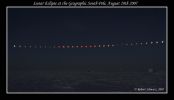
SouthPolarEclipse.jpgLunar Eclipse from the South Pole62 visiteCaption NASA:"The Moon was up continuously for 14 days in August -- when viewed from the South Pole. But during the total Lunar Eclipse on August 28, it circled only about 10° above the horizon. For Robert Scharwz, the resulting long line-of-sight through the atmosphere that blurred his images was a minor problem when he recorded this 4-hour long Lunar Eclipse sequence. A more severe problem was the outdoor air temperature of - 68° C (such as - 90 F). The extreme cold required him to make the series of exposures through a slit in a window from inside a heated room. Though the heat produced convection and further blurring, it was the only way to keep the camera at a reasonable operating temperature for an extended period of time. Still, he was rewarded with this impressive record of August's lunar eclipse from a unique perspective on planet Earth".MareKromium
|
|

Voyagers-00.gifTowards the "Terra Incognita" (1)62 visiteInterstellar Mission - Mission Objective
The mission objective of the Voyager Interstellar Mission (VIM) is to extend the NASA exploration of the Solar System beyond the neighborhood of the outer planets to the outer limits of the Sun's sphere of influence, and possibly beyond. This extended mission is continuing to characterize the outer Solar System environment and search for the heliopause boundary, the outer limits of the Sun's magnetic field and outward flow of the solar wind. Penetration of the heliopause boundary between the solar wind and the interstellar medium will allow measurements to be made of the interstellar fields, particles and waves unaffected by the solar wind.
The VIM is an extension of the Voyager primary mission that was completed in 1989 with the close flyby of Neptune by the Voyager 2 spacecraft. Neptune was the final outer planet visited by a Voyager spacecraft. Voyager 1 completed its planned close flybys of the Jupiter and Saturn planetary systems while Voyager 2, in addition to its own close flybys of Jupiter and Saturn, completed close flybys of the remaining two gas giants, Uranus and Neptune.
At the start of the VIM, the two Voyager spacecraft had been in flight for over 12 years having been launched in August (Voyager 2) and September (Voyager 1), 1977. Voyager 1 was at a distance of approximately 40 AU (Astronomical Unit - mean distance of Earth from the Sun, 150 million kilometers) from the Sun, and Voyager 2 was at a distance of approximately 31 AU.
As of July 2007, Voyager 1 was at a distance of 15.4 Billion Kilometers (103 AU) from the sun and Voyager 2 at a distance of 12.4 Billion kilometers (83 AU).
Voyager 1 is escaping the solar system at a speed of about 3.6 AU per year, 35 degrees out of the ecliptic plane to the north, in the general direction of the Solar Apex (the direction of the Sun's motion relative to nearby stars). Voyager 2 is also escaping the solar system at a speed of about 3.3 AU per year, 48 degrees out of the ecliptic plane to the south.
Both Voyagers are headed towards the outer boundary of the solar system in search of the heliopause, the region where the Sun's influence wanes and the beginning of interstellar space can be sensed. The heliopause has never been reached by any spacecraft; the Voyagers may be the first to pass through this region, which is thought to exist somewhere from 8 to 14 billion miles from the Sun. In December 2004 Voyager 1 crossed an area known as the termination shock. This is where the million-mile-per-hour solar winds slows to about 250,000 miles per hour—the first indication that the wind is nearing the heliopause. Voyager 2 is currently observing preshock phenomena, indicating that it is close to the termination shock. The Voyagers should cross the heliopause 10 to 20 years after reaching the termination shock. The Voyagers have enough electrical power and thruster fuel to operate at least until 2020. By that time, Voyager 1 will be 12.4 billion miles (19.9 billion KM) from the Sun and Voyager 2 will be 10.5 billion miles (16.9 billion KM) away. Eventually, the Voyagers will pass other stars. In about 40,000 years, Voyager 1 will drift within 1.6 light years (9.3 trillion miles) of AC+79 3888, a star in the constellation of Ophiucius. In some 296,000 years, Voyager 2 will pass 4.3 light years (25 trillion miles) from Sirius, the brightest star in the sky . The Voyagers are destined—perhaps eternally—to wander the Milky Way. For current distances, check: Mission Weekly Reports
MareKromium
|
|

OPP-SOL1293-1N242973923EFF86JZP1909R0M1.jpgVictoria's Paving - Sol 129362 visitenessun commentoMareKromium
|
|

The_Sun-Coronal_Hole.jpgCoronal Hole62 visiteCaption NASA:"The dark expanse below the Equator of the Sun is a Coronal Hole, such as a Low Density Region extending above the surface, where the Solar Magnetic Field opens freely into interplanetary space.
Shown in false color, the picture was recorded on September 19th, 2007, in Extreme Ultraviolet Light by the EIT instrument onboard the space-based SOHO observatory. Studied extensively from space since the 1960s in ultraviolet and x-ray light, Coronal Holes are known to be the source of the high-speed Solar Wind, atoms and electrons that flow outward along the open magnetic field lines.
The Solar Wind streaming from this coronal hole triggered colorful auroral displays on planet Earth begining late last week, enjoyed by spaceweather watchers at high latitudes".MareKromium
|
|
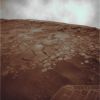
OPP-SOL1298-1N243420226EFF86L0P1909L0M1-1.jpgOn the edge of Victoria - Sol 1298 (interpret. n. 1 - possible natural colors; dominant: grey - brown/yellow; elab. Lunexit)62 visitenessun commentoMareKromium
|
|

Z-110-The_Moon-PlaskettCrater-00.jpgThe Spectacular Crater Plaskett62 visiteCaption ESA:"This image, taken by the Advanced Moon Imaging Experiment (AMIE) on board ESA's SMART-1 spacecraft, shows crater Plaskett on the Moon.
This image was taken by SMART-1 from its polar orbit, at an altitude of 3000 Km over the surface and with a ground resolution of 300 mt per pixel.
Plaskett crater sits at 82,1° North and 174,0° East, with its centre just 240 Km away from the Lunar North Pole.
The crater, about 109 Km across, is named after the Canadian astronomer John Stanley Plaskett (1865–1941)".MareKromium
|
|

Z-109-The_Moon-PlaskettCrater.jpgCrater Plaskett & Companions62 visiteCaption ESA:"Plaskett crater is the bottom crater in this mosaic built with images taken by the Advanced Moon Imaging Experiment (AMIE) on board ESA's SMART-1 spacecraft. Plaskett and its two Companion Craters sit near the Moon’s North Pole.
The shadow lengths can be used to calculate the height of surface features.
Data like this can be turned into virtual simulations of the surface to help engineers design suitable landers. From its rim, the full Earth would graze just above the horizon for only a few days per month. However some areas within the Crater never see the Earth.
Rozhdestvenskiy is a large lunar crater of about 177 Km of diameter at it is centered at 85,2° North and 155,4° West (just above Plaskett).
Its northern rim is just 60 Km from the North Pole".MareKromium
|
|

Jupiter-Clouds_NewHorizons_big.jpgJupiter's Clouds (from New Horizon) - HR62 visiteCaption NASA:"The New Horizons Spacecraft took some stunning images of Jupiter earlier this year while on the way out to Pluto. Famous for its Great Red Spot, Jupiter is also known for its regular, equatorial cloud bands, visible through even modest sized telescopes. The above image was taken near Jupiter's Terminator, and shows that the Jovian giant possibly has the widest diversity of cloud patterns in our Solar System. On the far left are clouds closest to Jupiter's South Pole.
Here turbulent whirlpools and swirls are seen in a dark region, dubbed a belt, that rings the Planet.
Even light colored regions, called zones, show tremendous structure, complete with complex wave patterns. The energy that drives these waves likely comes from below. New Horizons is the fastest space probe ever launched, and is zipping through the Solar System on track to reach Pluto in 2015".MareKromium
|
|
| 25353 immagini su 2113 pagina(e) |
 |
|
|
|
|
1098 | |
|
|
|
|





