| Piú viste |
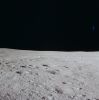
APOLLO_14_AS_14-66-9290_(HR).jpgAS 14-66-9290 (HR) - Looking for the Blue Flare... (2)62 visiteMa si tratterà poi davvero della Blue Flare che ha colto di sorpresa ed ha affascinato, assieme a migliaia di Private Researchers, anche la NASA, oppure siamo davanti ad un nuovo caso di superimposed image/photoartifact e cioè un dettaglio controverso (ergo - spesso - una possibile Anomalìa) il quale, assente nella versione raw del frame originale, poi appare misteriosamente nelle sue versioni digitalmente ripulite ed elaborate in HR?
MareKromium
|
|

APOLLO_14_AS_14-66-9293_(HR).jpgAS 14-66-9293 (HR) - Looking for the Blue Flare... (5)62 visitenessun commentoMareKromium
|
|
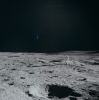
APOLLO_14_AS_14-66-9301_(HR).jpgAS 14-66-9301 (HR) - Looking for the Blue Flare... (13)62 visiteCaption NASA:"Ed is still doing a TV pan. Note the ridge behind him, still partially in shadow. Cone Crater is on a portion of this ridge that is off the picture to the right, virtually up-Sun (East) of the Landing Site".MareKromium
|
|

APOLLO_14_AS_14-66-9316_(HR).jpgAS 14-66-9316 (HR) - Looking for the Blue Flare... (16)62 visitenessun commentoMareKromium
|
|

Saturn_Venus.jpgEvening Friends62 visite"...Sanctum hoc poetae nomen quod nulla umquam barbaria violavit..."
(Cicerone - "Pro Archia")
"...Venerato è il nome di Poeta, poichè nessuna barbarie potè violarlo..."MareKromium
|
|

as17-147-22599.JPGAS 17-147-22599 - ALSEP Panorama: Wessex Cleft, Sculptured Hills and North Massif62 visiteALSEP pan. Gene standing upright at the deepcore hole. Wessex Cleft is behind him, with the Sculptured Hills to the right of the Cleft and the North Massif to the left. Note the raindrop pattern in the foreground soil.
MareKromium
|
|

CloudsandStars.jpgIn the twilights...62 visitenessun commentoMareKromium
|
|

M-008-92.jpgM 8 - The "Lagoon Nebula"62 visite"...Veritas, vel mendacio, vel silentio, corrumpitur..."
(Cicerone)
"...La Verità è corrotta sia dalla menzogna, sia dal silenzio (e cioè la "non diffusione" della Verità è altresì causa della sua corruzione - intesa come rovina, dimenticanza)MareKromium
|
|
SOL773-2P194990146EFFAPDAP2514R1M1.jpgLight shadow over sharp rocks - Sol 773 (natural colors - elab. Lunexit)62 visitenessun commentoMareKromium
|
|

The_Tarantula_Nebula-1.jpgThe "Tarantula Nebula"62 visite"...May the Wings of Freedom never loose their feathers..."
(Dal film "Big Trouble in Little China")MareKromium
|
|

Voyagers-00.gifTowards the "Terra Incognita" (1)62 visiteInterstellar Mission - Mission Objective
The mission objective of the Voyager Interstellar Mission (VIM) is to extend the NASA exploration of the Solar System beyond the neighborhood of the outer planets to the outer limits of the Sun's sphere of influence, and possibly beyond. This extended mission is continuing to characterize the outer Solar System environment and search for the heliopause boundary, the outer limits of the Sun's magnetic field and outward flow of the solar wind. Penetration of the heliopause boundary between the solar wind and the interstellar medium will allow measurements to be made of the interstellar fields, particles and waves unaffected by the solar wind.
The VIM is an extension of the Voyager primary mission that was completed in 1989 with the close flyby of Neptune by the Voyager 2 spacecraft. Neptune was the final outer planet visited by a Voyager spacecraft. Voyager 1 completed its planned close flybys of the Jupiter and Saturn planetary systems while Voyager 2, in addition to its own close flybys of Jupiter and Saturn, completed close flybys of the remaining two gas giants, Uranus and Neptune.
At the start of the VIM, the two Voyager spacecraft had been in flight for over 12 years having been launched in August (Voyager 2) and September (Voyager 1), 1977. Voyager 1 was at a distance of approximately 40 AU (Astronomical Unit - mean distance of Earth from the Sun, 150 million kilometers) from the Sun, and Voyager 2 was at a distance of approximately 31 AU.
As of July 2007, Voyager 1 was at a distance of 15.4 Billion Kilometers (103 AU) from the sun and Voyager 2 at a distance of 12.4 Billion kilometers (83 AU).
Voyager 1 is escaping the solar system at a speed of about 3.6 AU per year, 35 degrees out of the ecliptic plane to the north, in the general direction of the Solar Apex (the direction of the Sun's motion relative to nearby stars). Voyager 2 is also escaping the solar system at a speed of about 3.3 AU per year, 48 degrees out of the ecliptic plane to the south.
Both Voyagers are headed towards the outer boundary of the solar system in search of the heliopause, the region where the Sun's influence wanes and the beginning of interstellar space can be sensed. The heliopause has never been reached by any spacecraft; the Voyagers may be the first to pass through this region, which is thought to exist somewhere from 8 to 14 billion miles from the Sun. In December 2004 Voyager 1 crossed an area known as the termination shock. This is where the million-mile-per-hour solar winds slows to about 250,000 miles per hour—the first indication that the wind is nearing the heliopause. Voyager 2 is currently observing preshock phenomena, indicating that it is close to the termination shock. The Voyagers should cross the heliopause 10 to 20 years after reaching the termination shock. The Voyagers have enough electrical power and thruster fuel to operate at least until 2020. By that time, Voyager 1 will be 12.4 billion miles (19.9 billion KM) from the Sun and Voyager 2 will be 10.5 billion miles (16.9 billion KM) away. Eventually, the Voyagers will pass other stars. In about 40,000 years, Voyager 1 will drift within 1.6 light years (9.3 trillion miles) of AC+79 3888, a star in the constellation of Ophiucius. In some 296,000 years, Voyager 2 will pass 4.3 light years (25 trillion miles) from Sirius, the brightest star in the sky . The Voyagers are destined—perhaps eternally—to wander the Milky Way. For current distances, check: Mission Weekly Reports
MareKromium
|
|
OPP-SOL1293-1N242973923EFF86JZP1909R0M1.jpgVictoria's Paving - Sol 129362 visitenessun commentoMareKromium
|
|
| 25353 immagini su 2113 pagina(e) |
 |
|
|
|
|
1087 | |
|
|
|
|





