| Piú viste |
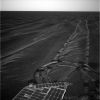
OPP-SOL366-1N160677904EFF42D9P1637R0M1.jpgTracks and dunes (1) - Sol 36662 visiteOsservate questo frame: le profonde tracce lasciate dal Rover Opportunity mentre si allontana da Endurance Crater e dallo Scudo Termico si affiancano (ed anche sovrappongono) ad alcune dune che, in ragione della loro forma, abbiamo battezzato Side-Winders. Ora riflettiamo un pò: come si formano le dune? E quali condizioni MINIME devono verificarsi affinchè le dune si formino?
Le dune si formano grazie al vento il quale, in un certo senso, modella le sabbie. Ma le sabbie, per essere "modellate", come devono essere? Diremmo "sottili" e "asciutte", come minimo!
Allora la domanda che ci poniamo - così sposando la Teoria del Dr Feltri - è molto semplice: dato e premesso che le sabbie di Meridiani Planum (e forse dell'intero Pianeta Rosso), a quanto ci è dato vedere e capire, hanno una consistenza simile a quella della "terra bagnata" (osservate ancora le tracce lasciate dalle ruote dei Rover per renderVi conto bene!), come accidenti fa il vento a modellarle???
|
|

Enceladus-PIA06581_modest.jpgEnceladus: getting closer...62 visiteCaption NASA originale:"This Cassini image of Saturn's moon Enceladus shows a region containing bizarre, wrinkled terrain. Enceladus is covered with bright water ice. The part of its surface visible here appears to be largely free of craters - indicating that it is geologically young (NOTA LUN-EX-IT: la mancanza di crateri non è solo indice di "gioventù geologica"; essa può anche essere dipendente dal fatto - improbabile ma da NON escludersi a-priori - che taluni processi geologici sìano ancora in corso!
Il tutto senza escludere la possibilità - anch'essa remota ma non assurda - che Encelado sia stata una "luna fortunata" e bombardata in misura inferiore rispetto alle altre...).
The first close imaging of this moon will be done by Cassini in February 2005 and should reveal many surprises. Enceladus has a diameter of 499 Km (310 miles). This view shows primarily the leading hemisphere of Enceladus and it was taken from a distance of 367.000 Km. Resolution in the original image was about 2 Km per pixel".
|
|
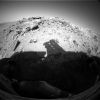
SOL409-2F162678127EFFA800P1214L0M1.jpgAnomalous stones (1)62 visiteScusateci la assoluta banalità e prevedibilità di questo titolo, ma Vi sarà sufficiente dare anche solo una rapida e distratta occhiata a questo frame ed a quelli che seguiranno per verificare la totale bizzarria di questo paesaggio il quale - sebbene da svariati punti di vista e per molteplici motivi ci appare sempre meno "reale" e sempre più "virtuale"... - resta comunque di grande suggestione. La domanda-base che ci poniamo (e cioè "che cosa esattamente stiamo guardando?") resta, tuttavia, ancora senza una risposta credibile.
|
|

OPP-SOL385-1N162372890EDN45HLF0006R0M1.jpgSide-Winders, on Sol 385 (4)62 visiteCome avete visto, queste "dunette sinuose" evidenziano alcune peculiarità le quali sembrano avere colpito anche i Tecnici del Centro Controllo Missione. Guardatele attentamente anche Voi e poi provate a mettere a confronto le immagini dei Side-Winders di Meridiani Planum con le tracce lasciate dai serpenti sulle sabbie dei deserti terrestri: sono, dimensioni a parte, tracce davvero MOLTO simili.
Attenzione però: dato che ogni cosa che viene detta in questo campo - specie se curiosa o stravagante - tende, di regola, ad essere rapidamente ripresa e fraintesa, noi desideriamo puntualizzare a chiare lettere che l'analogia stabilita fra dunette Marziane e tracce di serpenti è una semplice "curiosità", nulla di più.
Noi NON abbiamo MAI detto nè IMPLICATO che i Side-Winders Marziani sìano il risultato (!) del passaggio di ciclopici serpenti sulla superficie di Meridiani Planum!
|
|
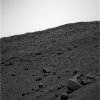
SOL418-2P163473227EFFA808P2374R1M1.jpgBoulders (2)62 visiteC'è solo un leggerissimo cambio di prospettiva rispetto al frame precedente; un cambio necessario (dall'occhio Sx all'occhio Dx del Rover) per realizzare il cosiddetto "stereo-pair" e quindi riuscire ad elaborare una versione 3D di questo scorcio.
|
|

Uranus-uppatm-PIA01488.jpgHaze in the upper atmosphere of Uranus62 visiteCaption NASA originale:"This is a computer enhancement of a Voyager 2 image, that emphasizes the high-level haze in Uranus' upper atmosphere. Notice how the clouds are obscured by the overlying atmosphere".
|
|

Uranus-HST-PIA01279.jpgUranus from Hubble Space Telescope62 visiteCaption NASA originale:"Uranus is sometimes called the sideways planet, because its rotation axis tipped more than 90° from the planet's orbit around the Sun. The year on Uranus lasts 84 Earth years, which creates extremely long seasons - winter in the Northern Hemisphere has lasted for nearly 20 years. Uranus has also been called bland and boring, because no clouds have been detectable in ground-based images of the planet. Even to the cameras of the Voyager spacecraft in 1986, Uranus presented a nearly uniform blank disk and discrete clouds were detectable only in the Southern Hemisphere. Voyager flew over the Planet's cloud tops near the dead of northern winter (when the northern hemisphere was completely shrouded in darkness).
Two images are shown here. The "aqua" image (on the left) is taken at 5,470 Angstroms, which is near the human eye's peak response to wavelength. Color has been added to the image to show what a person on a spacecraft near Uranus might see. Little structure is evident at this wavelength, though with image-processing techniques, a small cloud can be seen near the planet's northern limb (rightmost edge). The "red" image (on the right) is taken at 6,190 Angstroms, and is sensitive to absorption by methane molecules in the planet's atmosphere. The banded structure of Uranus is evident, and the small cloud near the northern limb is now visible".
|
|

NGC-2266.jpgNGC 2266 - Open Star Cluster62 visiteDa "NASA - Picture of the Day" del 19 Marzo 2005:" The New General Catalog of star clusters and nebulae really isn't so new. In fact, it was published in 1888 - an attempt by J. L. E. Dreyer to consolidate the work of astronomers William, Caroline and John Herschel along with others into a useful single, complete catalog of astronomical discoveries and measurements. Dreyer's work was successful and is still important today as this famous catalog continues to lend its "NGC" to bright clusters, galaxies and nebulae. Take for example this star cluster known as NGC 2266 (item number 2.266 in the NGC compilation). It lies about 10.000 LY distant in the constellation Gemini and represents an open or galactic cluster. With an age of about 1 BY, NGC 2266 is old for a galactic cluster. Its evolved red giant stars are readily apparent in this gorgeous three-color image".
|
|

Saturn-N00031212.jpgPan and Epimetheus (from approx. 1,5 MKM)62 visitenessun commento
|
|

Claritas_Fossae-2-029-290304-0068-6-co-02.jpgClaritas Fossae (2 - ESA/ DLR/ FU Berlin - G. Neukum)62 visitevedi il commento al frame che precede
|
|

Craters-Benedictus_XVI-PIA07838.jpgImpact Crater with frost deposits (Benedictus XVI Crater - Original NASA/JPL/MSSS b/w Frame)62 visiteLocation near: 37,5° South Lat. and 222,1° West Long.
Image width: ~3 Km (~1,9 mi)
Illumination from: upper left
Season: Southern Winter
Lunar Explorer Italia, in passato, ha spesso 'battezzato' crateri e rilievi Marziani i quali - ufficialmente - non hanno nome, usando un pizzico di fantasia e cercando di rimanere rispettosa della tradizione Astronomica e Scientifica in materia di nomenclatura. Oggi, 19 Aprile 2005, abbiamo pubblicato la foto di questo "frosty crater", anch'esso senza nome.
Ebbene, anche se la Scienza e la Fede sono Entità profondamente diverse (e sovente in disaccordo, come la Storia ci insegna e racconta) e sebbene Lunar Explorer Italia sia un'Associazione laica in tutto e per tutto, riteniamo giusto rendere omaggio in qualche modo al Nuovo Pontefice della Santa Romana Ecclesia e quindi battezziamo questo imponente rilievo Marziano con il nome di "Benedetto Decimo-Sesto".
|
|

Titan-Craters-Unnamed_Crater-PIA07868_fig1.jpgTitan's most prominent Impact Crater62 visiteCaption NASA originale:"This 3-panel image shows one of Titan's most prominent impact craters in an infrared-wavelength image (left), radar image (center) and in the false-color image (right). The Cassini radar imaged this crater during Cassini's 3rd flyby of Titan, on Feb. 15, 2005. The Crater, located at 16° West, 11°North, is about 80 Km in diameter and is surrounded beyond that by a blanket of material thrown out of the crater during impact. In radar, brighter surfaces mean rougher terrains, or else terrains tilted toward the radar. The Crater has a dark floor and a small bright area in the center and it is surrounded by bright material, which has a very faint halo slightly darker than the surrounding dark material".
|
|
| 25353 immagini su 2113 pagina(e) |
 |
|
|
|
|
1083 | |
|
|
|
|





