| Piú viste |

OPP-SOL1997.jpgBlock Island in Natural Colors - Sol 1997 (credits: Dr G. Barca)63 visitenessun commentoMareKromium
|
|
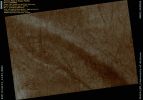
ESP_014272_1245_RED_abrowse.jpgEsker in Southern Argyre Planitia (Natural Colors; credits: Lunexit)63 visiteThough a variety of origins have been proposed, this sinuous, layered, boulder-filled deposit in the Southern Argyre Planitia is likely an "Esker".
"Eskers" form in wet-based glaciers, when water flows inside or below the glaciers and deposits sediment. After the ice melts, the sediment is left behind as a ridge.
Because the material is deposited by flowing water, the sediment in Eskers is sorted: larger rocks, pebbles, sand grains, etc. are deposited first, and smaller sediment - such as smaller pebbles, sand, or clay - are deposited further from the source and on top of the coarser material.
Several factors (including the amount of sediment available, the speed and volume of the flowing water, and the slope over which it flowed) determine how much sediment is deposited and how large the dominant grain size is. There may be many of these sequences preserved within an Esker.
Eskers look a little like Inverted River Beds. One relatively simple way to differentiate between the two is that IRBs record flow in a downhill direction along their entire length.
Eskers, on the other hand, can record flow both down- and uphill. This is possible because water flowing through the ice tunnels in glaciers is under pressure, just like water in a hose.
This particular Esker is part of a branching and braided network of Ridges in the Southern Argyre Basin.
The boulders are on the order of 1-3 meters (about 3-10 feet) in diameter.MareKromium
|
|

ESP_014139_2070_RED_abrowse-00.jpgPhyllosilicates Deposit North Mawrth Vallis (Natural Colors)63 visitenessun commentoMareKromium
|
|

NGC-3372-2.jpgNGC 3372 - Carina Nebula63 visite"...Spesso mi chiedo quale sia davvero il motivo per cui un individuo che, da vivo, era un gran bastardo, una volta defunto debba diventara un "Buon Diavolo"..."
P.C. Floegers - "Conversations"MareKromium
|
|

LRO-1006-392811main_vlcsnap-2009-10-09-04h20m01s95_full.jpgLCROSS impacting the Moon63 visiteThe LCROSS mission operations team initiated power-up of the LCROSS science payload and saw this view of the Moon.MareKromium
|
|

Sharpless-171.jpgSharpless 171 (HR)63 visite"...La ricerca della Saggezza non è saggia, e neppure prudente.
E' distruttiva.
Non cancella i tuoi limiti, te li fa vedere.
Non toglie la solitudine, te la fa apprezzare.
Piu' impari, piu' sei solo.
"Piu' sapienza, piu' affanno", come dice Qoelet.
"Piu' carne, piu' vermi"..."
Pialuisa BiancoMareKromium
|
|

ESP_014380_1775_RED_abrowse-00.jpgExtremely Unusually-looking Skylight, N/E of Arsia Mons (CTX frame)63 visiteDopo il possibile Skylight recentissimamente individuato sulla Luna grazie ad immagini orbitali ottenute della Sonda Nipponica "Kaguya" e dopo i vari "Buchi su Marte" (pozzi da collasso) individuati dalla Sonda MRO nei mesi trascorsi, ecco un nuovo (possibile) Pozzo Marziano la cui forma - come meglio vedrete nei successivi EDM realizzati dal nostro sempre bravo e puntuale Dr Barca - è decisamente inusuale.
In realtà, il collasso non sembra essersi aperto su un normale "lava tube" (ossìa una galleria sotterranea attraverso la quale, un tempo, scorse della lava fusa), bensì sopra una grande caverna sul cui fondo pare proprio che sorga un "mound", ossìa un dosso, una collinetta dai fianchi dolci e smussati.
Una collinetta sotterranea che, come vedrete, occupa tutta la porzione Ovest del pozzo.
I margini del pozzo sono, come sempre, estremamente frastagliati (chiari segni di un cedimento tanto devastante, quanto improvviso) e - presumibilmente - scoscesi.
Attendiamo nuove immagini con diverse geometrie di illuminazione per poter vedere e quindi dire qualcosa di più su questa nuova e, come sempre, affascinante Martian Surface Feature.MareKromium
|
|

Vision.jpgGalactic Vision63 visitenessun commentoMareKromium
|
|

BlueSun.jpgBlue Sun63 visiteDa "NASA - Picture of the Day" del giorno 4 Novembre 2009:"Our Sun may look like all soft and fluffy, but it is not. Our Sun is an extremely large ball of bubbling hot gas, mostly Hydrogen gas. The above picture of our Sun was taken last month in a specific red color of light emitted by Hydrogen gas called "Hydrogen-alpha" and then color inverted to appear blue.
In this light, details of the Sun's Chromosphere are particularly visible, highlighting numerous thin tubes of magnetically-confined hot gas known as spicules rising from the Sun like bristles from a shag carpet.
Our Sun glows because it is hot, but it is not on fire. Fire is the rapid acquisition of Oxygen, and there is very little Oxygen on the Sun. The energy source of our Sun is the nuclear fusion of Hydrogen into Helium deep within its core. No Sunspots or large active regions were visible on the Sun this day, although some Solar Prominences are visible around the edges".MareKromium
|
|

SOL2047-MFsoundcodeEXPLAN-02.mp3Martian Sounds, from Sol 204763 visitenessun commentoMareKromium
|
|
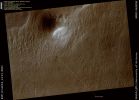
ESP_014264_2235_RED_abrowse-00.jpgSigns of a possible (and recent) "Mid-Air Meteor Strike" (CTX Frame - Natural Colors; credits: Lunexit)63 visitenessun commentoMareKromium
|
|

OPP-SOL400-1P163689595EFF5000P2663L6M1.jpgLow Sun over Meridiani - Sol 40063 visitenessun commentoMareKromium
|
|
| 25353 immagini su 2113 pagina(e) |
 |
|
|
|
|
1082 | |
|
|
|
|





