| Piú viste |
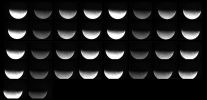
Volcanoes-Arsia_Mons-Eruption-02.jpgArsia Mons is erupting? (ALL available frames - a Photo-Mosaic by Dr Marco Faccin - Lunexit Team)63 visitenessun commentoMareKromium
|
|
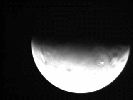
Volcanoes-Arsia_Mons-Eruption-03.gifArsia Mons is erupting? (a GIF-Movie by: Dr Marco Faccin - Lunexit Team)63 visitenessun commentoMareKromium
|
|

LRO-0007a-369443main_lroc_apollo16_lrg.jpgDescartes Highlands: the Apollo 16 Landing Site (ctx frame)63 visitenessun commentoMareKromium
|
|

Jupiter-Impact-2010-002.jpgImpact on Jupiter! (edm)63 visitenessun commentoMareKromium
|
|

Panoramic-AS16-107-17483-17485.jpgFrom AS 16-107-17483 until 17485 (EVA-2; Station 4 Crater)63 visitenessun commentoMareKromium
|
|

Titan-PIA11542.jpgEnchanted Titan (Natural Colors; credits: Lunar Explorer Italia)63 visiteCaption NASA:"The Cassini Spacecraft looks toward Fensal and Aztlan, two dark areas near the Equator of Titan.
Like other albedo features on Titan, these areas are named after enchanted places or paradises from legends and myths from the World's Cultures. Fensal, the name of the area on the left, is a magnificent mansion in Norse mythology. Aztlan, the name of the dark area on the right of the image, is an Aztec mythical land.
Lit Terrain seen here is mostly on the Leading Hemisphere of Titan. North on Titan is up and rotated 38° to the left.
The image was taken with the Cassini Spacecraft narrow-angle camera on May 25, 2009 using a spectral filter sensitive to wavelengths of Near-InfraRed light centered at 938 nanometers.
The view was acquired at a distance of approx. 1,3 MKM (about 808.000 miles) from Titan and at a Sun-Titan-Spacecraft, or Phase, Angle of 25°.
Image scale is roughly 8 Km (about 5 miles) per pixel".MareKromium
|
|

SOL1976-GB1.jpgSearching in the Sands... - Sol 1976 (Natural Colors; credits: Dr G. Barca)63 visitenessun commentoMareKromium
|
|
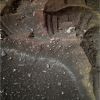
SOL1977-GB.jpgDeep Rover Tracks - Sol 1977 (possible True Colors; credits: Dr G. Barca)63 visitenessun commentoMareKromium
|
|
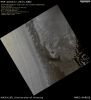
PSP_009357_2655_RED_abrowse-00.jpgSmall Cavi and Contact Relationships in the North Pole (Natural Colors; credits: Lunexit)63 visitenessun commentoMareKromium
|
|

Solar_Eclipse~0.jpgA "Diamond Ring" among the clouds63 visiteDa "NASA - Picture of the Day" del giorno 8 Agosto 2009:"Cloudy skies over Wuhan, China hid the delicate Solar Corona during July's Total Eclipse of the Sun. Still, the Moon's silhouette was highlighted by these glistening diamonds as the Total Eclipse Phase ended. Caused by bright Sunlight streaming through dips and valleys in the irregular terrain along the Moon's edge, the effect is known as Baily's Beads, named after Francis Baily who called attention to the phenomenon in 1836.
The dramatic appearance of the beads at the beginning or end of a Total Solar Eclipse is also known as the Diamond Ring effect. In this remarkable image, a small, pinkish solar prominence can also be seen along the edge, below the diamonds".MareKromium
|
|
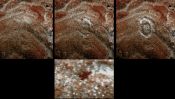
SOL2006-MF2-LXT.jpgControversial Surface Feature - Sol 2006 (Superdefinition and Natural - but enhanced - Colors; credits: Dr M. Faccin & Lunexit)63 visitenessun commentoMareKromium
|
|

ColorfulReality.jpgEmissions (by Marco Faccin)63 visitenessun commentoMareKromium
|
|
| 25353 immagini su 2113 pagina(e) |
 |
|
|
|
|
1081 | |
|
|
|
|





