| Piú viste |

OPP-SOL570-2.jpgSolar Panels and Paving - Sol 570 (possible True Colors; credits: Dr G. Barca & Lunexit)63 visiteUna curiosità: osservate il sasso a forma di parallelepipedo che "emerge" quasi a centro frame. A parte il suo colore (grigio-bluetto), unico ed indefinibile - e "scorrelato" dal resto del paesaggio al quale esso accede -, c'è pure un altro piccolo - ma ben visibile - particolare che rende questo minuscolo rilievo "intrigante": sapreste dire qual'è e perchè si tratta di un dettaglio peculiare?
Per le risposte, usate pure la funzione "commenti". In caso di mancate o errate risposte, le note ulteriori ariveranno tra 24 ore...Buon Lavoro!MareKromium
|
|
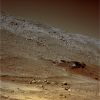
SOL867-3.jpgDark Mars - Sol 867 (possible natural colors; credits: Dr G. Barca & Lunexit)63 visitenessun commentoMareKromium
|
|

Venus___Jupiter.jpgChilean Skyscape63 visitenessun commentoMareKromium
|
|

PSP_009334_2275_RED.jpgThermophysical Boundary (possible True Colors; credits: Lunar Explorer Italia)63 visiteMars Local Time: 15:14 (early afternoon)
Coord. (centered): 47,0° North Lat. and 118,4° East Long.
Spacecraft altitude: 304,8 Km (such as about 190,5 miles)
Original image scale range: 30,5 cm/pixel (with 1 x 1 binning) so objects ~61 cm across are resolved
Map projected scale: 25 cm/pixel
Map projection: EQUIRECTANGULAR
Emission Angle: 0,4°
Phase Angle: 44,5°
Solar Incidence Angle: 44° (meaning that the Sun is about 46° above the Local Horizon)
Solar Longitude: 102,7° (Northern Summer)
Credits: NASA/JPL/University of Arizona
Additional process. and coloring: Lunar Explorer ItaliaMareKromium
|
|

SOL208-2R144843263FFL8400P1313L0M1-A208R1.jpgSmiling Sun...63 visitenessun commentoMareKromium
|
|
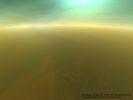
Huygens-Down-03.jpgHuygens' Descent to Titan: 90 Km from the Surface (credits: R. Pascal)63 visiteThe blue color of the sky slowly vanishes with decreasing distance to the Surface and is replaced by a brownish tint. Huygens is still above a layer of complex organic condensate haze, that prevents a clear view down to the Surface.MareKromium
|
|
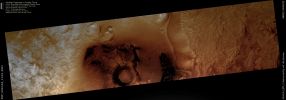
PSP_006504_1910_RED_abrowse-00~0.jpgAeolian Features in Arabia Terra (MULTISPECTRUM; credits: Lunexit)63 visiteThis observation shows part of the floor of a large impact crater in Arabia Terra. This crater formed in the distant past when a large asteroid or comet struck Mars, and it has been heavily modified since formation.
The crater was partially filled by sediments, forming the rock outcrops and layers visible in this image.
After this material was laid down, part of the deposits were eroded away. The central part of the image has been carved especially deeply, forming a distinct depression.
This depression has been a site of aeolian transport of sand in more recent times. A particularly interesting aspect of this site is that there appears to have been multiple styles of aeolian activity. Both large sand dunes (the dark hills) and smaller ripples (sharp, light-toned narrow ridges) are visible.
While ripples are often found in association with dunes, the different colors suggest that the material is not the same.
(At full resolution, the surfaces of both the dunes and the large ripples are covered with much smaller ripples)
Even where the ripples and dunes are in contact, there is a distinct contrast between the materials: dark sand appears to fill a trough between two large light ripples, suggesting that the dark sand has moved more recently. This could be due to different grain sizes, since certain sizes are most easily lifted by the wind.MareKromium
|
|
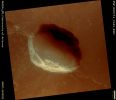
PSP_009751_1645_RED.jpgPit in Southeastern Syria Planum (possible True Colors; credits: Lunar Explorer Italia)63 visiteMars Local Time: 15:32 (middle afternoon)
Coord. (centered): 15,4° North Lat. and 261,7° East Long.
Spacecraft altitude: 251 Km (such as about 156,9 miles)
Original image scale range: 25,1 cm/pixel (with 1 x 1 binning) so objects ~75 cm across are resolved
Map projected scale: 25 cm/pixel
Map projection: EQUIRECTANGULAR
Emission Angle: 5°
Phase Angle: 68°
Solar Incidence Angle: 64° (meaning that the Sun is about 26° above the Local Horizon)
Solar Longitude: 117,6° (Northern Summer)
Credits: NASA/JPL/University of Arizona
Additional process. and coloring: Lunar Explorer ItaliaMareKromium
|
|
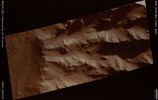
PSP_009789_1660_RED.jpgCoprates' Wall (possible True Colors; credits: Lunar Explorer Italia)63 visiteMars Local Time: 15:42 (middle afternoon)
Coord. (centered): 14,1° South Lat. and 306,6° East Long.
Spacecraft altitude: 289,5 Km (such as about 180,9 miles)
Original image scale range: 29 cm/pixel (with 1 x 1 binning) so objects ~87 cm across are resolved
Map projected scale: 25 cm/pixel
Map projection: EQUIRECTANGULAR
Emission Angle: 26,4°
Phase Angle: 46,9°
Solar Incidence Angle: 65° (meaning that the Sun is about 25° above the Local Horizon)
Solar Longitude: 118,9° (Northern Summer)
Credits: NASA/JPL/University of Arizona
Additional process. and coloring: Lunar Explorer ItaliaMareKromium
|
|

PSP_009878_2605_RED.jpgUnconformity in Gemina Lingula Layered Deposits (possible True Colors; credits: Lunar Explorer Italia)63 visiteMars Local Time: 15:15 (early afternoon)
Coord. (centered): 80,3° South Lat. and 22,6° East Long.
Spacecraft altitude: 340,6 Km (such as about 212,9 miles)
Original image scale range: 34,1 cm/pixel (with 1 x 1 binning) so objects ~1,02 mt across are resolved
Map projected scale: 25 cm/pixel
Map projection: EQUIRECTANGULAR
Emission Angle: 21,1°
Phase Angle: 45,9°
Solar Incidence Angle: 63° (meaning that the Sun is about 27° above the Local Horizon)
Solar Longitude: 122,2° (Northern Summer)
Credits: NASA/JPL/University of Arizona
Additional process. and coloring: Lunar Explorer ItaliaMareKromium
|
|

The_Indwellers.jpgThe Indwellers (by Roberto Tremolada)63 visitenessun commentoMareKromium
|
|
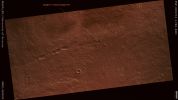
PSP_009765_1780_RED.jpgPossible Skylight Near Arsia Mons (possible True Colors; credits: Lunar Explorer Italia)63 visiteMars Local Time: 15:29 (early afternoon)
Coord. (centered): 2,1° South Lat. and 237,8° East Long.
Spacecraft altitude: 159,8 Km (such as about 162,4 miles)
Original image scale range: 26 cm/pixel (with 1 x 1 binning) so objects ~78 cm across are resolved
Map projected scale: 25 cm/pixel
Map projection: EQUIRECTANGULAR
Emission Angle: 5,4°
Phase Angle: 61,0°
Solar Incidence Angle: 57° (meaning that the Sun is about 33° above the Local Horizon)
Solar Longitude: 118,1° (Northern Summer)
Credits: NASA/JPL/University of Arizona
Additional process. and coloring: Lunar Explorer Italia
Nota Lunexit: "Skylight" ----> curiosa, ma bella, espressione NASA che indica un pozzo da collasso a camino verticale.MareKromium
|
|
| 25353 immagini su 2113 pagina(e) |
 |
|
|
|
|
1080 | |
|
|
|
|





