| Piú viste |
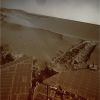
OPP-SOL1632-1N273077584EFF90MRP0743L0M2.jpgDusty Solar Panels and Deep Tracks - Sol 1632 (tri-chromatic version; credits: Lunexit)63 visitenessun commentoMareKromium
|
|
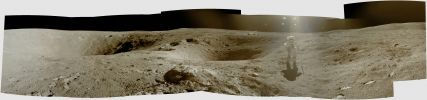
Panoramic-AS16-114-18417-18426.jpgFrom AS 16-114-18417 until 18426 (EVA-1; Flag Crater - Sx - and Plum Crater - Dx)63 visitenessun commentoMareKromium
|
|
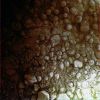
OPP-SOL1645-MF.JPGMicroscopic Meridiani - Sol 1645 (True Colors; credits: Dr M. Faccin)63 visitenessun commentoMareKromium
|
|

Dione-N00119792.jpgCross-Worlds! (8)63 visitenessun commentoMareKromium
|
|

PHOE-SOL112-lg33068-33069-33070-2.jpgVastitas' Horizon - Sol 112 (Superdefinition and natural colors; credits: Dr G. Barca)63 visitenessun commentoMareKromium
|
|

Panoramic-AS16-109-17831-17836.jpgFrom AS 16-109-17831 until 17836 (EVA-1; Buster Crater)63 visitenessun commentoMareKromium
|
|
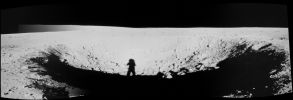
Panoramic-AS12-49-7269-7275.jpgFrom AS 12-49-7269 until 7275 (EVA-2; Sharp Crater)63 visitenessun commentoMareKromium
|
|
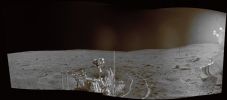
Panoramic-AS14-64-9054-9059.jpgFrom AS 14-64-9054 until 9059 (EVA-2; MET Panorama)63 visitenessun commentoMareKromium
|
|
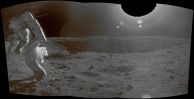
Panoramic-AS12-49-7213-7216.jpgFrom AS 12-49-7213 until 7216 (EVA-2; Up-Sun, near Triple Crater)63 visitenessun commentoMareKromium
|
|
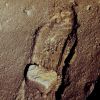
PHOE-SOL117-lg34310-34313-34314-2.jpg"Headless": just like NASA... - Sol 117 (True Colors; credits: Dr G. Barca)63 visitenessun commentoMareKromium
|
|

Solar_Eclipse-Tse2008_200_mo1_big.jpgAugust 2008 Total Solar Eclipse63 visiteCaption NASA:"For a moment on August 1st, the daytime sky grew dark along the path of a Total Solar Eclipse. While watching the geocentric celestial event from Mongolia, photographer Miloslav Druckmuller recorded multiple images with two separate cameras as the Moon blocked the bright solar disk and darkened the sky.
This final composition consists of 55 frames ranging in exposure time from 1/125 to 8 seconds. It spans nearly 12°, with the relative position of the Moon and Sun corresponding to mid-eclipse. On the left is bright planet Mercury, but many stars are also visible, including the Praesepe Star Cluster (also known as M44 or the Beehive Cluster) in Cancer, above and to the right of the silhouetted Moon. Remarkably, the nearly perfect conditions and wide range in individual exposures allow the composite picture to register the lunar surface and follow the delicate solar corona out to a distance of nearly 20 times the radius of the Sun. In fact, the composite presents a range in brightness beyond what the eye could see during the eclipse".MareKromium
|
|

TwinSuns-B+20-207.jpgTwin Suns63 visite"...When you search for me, you will find me; if you seek me with all your heart, I will let you find me..."
- Jeremiah, 29:13-14MareKromium
|
|
| 25353 immagini su 2113 pagina(e) |
 |
|
|
|
|
1078 | |
|
|
|
|





