| Piú viste |

Volcanoes-Ascraeus_Mons-20070926a-PCF-LXTT.jpgThe Layered Walls of Ascraeus Caldera (Absolute Natural Colors; credits for the additional process. and color.: Dr Paolo C. Fienga - Lunexit Team)64 visitenessun commentoMareKromium
|
|
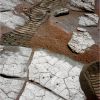
OPP-SOL2397-GB-LXTT2.jpgRover Tracks and Martian Paving - Sol 2397 (Natural Colors; credits for the additional process. and color.: Dr Gianluigi Barca - Lunexit Team)64 visitenessun commentoMareKromium
|
|
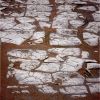
OPP-SOL2383-GB-LXTT.jpgThe always beautiful Martian Paving - Sol 2383 (Natural Colors; credits for the additional process. and color.: Dr Gianluigi Barca - Lunexit Team)64 visitenessun commentoMareKromium
|
|
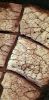
OPP-SOL2401-EB-TrueColors2.jpgThe always beautiful Martian Paving - Sol 2401 (True Colors; credits for the additional process. and color.: Elisabetta Bonora - Lunexit Team)64 visitenessun commentoMareKromium
|
|
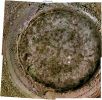
SOL358-MF-LXTT-2.jpgEffects of Abrasion - Sol 358 (an Image-Mosaic in slightly saturated Natural Colors by Dr Marco Faccin - Lunexit Team)64 visitenessun commentoMareKromium
|
|
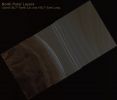
NorthernLayers-TRA_000878_2660_RED.jpgNorth Polar Layered Deposits (Absolute Natural Colors; credits for the additional process. and color.: Dr Paolo C. Fienga - Lunexit Team:)64 visitenessun commentoMareKromium
|
|
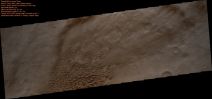
Dunes-Aonia_Terra-PIA13839-PCF-LXTT.jpgDunefield in Aonia Terra (Absolute Natural Colors; credits for the additional process. and color.: Dr Paolo C. Fienga - Lunexit Team)64 visitenessun commentoMareKromium
|
|
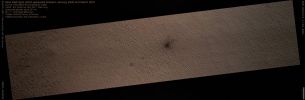
PSP_006972_1710_RED_abrowse.jpgRecent Impact (Absolute Natural Colors; credits for the additional process. and color.: Dr Paolo C. Fienga - Lunexit Team)64 visitenessun commentoMareKromium
|
|

Volcanic_Features-Lava_Flows_in_Tharsis-PIA16335-PCF-LXTT-IPF.jpgLava Flows in Tharsis (Absolute Natural Colors; credits for the additional process. and color.: Dr Paolo C. Fienga/Lunar Explorer Italia/Italian Planetary Foundation)64 visiteOrbit Number: 48151
Latitude (centered): 11,2222° North
Longitude (East): 279,398°
Instrument: VIS
Captured: October, 21st, 2012MareKromium
|
|

ZZ-Mercury-Limb-PIA16299-PCF-LXTT-IPF-1.jpgOn the Limb... (Absolute Natural Colors; credits for the additional process. and color. Dr Paolo C. Fienga/Lunar Explorer Italia/Italian Planetary Foundation)64 visiteEven though quite a few Impact Craters are visible in this Absolute Natural Color view of Mercury's Limb, the Crater Degas (whose diameter is approx. 55 Km) gets easily noticed. Located near the center of the image, the distinctive gray color of the Low-Reflectance (---> Albedo) Material associated with Degas Crater (Material that covers most of the Floor, the Inner and Outer Rim, as well as a little bit of the Surface located in close proximity with the Crater itself) makes a clear contrast with the surrounding Terrain and neighboring Craters.
This image was acquired as a Targeted Observation that occurred simultaneously with a measurement carried out by the Mercury Atmospheric and Surface Composition Spectrometer (MASCS). Targeted Observations that involve both MDIS and MASCS, once the data from both instruments are combined, facilitate a better understanding of the color and reflectance of small-scale Geologic Features which are present on the Surface of Mercury.
Date acquired: October, 6th, 2012
Images Mission Elapsed Time (MET): 258052701, 258052721, 258052705
Images ID: 2717216, 2717221, 2717217
Instrument: Wide Angle Camera (WAC) of the Mercury Dual Imaging System (MDIS)
Center Latitude: 35,98° North
Center Longitude: 231,2° East
Center Resolution: 533 meters/pixel
This picture (which is an Original NASA - MESSENGER Spacecraft color frame published on the NASA - Planetary Photojournal with the ID n. PIA 16299) has been additionally processed and then re-colorized in Absolute Natural Colors (such as the colors that a human eye would actually perceive if someone were onboard the NASA - MESSENGER Spacecraft and then looked down, towards the Surface of Mercury), by using an original technique created - and, in time, dramatically improved - by the Lunar Explorer Italia Team. Different colors, as well as different shades of the same color, mean, among other things, the existence of different Elements (Minerals) present on the Surface of Mercury, each having a different Albedo (---> Reflectivity) and Chemical Composition.MareKromium
|
|

SOL0138-1-GB-LXTT-IPF.jpgThe "Paving" of Yellowknife Bay - Sol 127 (an Image-Mosaic in Calibrated Natural Colors; credits for the additional process. and color.: Dr Gianluigi Barca/Lunar Explorer Italia/Italian Planetary Foundation)64 visitenessun commentoMareKromium
|
|
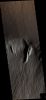
Volcanic_Features-Escarpment-OM-PIA16651-PCF-LXTT-IPF.jpgOlympus' Escarpment (Absolute Natural Colors; credits for the additional process. and color. Dr Paolo C. Fienga/Lunar Explorer Italia/Italian Planetary Foundation)64 visiteThis image, taken by the NASA - Mars Odyssey Orbiter during its 48003rd Orbit, shows us a VERY small (but still extremely interesting, as you can see by yourself) portion of the steep Escarpment existing between the Main Edifice of the Great Martian Volcano known as Olympus Mons and the surrounding Volcanic Plains (remember that an Escarpment is a - usually - steep Slope or a long Cliff that occurs from Erosion or Faulting and separates 2 (two) - relatively levelled/flat - areas/terrains which are situated at different elevations with regard to a certain, and given, Datum - such as that Point, Place or Region of a Celestial Body that is conventionally considered to be situated at Zero Altitude (the Sea Level, for instance, and as far as the Planet Earth is concerned).
Latitude: 13,9669° North
Longitude: 227,030° East
Instrument: VIS
Captured: October, 9th, 2012
The picture (which is an Original Mars Odyssey Orbiter b/w frame published on the NASA - Planetary Photojournal with the ID n. PIA 16651) has been additionally processed and then colorized in Absolute Natural Colors (such as the colors that a human eye would actually perceive if someone were onboard the NASA - Mars Odyssey Orbiter and then looked down, towards the Surface of Mars), by using an original technique created - and, in time, dramatically improved - by the Lunar Explorer Italia Team.MareKromium
|
|
| 25353 immagini su 2113 pagina(e) |
 |
|
|
|
|
1073 | |
|
|
|
|





