| Piú viste |

PSP_003695_1250_RED_abrowse-00.jpgUnnamed Southern Crater with Large Dunefield and DD Streaks (CTX Frame - Natural Colors; credits for the additional process. and color.: Dr Paolo C. Fienga - Lunexit Team)64 visitePSP_003695_1250 shows a Southern Hemisphere crater with gullies, dunes, periglacial modification, bright rock deposits and Dust Devil Tracks.
Although these features are all common on Mars, there are not many places that have all of them together as viewed here.
The gullies seen at the top of the image are likely caused by wet debris flows. They have deposits of multiple ages. The gully on the left has bright deposits that have been modified by periglacial processes overlain by slightly darker deposits that have not been modified. Periglacial processes, such as seasonal freezing and thawing, are responsible for the polygonal fractures seen near the gullies and around the image.
The dark material in the center of the image is a dune field.
There are several different sizes and orientations of dunes — these different orientations indicate that the dominant winds in the area have changed throughout time.
The dark streaks that criss-cross on the outskirts of the dune field are DDT.
DDs are spinning cells of dust that travel across the Martian Surface. As they move, they pick up and redeposit particles, as well as disturbing dust on the surface.
They are responsible elsewhere on Mars for removing dust from the solar panels of the Mars Exploration Rovers Spirit and Opportunity, which has helped to extend their missions way beyond the 90-day primary mission.
Note that the black rectangular feature near the top right of the image is a data gap resulting from data transmission problems; it is not a real feature. MareKromium
|
|
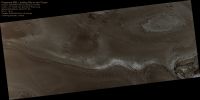
PSP_003907_1780_RED_browse-1.jpgProposed MSL Site in Iani Chaos (Natural Colors; credits for the additional process. and color.: Dr Paolo C. Fienga - Lunexit Team)64 visitenessun commentoMareKromium
|
|

Volcanoes-Ascraeus_Mons-20070926a-PCF-LXTT.jpgThe Layered Walls of Ascraeus Caldera (Absolute Natural Colors; credits for the additional process. and color.: Dr Paolo C. Fienga - Lunexit Team)64 visitenessun commentoMareKromium
|
|
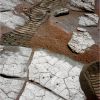
OPP-SOL2397-GB-LXTT2.jpgRover Tracks and Martian Paving - Sol 2397 (Natural Colors; credits for the additional process. and color.: Dr Gianluigi Barca - Lunexit Team)64 visitenessun commentoMareKromium
|
|
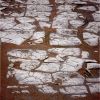
OPP-SOL2383-GB-LXTT.jpgThe always beautiful Martian Paving - Sol 2383 (Natural Colors; credits for the additional process. and color.: Dr Gianluigi Barca - Lunexit Team)64 visitenessun commentoMareKromium
|
|
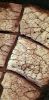
OPP-SOL2401-EB-TrueColors2.jpgThe always beautiful Martian Paving - Sol 2401 (True Colors; credits for the additional process. and color.: Elisabetta Bonora - Lunexit Team)64 visitenessun commentoMareKromium
|
|
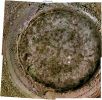
SOL358-MF-LXTT-2.jpgEffects of Abrasion - Sol 358 (an Image-Mosaic in slightly saturated Natural Colors by Dr Marco Faccin - Lunexit Team)64 visitenessun commentoMareKromium
|
|
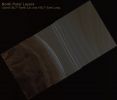
NorthernLayers-TRA_000878_2660_RED.jpgNorth Polar Layered Deposits (Absolute Natural Colors; credits for the additional process. and color.: Dr Paolo C. Fienga - Lunexit Team:)64 visitenessun commentoMareKromium
|
|
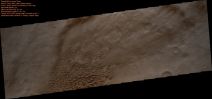
Dunes-Aonia_Terra-PIA13839-PCF-LXTT.jpgDunefield in Aonia Terra (Absolute Natural Colors; credits for the additional process. and color.: Dr Paolo C. Fienga - Lunexit Team)64 visitenessun commentoMareKromium
|
|
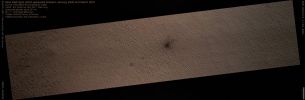
PSP_006972_1710_RED_abrowse.jpgRecent Impact (Absolute Natural Colors; credits for the additional process. and color.: Dr Paolo C. Fienga - Lunexit Team)64 visitenessun commentoMareKromium
|
|

Volcanic_Features-Lava_Flows_in_Tharsis-PIA16335-PCF-LXTT-IPF.jpgLava Flows in Tharsis (Absolute Natural Colors; credits for the additional process. and color.: Dr Paolo C. Fienga/Lunar Explorer Italia/Italian Planetary Foundation)64 visiteOrbit Number: 48151
Latitude (centered): 11,2222° North
Longitude (East): 279,398°
Instrument: VIS
Captured: October, 21st, 2012MareKromium
|
|

ZZ-Mercury-Limb-PIA16299-PCF-LXTT-IPF-1.jpgOn the Limb... (Absolute Natural Colors; credits for the additional process. and color. Dr Paolo C. Fienga/Lunar Explorer Italia/Italian Planetary Foundation)64 visiteEven though quite a few Impact Craters are visible in this Absolute Natural Color view of Mercury's Limb, the Crater Degas (whose diameter is approx. 55 Km) gets easily noticed. Located near the center of the image, the distinctive gray color of the Low-Reflectance (---> Albedo) Material associated with Degas Crater (Material that covers most of the Floor, the Inner and Outer Rim, as well as a little bit of the Surface located in close proximity with the Crater itself) makes a clear contrast with the surrounding Terrain and neighboring Craters.
This image was acquired as a Targeted Observation that occurred simultaneously with a measurement carried out by the Mercury Atmospheric and Surface Composition Spectrometer (MASCS). Targeted Observations that involve both MDIS and MASCS, once the data from both instruments are combined, facilitate a better understanding of the color and reflectance of small-scale Geologic Features which are present on the Surface of Mercury.
Date acquired: October, 6th, 2012
Images Mission Elapsed Time (MET): 258052701, 258052721, 258052705
Images ID: 2717216, 2717221, 2717217
Instrument: Wide Angle Camera (WAC) of the Mercury Dual Imaging System (MDIS)
Center Latitude: 35,98° North
Center Longitude: 231,2° East
Center Resolution: 533 meters/pixel
This picture (which is an Original NASA - MESSENGER Spacecraft color frame published on the NASA - Planetary Photojournal with the ID n. PIA 16299) has been additionally processed and then re-colorized in Absolute Natural Colors (such as the colors that a human eye would actually perceive if someone were onboard the NASA - MESSENGER Spacecraft and then looked down, towards the Surface of Mercury), by using an original technique created - and, in time, dramatically improved - by the Lunar Explorer Italia Team. Different colors, as well as different shades of the same color, mean, among other things, the existence of different Elements (Minerals) present on the Surface of Mercury, each having a different Albedo (---> Reflectivity) and Chemical Composition.MareKromium
|
|
| 25353 immagini su 2113 pagina(e) |
 |
|
|
|
|
1071 | |
|
|
|
|





