| Piú viste |

APOLLO 15 AS 15-88-11980.jpgAS 15-88-11980 - Aristarchus and Herodotus237 visitenessun commento
|
|

ZZ-ZZ-Towers on the Moon-3.jpgThe "Towers" of the Moon: Alien artifacts, Myth or Bogus? (2)237 visiteDato che i Ricercatori Lunar Explorer Italia non prendono mai per 'oro colato' il materiale che si riesce a trovare - anche se e quando la fonte è autorevole -, siamo andati sul Sito
http://www.cmf.nrl.navy.mil/clementine/clib (Naval Research Laboratory)
ed abbiamo cercato le immagini che il Dr Skipper ha già analizzato e che ci ha impedito di riprodurre.
Questa è la prima e, come potrete verificare, le 'alterazioni' ci sono, sono quelle già evidenziate dal Dr Skipper nei suoi Reports e sono evidenti ma...Noi non ci siamo fermati e siamo andati avanti.
E quello che abbiamo trovato è, semplicemente, raccapricciante.
Venite con noi...
|
|

APOLLO 15 AS 15 86-11608 HR.jpgAS 15-86-11608 - Photo of the ground after the removal of the Glass Sphere237 visiteAmmettendo tranquillamente l'origine "terrestre" del piccolo manufatto che è stato chiamato "Glass Sphere" (?!?) ci poniamo sostanzialmente due domande:
1) agli Astronauti cade di mano un oggettino che fa parte di qualche dotazione del loro equipaggiamento: cose che capitano. Ma allora perchè fermarsi a fotografarlo?
2) supponendo che la fotografia fosse in qualche modo connessa alla problematica del contrasto fra oggetti colorati e la cinerea superficie Lunare (funzione già devoluta allo Gnomon) perchè, una volta raccolto l'oggetto, il suolo viene ri-fotografato?
Che cosa c'era di così strano e/o di così importante nel manufatto caduto sul suolo e quindi ripreso?
|
|

ESP_020862_1430_RED_abrowse-PCF-LXTT.jpgRipples (Absolute Natural Colors; credits for the additional process. and color.: Dr Paolo C. Fienga - Lunexit Team)237 visitenessun commentoMareKromium
|
|

PSP_004980_1035_RED_browse-01-PCF-LXTT.jpgUnnamed "Ghost" Crater near the South Pole (EDM - Absolute Natural Colors; credits for the additional process. and color.: Dr Paolo C. Fienga - Lunexit) 237 visiteCreep of the Crater Wall Material may have also played a role in erasing the Crater. This far South, the Surface Material is likely to be ice-rich and will slowly flow downhill. Additional evidence for near-surface ice is provided by the pervasive Polygons in the image, forming due to stresses caused by temperature variations in ice-rich ground.
Regardless of the mechanism, the Crater remains faintly expressed in the surface morphology. Note that the Surface has a similar texture away from the Crater, but not organized into concentric arcs. The residual structure of the Crater provides some control on stresses, producing the ringed pattern. MareKromium
|
|

Hesperia_Planum-224co01_H-PCF-LXTT.jpgHuge Massif in Hesperia Planum237 visiteCaption ESA:"The HRSC on ESA's Mars Express obtained this image on June, 13th, 2004, during orbit 506 with a ground resolution of approx. 37,6 mt per pixel.
This view shows a portion of the Hesperia Planum Region, containing the Massif, and located at approx. 30,3° South Lat. and 97,8° East Long.".MareKromium
|
|

Channels-Mangala_Vallis-PCF-LXTT.jpgTrough in Mangala Vallis (Absolute Natural Colors; credits for the additional process. and color.: Dr Paolo C. Fienga - Lunexit Team)237 visitenessun commentoMareKromium
|
|

Vastitas_Borealis-M0303289.jpgClouds over Vastitas Borealis237 visiteLongitude of image center: 28,49° West
Latitude of image center: 66,63° North
Scaled pixel width: 267,40 meters
Scaled image width: 130,20 Km
Scaled image height: 114,41 Km
Solar Longitude (Ls): 172,30°
Local True Solar Time: 14,29 decimal hours
Emission Angle: 3,68°
Incidence Angle: 67,74°
Phase Angle: 65,30°
North Azimuth: 96,31°
Sun Azimuth: 313,92°
Spacecraft Altitude: 427,87 Km
Slant Distance: 428,66 KmMareKromium
|
|

North_Polar_Cap-M0105362-PCF-LXTT.jpgFrame M0105362 - The North Polar Cap (Natural Colors; credits for the additional process. and color.: Dr Paolo C. Fienga - Lunexit Team)237 visitenessun commentoMareKromium
|
|
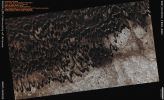
ESP_023076_1890_RED_abrowse-PCF-LXTT.jpgDunefield on the Floor of Nili Patera (Absolute Natural Colors; credits for the additional process. and color.: Dr Paolo C. Fienga - Lunexit Team)237 visitenessun commentoMareKromium
|
|

Craters-Unnamed_Crater-PIA07202-PCF-LXTT.jpgUnnamed Crater with Pedestal (Absolute Natural Colors; credits for the additional process. and color.: Dr Paolo C. Fienga - Lunar Explorer Italia)237 visiteThis Mars Global Surveyor (MGS) Mars Orbiter Camera (MOC) image shows an Unnamed Impact Crater, a little over 2 Km (> 1,2 mi) in diameter, located in Noachis Terra near 50,4° South and 14,3° West. The Crater's Bouldery Ejecta Blanket has protected underlying material from being eroded away by wind, leaving the Ejecta up on a low Pedestal. This picture covers an area about 3 Km (approx. 1,9 miles) across, and is illuminated by sunlight from the lower left.MareKromium
|
|

Utopia_Planitia-PIA07839.jpgPolygons in Utopia Planitia (Absolute Natural Colors; credits for the additional process. and color.: Dr Paolo C. Fienga - Lunexit Team)237 visiteCaption NASA originale:"This MGS-MOC image shows a typical view of Polygon-cracked and Pitted Surfaces unique to Western Utopia Planitia. No other place on Mars has this appearance. Some Mars scientists have speculated that ground ice may be responsible for these landforms".
Location near: 42,3° North Lat. and 275,6° West Long.
Image width: ~3 Km (~1,9 mi)
Illumination from: lower left
Season: Northern SummerMareKromium
|
|
| 25353 immagini su 2113 pagina(e) |
 |
|
|
|
|
107 | |
|
|
|
|





