| Piú viste |
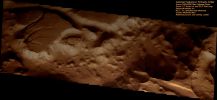
Craters-Timbuktu_Crater-20080101a-PCF-LXTT.jpgFeatures of Timbuktu Crater (Absolute Natural Colors; credits for the additional process. and color.: Dr Paolo C. Fienga - Lunexit Team)63 visitenessun commentoMareKromium
|
|

Craters-Unnamed_Crater-PIA07508-PCF-LXTT.jpgImpact Crater and Windstreak (Natural Colors; credits for the additional process. and color.: Dr Paolo C. Fienga - Lunexit Team)63 visiteCaption NASA:"This MGS-MOC image shows a 1,2-Km-diameter North mid-latitude crater with a bright wind streak".
Location near: 30,8° North Lat. and 131,8° West Long.
Image width: ~3 Km (~1,9 mi)
Illumination from: lower left
Season: Northern Summer MareKromium
|
|

OPP-SOL2291-EB-PCF-LXTT.jpgMeridiani Planum - Sol 2291 (an Image-Mosaic in Absolute Natural Colors; credits for the additional process. and color.: Elisabetta Bonora and Paolo C. Fienga - Lunexit Team)63 visitenessun commentoMareKromium
|
|

Lutetia-02.jpgAsteroid "Lutetia"63 visiteThough the first look of the giant asteroid, through nearly 400 images, has revealed a lot about the primitive survivor's cratered surface, a lot more needs to be unlocked.
The data collected by Rosetta Spacecraft, with the help of multi-wavelength cameras, spectrometers etc., will unravel the mysteries surrounding the composition of Lutetia. Some asteroids are a broken part of iron-rich cores of proto-planets or they may just be composed of Carbon.MareKromium
|
|

Coprates_Catena-h0438_0000_nd3-00-PCF-LXTT.jpgFrame Mars Express n. h0438_0000_nd3 (natural colors - elab. Lunexit) 63 visitenessun commentoMareKromium
|
|
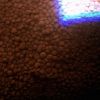
OPP-SOL2297-EB-LXTT.jpgJust Berries... - Sol 2297 (Natural Colors; credits for the additional process. and color.: Elisabetta Bonora - Lunexit Team)63 visitenessun commentoMareKromium
|
|

OPP-SOL2297-HD3D-EB-LXTT.jpgDeep Inside Meridiani... - Sol 2297 (Hi-Def-3D; credits for the additional process. and color.: Elisabetta Bonora - Lunexit Team)63 visitenessun commentoMareKromium
|
|
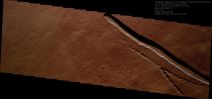
Collapse_Features-PavonisMons-20080306a.jpgChannel on Pavonis Mons (Natural Colors; credits for the additional process. and color.: Dr Paolo C. Fienga - Lunexit Team)63 visitenessun commentoMareKromium
|
|

Dione-N160934-48-EB-PCF-LXTT.jpgDione (an Image-Mosaic in Absolute Natural Colors by Elisabetta Bonora - Lunexit Team)63 visitenessun commentoMareKromium
|
|

Dione-N160934-48-EB-LXTT.jpgDione (an Image-Mosaic in RAW Natural Colors by Elisabetta Bonora - Lunexit Team)63 visitenessun commentoMareKromium
|
|

Prometheus~0.jpgThe "Rise" of Prometheus...63 visiteCaption NASA:"What is that dark streak below Prometheus? Although it may look like a shadow or a trail blazed by sweeping up material, computer simulations indicate that the dark streak is better understood as an empty path pulled away by the gravity of Saturn's small moon. The particles don't follow Prometheus so much as glide sideways past where Prometheus used to be. One dark Streamer is created during each pass of Prometheus through the F-Ring that it shepherds.
The Streamers were unpredicted and first discovered in 2004 on HR images taken by the Cassini Spacecraft orbiting Saturn.
Close inspection of the Surface of Prometheus itself in the above image shows interesting structure and craters.
The Cassini Spacecraft arrived at Saturn in 2004 and, as it continues to function well, is now expected to continue to send back data and images from the distant ringed world until 2017".MareKromium
|
|

PSP_003695_1250_RED_abrowse-00.jpgUnnamed Southern Crater with Large Dunefield and DD Streaks (CTX Frame - Natural Colors; credits for the additional process. and color.: Dr Paolo C. Fienga - Lunexit Team)63 visitePSP_003695_1250 shows a Southern Hemisphere crater with gullies, dunes, periglacial modification, bright rock deposits and Dust Devil Tracks.
Although these features are all common on Mars, there are not many places that have all of them together as viewed here.
The gullies seen at the top of the image are likely caused by wet debris flows. They have deposits of multiple ages. The gully on the left has bright deposits that have been modified by periglacial processes overlain by slightly darker deposits that have not been modified. Periglacial processes, such as seasonal freezing and thawing, are responsible for the polygonal fractures seen near the gullies and around the image.
The dark material in the center of the image is a dune field.
There are several different sizes and orientations of dunes — these different orientations indicate that the dominant winds in the area have changed throughout time.
The dark streaks that criss-cross on the outskirts of the dune field are DDT.
DDs are spinning cells of dust that travel across the Martian Surface. As they move, they pick up and redeposit particles, as well as disturbing dust on the surface.
They are responsible elsewhere on Mars for removing dust from the solar panels of the Mars Exploration Rovers Spirit and Opportunity, which has helped to extend their missions way beyond the 90-day primary mission.
Note that the black rectangular feature near the top right of the image is a data gap resulting from data transmission problems; it is not a real feature. MareKromium
|
|
| 25353 immagini su 2113 pagina(e) |
 |
|
|
|
|
1068 | |
|
|
|
|





