| Piú viste |

APOLLO_12_AS_12-57-8454_HR.jpgAS 12-57-8454 (HR) - Soil surface NOT greatly disturbed by the LM descent engine exhaust63 visitenessun commento
|
|

AuroraBorealis-Alaska.jpgAurora over Alaska63 visiteCaption NASA:"Higher than the highest mountain, higher than the highest airplane, lies the realm of the aurora. Aurora rarely reach below 60 Km, and can range up to 1000. Aurora light results from solar shockwave causing energetic electrons and protons to striking molecules in the Earth's atmosphere. Frequently, when viewed from space, a complete aurora will appear as a circle around one of the Earth's magnetic poles. The above digitally enhanced photograph was taken in 2005 January shows a spectacular aurora borealis above the frozen landscape of Bear Lake, Alaska, USA.
The above image was voted Wikipedia Commons Picture of the Year for 2006".
|
|

Inca-City-M0306902-00.jpgA true "South Polar Oddity": Inca City (2 - False Colors)63 visite"Inca City" is the informal name given by Mariner 9 Scientists in 1972 to a set of intersecting, rectilinear ridges that are located among the layered materials of the South Polar Region of Mars. Their origin has never been understood; most investigators thought they might be sand dunes, either modern dunes or, more likely, dunes that were buried, hardened, then exhumed. Others considered them to be dikes formed by injection of molten rock (magma) or soft sediment into subsurface cracks that subsequently hardened and then were exposed at the surface by wind erosion.
|
|

The_Evaporating_Planet.jpgWater Claimed in Evaporating Planet HD 209458b63 visitePlanet HD 209458b is evaporating. It is so close to its parent star that its heated atmosphere is simply expanding away into space. Some astronomers studying this distant planetary system now believe they have detected water vapor among the gases being liberated. This controversial claim, if true, would mark the first instance of planetary water beyond our Solar System, and indicate anew that life might be sustainable elsewhere in the universe. HD 209458b is known as a hot Jupiter type system because it involves a Jupiter-type planet in a Mercury-type orbit. Although spectroscopic observations from the Hubble Space Telescope are the basis for the water detection claim, the planetary system is too small and faint to image. Therefore, an artist's impression of the HD 209458b system is shown above. Research into the atmospheric composition of HD 209458b and other extrasolar planets is continuing.MareKromium
|
|
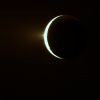
Enceladus-N00081671.jpgFountains in the Darkness (4) - natural colors, elab. Lunexit63 visiteCaption NASA:"N00081671.jpg was taken on April 24, 2007 and received on Earth April 25, 2007.
The camera was pointing toward ENCELADUS that, at the time, was approx. 190.884 Km, and the image was taken using the CL1 and CL2 filters.
This image has not been validated or calibrated".MareKromium
|
|

The_Sun-PIA09328.jpgThe North Pole of the Sun63 visiteNASA's Solar TErrestrial RElations Observatory (STEREO) satellites have provided the first three-dimensional images of the Sun. For the first time, scientists will be able to see structures in the Sun's atmosphere in 3D.
The new view will greatly aid scientists' ability to understand solar physics and thereby improve space weather forecasting.
The EUVI imager is sensitive to wavelengths of light in the extreme ultraviolet portion of the spectrum.
EUVI bands at wavelengths of 304, 171 and 195 Angstroms have been mapped to the red blue and green visible portion of the spectrum; and processed to emphasize the temperature difference of the solar material.
In this picture, a large spicule can be seen. MareKromium
|
|

The_Sun-PIA09320.jpgFull Disk Image of the Sun (March 26, 2007)63 visitenessun commentoMareKromium
|
|
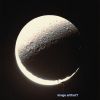
Rhea-N00084610.jpgOver-exposed Rhea63 visitenessun commentoMareKromium
|
|

Rhea-N00084608.jpgJust a "smile" from Rhea...63 visitenessun commentoMareKromium
|
|
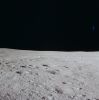
APOLLO_14_AS_14-66-9290_(HR).jpgAS 14-66-9290 (HR) - Looking for the Blue Flare... (2)63 visiteMa si tratterà poi davvero della Blue Flare che ha colto di sorpresa ed ha affascinato, assieme a migliaia di Private Researchers, anche la NASA, oppure siamo davanti ad un nuovo caso di superimposed image/photoartifact e cioè un dettaglio controverso (ergo - spesso - una possibile Anomalìa) il quale, assente nella versione raw del frame originale, poi appare misteriosamente nelle sue versioni digitalmente ripulite ed elaborate in HR?
MareKromium
|
|

APOLLO_14_AS_14-66-9293_(HR).jpgAS 14-66-9293 (HR) - Looking for the Blue Flare... (5)63 visitenessun commentoMareKromium
|
|

Saturn_Venus.jpgEvening Friends63 visite"...Sanctum hoc poetae nomen quod nulla umquam barbaria violavit..."
(Cicerone - "Pro Archia")
"...Venerato è il nome di Poeta, poichè nessuna barbarie potè violarlo..."MareKromium
|
|
| 25353 immagini su 2113 pagina(e) |
 |
|
|
|
|
1063 | |
|
|
|
|





