| Piú viste |

SOL1906-1943-Calypso_L257atc_br2.jpgCalypso Panorama - from Sol 1906 to Sol 1943 (Natural Colors; credits: NASA/JPL-Caltech/Cornell University)64 visiteCaption NASA:"This full-circle view from the Panoramic Camera (Pancam) on NASA's Mars Exploration Rover Spirit shows the terrain surrounding the location called "Troy", where Spirit became embedded in soft soil during the Spring of 2009. The hundreds of images combined into this view were taken beginning on the 1906th Martian Day (or Sol) of Spirit's Mission on Mars (such as May, 14, 2009) and ending on Sol 1943 (such as June, 20, 2009).
North is at the center; South at both ends. The Western Edge of the low plateau called Home Plate dominates the right half of the panorama. At the far right is a bright-topped mound called "Von Braun", a possible future destination for Spirit's exploration. Near the center of the panorama, in the distance, lies Husband Hill, where Spirit recorded views from the Summit in 2005. The ridge on the left, near the Rover Tracks leading to Troy from the North, is called "Tsiolkovsky".
For scale, the parallel tracks are about 1 meter (39 inches) apart. The track on the right is more evident because Spirit was driving backwards, dragging its right-front wheel, which no longer rotates.
The bright soil in the center foreground is soft material in which Spirit became embedded after the wheels on that side cut through a darker top layer. The composition of different layers in the soil at the site became the subject of intense investigation by tools on Spirit's Robotic Arm.
The PanCam Team named this scene the camera's Calypso Panorama.
This version is an Approximate True-Color, red-green-blue composite panorama generated from images taken through the Pancam's 750-nanometer, 530-nanometer and 480-nanometer filters.
This "Natural Color" view is the Rover Team's best estimate of what the scene would look like if we were there and able to see it with our own eyes.
Spirit has been investigating a region within Mars' Gusev Crater for more than 67 months in what was originally planned as a three-month mission".
Note Lunexit: la NASA, a quanto pare, confonde/mischia in maniera scandalosa il concetto di "True Colors" (ancorchè "approximate") con il concetto di "Natural Colors" - rileggete attentamente se non ci avete fatto caso.
Se la colorizzazione di questa immagine è, come scrivono gli Amici di Pasadena, la Best Estimate del Rover Team sul come la Piana di Gusev dovrebbe apparire ad occhi umani...beh, scusateci la presunzione, ma il loro livello tecnico a noi appare piuttosto imbarazzante...MareKromium
|
|

NGC-3372-2.jpgNGC 3372 - Carina Nebula64 visite"...Spesso mi chiedo quale sia davvero il motivo per cui un individuo che, da vivo, era un gran bastardo, una volta defunto debba diventara un "Buon Diavolo"..."
P.C. Floegers - "Conversations"MareKromium
|
|

ESP_014188_1320_RED_abrowse.jpgUSGS Dune Database Entry Number 0894-475 (Natural Colors; credits: Lunexit)64 visitenessun commentoMareKromium
|
|

Sharpless-171.jpgSharpless 171 (HR)64 visite"...La ricerca della Saggezza non è saggia, e neppure prudente.
E' distruttiva.
Non cancella i tuoi limiti, te li fa vedere.
Non toglie la solitudine, te la fa apprezzare.
Piu' impari, piu' sei solo.
"Piu' sapienza, piu' affanno", come dice Qoelet.
"Piu' carne, piu' vermi"..."
Pialuisa BiancoMareKromium
|
|
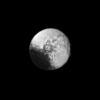
Japetus-PIA11608.jpgJapetus, from far away...64 visiteCaption NASA:"The Cassini spacecraft captures a far-off view of the two-toned surface of Saturn's moon Japetus. Scientists continue to investigate the nature of this moon's Surface. See also PIA08384 to learn more.
This view looks toward the Saturn-facing side of Japetus. North on Japetus is up and rotated 45° to the left. Scale in the original image was about 22 Km (approx. 14 miles) per pixel. The image has been magnified by a factor of three and contrast-enhanced to aid visibility.
The image was taken in visible light with the Cassini Spacecraft narrow-angle camera on Sept. 24, 2009. The view was obtained at a distance of approx. 3,7 MKM (such as about 2,3 MMs) from Japetus and at a Sun-Japetus-Spacecraft, or Phase, Angle of 12°".MareKromium
|
|
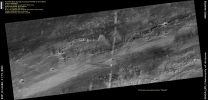
ESP_014380_1775_RED_abrowse-00.jpgExtremely Unusually-looking Skylight, N/E of Arsia Mons (CTX frame)64 visiteDopo il possibile Skylight recentissimamente individuato sulla Luna grazie ad immagini orbitali ottenute della Sonda Nipponica "Kaguya" e dopo i vari "Buchi su Marte" (pozzi da collasso) individuati dalla Sonda MRO nei mesi trascorsi, ecco un nuovo (possibile) Pozzo Marziano la cui forma - come meglio vedrete nei successivi EDM realizzati dal nostro sempre bravo e puntuale Dr Barca - è decisamente inusuale.
In realtà, il collasso non sembra essersi aperto su un normale "lava tube" (ossìa una galleria sotterranea attraverso la quale, un tempo, scorse della lava fusa), bensì sopra una grande caverna sul cui fondo pare proprio che sorga un "mound", ossìa un dosso, una collinetta dai fianchi dolci e smussati.
Una collinetta sotterranea che, come vedrete, occupa tutta la porzione Ovest del pozzo.
I margini del pozzo sono, come sempre, estremamente frastagliati (chiari segni di un cedimento tanto devastante, quanto improvviso) e - presumibilmente - scoscesi.
Attendiamo nuove immagini con diverse geometrie di illuminazione per poter vedere e quindi dire qualcosa di più su questa nuova e, come sempre, affascinante Martian Surface Feature.MareKromium
|
|

Craters-RabeCrater-20091030a.jpgWarm Dunes inside Rabe Crater (Daytime IR)64 visiteCoord.: 43,8° South Lat. and 34,4° East Long.MareKromium
|
|

Vision.jpgGalactic Vision64 visitenessun commentoMareKromium
|
|

BlueSun.jpgBlue Sun64 visiteDa "NASA - Picture of the Day" del giorno 4 Novembre 2009:"Our Sun may look like all soft and fluffy, but it is not. Our Sun is an extremely large ball of bubbling hot gas, mostly Hydrogen gas. The above picture of our Sun was taken last month in a specific red color of light emitted by Hydrogen gas called "Hydrogen-alpha" and then color inverted to appear blue.
In this light, details of the Sun's Chromosphere are particularly visible, highlighting numerous thin tubes of magnetically-confined hot gas known as spicules rising from the Sun like bristles from a shag carpet.
Our Sun glows because it is hot, but it is not on fire. Fire is the rapid acquisition of Oxygen, and there is very little Oxygen on the Sun. The energy source of our Sun is the nuclear fusion of Hydrogen into Helium deep within its core. No Sunspots or large active regions were visible on the Sun this day, although some Solar Prominences are visible around the edges".MareKromium
|
|

SOL2047-MFsoundcodeEXPLAN-02.mp3Martian Sounds, from Sol 204764 visitenessun commentoMareKromium
|
|

OPP-SOL400-1P163689595EFF5000P2663L6M1.jpgLow Sun over Meridiani - Sol 40064 visitenessun commentoMareKromium
|
|
SOL2080-2P311015081EFFB204P2629L6M1.jpgPeaceful Horizon - Sol 2080 (Natural Colors; credits: Lunexit)64 visitenessun commentoMareKromium
|
|
| 25353 immagini su 2113 pagina(e) |
 |
|
|
|
|
1053 | |
|
|
|
|





