| Piú viste |
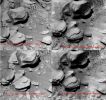
SOL1360-4_FRAMES.jpgThe "Evolution" of the Vent... (1 - a mosaic by Dr Gianluigi Barca) - Sol 136064 visiteIl "TeamWork" è un elemento essenziale per Lunar Explorer Italia. Dopo la splendida elaborazione del Dr Faccin, ecco un mosaico della medesima porzione del suolo - probabilmente attaccato da emissioni di gas e polveri - realizzato dal sempre bravissimo ed ultra-attento Dr Gianluigi Barca (Direttore di Lunexit, Sez. Liguria e Piemonte - http://www.lunarexplorer.it/).
Come potete constatare Voi stessi, il dettaglio (e cioè la possible Volcanic Vent) sembra "evolvere", pur all'interno del medesimo Sol (il 1360).
Forse è così (e sarebbe una scoperta straordinaria!) o forse l'opening della "vent" è solo il prodotto di un cambio di filtro/colore, ingannevole più che mai (e non sarebbe certo la prima volta che questo fenomeno accade). Noi non lo sappiamo e non possiamo essere certi di NULLA, al momento.
O meglio, noi possiamo essere certi di una sola cosa: coloro che lavorano per Lunexit stanno superando se stessi e stanno dando il massimo ed il meglio. E questo è già sufficiente.
Avremo commesso errori? Avremo fatto scoperte rivoluzionarie sulla morfologia di Marte?
Questo non lo può dire nessuno.
Ciò che possiamo dire è che, quando non è lo stesso Marte a sorprenderci e spiazzarci, allora sono i "color/filter tricks" della NASA a farlo. E questo è un fatto: grave (perchè Scienza e Conoscenza dovrebbero essere un patrimonio accessibile a tutti) e triste (perchè ci si rende conto sempre più del fatto che: o 1) si posseggono mezzi e risorse enormi (e allora si può arrivare a dire qualcosa di sensato e di - relativamente - certo) oppure 2) possiamo solo cercare di affinare i nostri sensi e le nostre capacità sino a superare noi stessi, ma sempre nella consapevolezza che - in fondo e per motivi "tecnologici" - potremmo essere in errore.
Potremmo comunque aver preso una svista orribile.
Complimenti e congratulazioni, SEMPRE e COMUNQUE, al Dr Barca per lo splendido Lavoro e per il continuo e costante aiuto e supporto.
Ed ora...La parola a Voi!MareKromium
|
|

PSP_005456_1650_RED_abrowse-01.jpgHome Plate from Orbit (EDM; Natural Colors - elab. Lunexit)64 visiteIl MER Spirit è indicato da una Freccia Rossa (Red Arrow), ad approx. ore 05:30 di Home Plate (la struttura più chiara, posta sul lato Dx del frame ed in posizione mediana).MareKromium
|
|

M-045-000.jpgM 45 - The "Pleiades" Star-Cluster64 visite"...Possunt, quia posse videntur..."
(Virgilio)
"...Possono perchè credono (sono convinti) di potere..."MareKromium
|
|

Sunjet.jpgA Jet from the Sun64 visiteCaption NASA:"What powers the Solar Wind? Our Sun is known to emit a powerful wind of particles with gusts that can even affect astronauts and satellites orbiting Earth. The cause of the Solar Wind has been debated for decades but is thought to be rooted in Alfvén Waves generated by the ever changing Magnetic Field of the Sun.
Newly released images from the Japanese Hinode satellite appear to bolster this hypothesis, imaging an average of 240 daily plasma jets that are excellent candidates to fuel the outwardly moving Alfvén Waves.
The jets and waves are themselves ultimately created by magnetic reconnection events, rapid events where lines of constant magnetic field suddenly move extremely rapidly, dragging electrons and protons along with them.
On the image left, one such jet is visible in X-ray light. Bright spots show relatively energetic regions elsewhere on the Sun".MareKromium
|
|

000-P-FILTERS.jpgJust to remember...64 visitenessun commentoMareKromium
|
|

SOL164-2N140937682EFF6938P1914L0M1.jpgThe "Martian Mound": a very unusual rock formation? (3 - MULTISPECTRUM; credits: Lunexit)64 visiteCieli Azzurri su Marte?... Giudicate Voi.
Noi ne dubitiamo fortemente...MareKromium
|
|
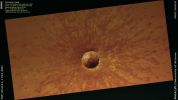
PSP_004313_1760_RED_abrowse-00.jpgWinslow Crater - context frame n. 1 (MULTISPECTRUM; credits: Lunexit)64 visiteIn this first HiRISE image of Winslow Crater (PSP_004313_1760), distinct dark rays surrounding the crater and are consistent with the THEMIS data’s suggestion of rockier materials. V-shaped patterns in the rays — referred to as a “herringbone” pattern — are identical to those around fresh Lunar Craters.
These form when materials are ejected from the crater at a very low angle, which form clusters of secondary craters that preferentially eject materials down-range in a V-shaped pattern. (It‘s the same pattern that you would get when shooting a water pistol nearly parallel to a sidewalk.)
Also noteworthy are the large meter-to-decimeter-sized boulders on the steep rim that have not been buried or physically weathered to smaller sizes in this windy region, indicating that they have not been exposed long.
This is also reminiscent of Meteor Crater and examples of fresh simple craters on the Moon.
The ring of rocky, cliff-forming materials in the inner wall of the Crater represents original bedrock that was uplifted and exposed by the impact. The characteristic morphology is called “spur and gully” consisting of both the protruding bedrock inter-fingered with debris shoots feeding fans of sandy materials that extend down to the crater floor.
Throughout this Region, the present-day surface consists of a mix of global dust and volcanic sands from the Syrtis Major complex that typically cover the local bedrock. Winslow Crater is an excellent example of how craters can provide a window into the subsurface by exposing the local bedrock within the ejecta and crater wall.MareKromium
|
|
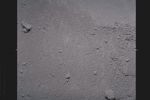
APOLLO_12_AS_12-57-8443_HR-a.jpgAS 12-57-8443 (a) - Soil surface disturbed by the LM descent engine exhaust (coloring: Lunexit)64 visitenessun commentoMareKromium
|
|
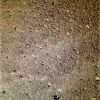
OPP-SOL414-1.jpgGreenish Martian "undisturbed" Soil - Sol 414 (true-colors; credits: Dr G. Barca)64 visiteCi sono davvero licheni e tenui muschi fra le sabbie di Meridiani, come pare suggerire questa bellissima elaborazione in colori veri del Dr Barca?... Voi che dite?MareKromium
|
|

SOL690-2N187626189EFFAJ2EP0715L0M1.jpgIs there Life on Mars? - Sol 690 (credits: Dr M. Faccin)64 visiteL'immagine di questo "guscio" (o "pseudo-roccia") parzialmente sollevato dal suolo è intrigante e ci riporta alla memoria non solo le più recenti teorizzazioni del Dr Alessio Feltri sulla Materia, ma anche una serie di interrogativi riguardanti il concetto stesso di "Forma Vitale".
Sono solo rocce quelle che stiamo guardando? Sono fossili? Sono qualcosa d'altro e di più?
David Bowie, in un suo grande successo di parecchi anni fa si poneva la domanda che ci poniamo noi, oggi, davanti a queste suggestive inquadrature, ben individuate, magnficate e montate in un collage dal nostro Grande Amico e Partner (il sempre più bravo ed attento Marco Faccin): "Is there Life on Mars?"...
Voi che dite?MareKromium
|
|

as08-14-2420.jpgAS 08-14-2420 - Old Crater on the Far-Side of the Moon (1 - MULTISPECTRUM; credits: Lunexit)64 visiteCoord.: 10° South Lat. and 175° West Long.MareKromium
|
|

SOL047-1.jpgWhat a "Trench"! - Sol 47 (1 - true colors; credits: Dr G. Barca)64 visitenessun commentoMareKromium
|
|
| 25353 immagini su 2113 pagina(e) |
 |
|
|
|
|
1050 | |
|
|
|
|





