| Piú viste |

Craters-Unnamed_Crater-South_Polar_Regions-PIA03921-PCF-LXTT.jpgUnnamed South Polar Defrosting Crater (Absolute Natural Colors; credits for the additional process. and color.: Dr Paolo C. Fienga - Lunar Explorer Italia)64 visitenessun commentoMareKromium
|
|

A-Phoenix-002.jpgThe Phoenix Lander and its Solar Panels in the "Clean Room"64 visitenessun commentoMareKromium
|
|

Under_The_Stars.jpgOld Faithful...64 visite
Caption NASA:"You don't have to be at Yellowstone to see a sky this beautiful, but it helps. Only at Yellowstone National Park in Wyoming, USA, would you see the picturesque foreground of the famous "Old Faithful Geyser" erupting in front an already picturesque sky. Old Faithful Geyser, visible in the foreground, is seen propelling a stream of hot water over 30 mt up in the air. This happens predictably for a few minutes about every 90 minutes. Also predictable are the brightest orbs that popular the nighttime sky, although those visible at any one time keep changing. Visible far in the background sky of this mid-June image are the plane of our Milky Way Galaxy on the left, and the bright planet Jupiter on the right. Jupiter is the brightest celestial object in the entire image. Old Faithful has been erupting at least since the late 1800s".
Nota: siamo curiosi di vedere quando la NASA "ipotizzerà" (ironizziamo, poichè le evidenze fotografiche in nostro possesso sono già innumerevoli) che alcuni fenomeni attualmente catalogati come "minicicloni" o "Dust Devils" (DD) sono, in realtà (ed in maniera particolare nelle aree presso-polari), dei geysers.
Geysers che, a volte, eruttano fango e ghiaccio e, altre volte - forse - acqua calda ed idrocarburi.
Staremo a vedere...MareKromium
|
|
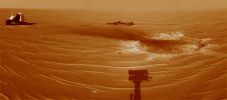
OPP-SOL330-1NN325EFF40CYLA3P0685L000M1-crop-B330R1.jpgThe Heat-Shield and its surroundings - full panorama - Sol 330 (Extremely Enhanced and Saturated Natural Colors; credits for the additonal process. and color.: Dr Paolo C. Fienga - Lunexit Team)64 visitenessun commentoMareKromium
|
|
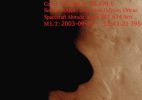
Craters-Unnamed_Crater_with_possible_Oil_Lake-V07738009-PCF-LXTT-00.jpgMigrating Dunes, Dirty Waters or maybe Surfacing Hydrocarbons? (1 - Natural Colors; credits for the additional process. and color.: Dr Paolo C. Fienga - Lunexit Team)64 visiteAttraverso la ricerca e selezione, operata dal bravissimo Dr Gianluigi Barca, di 5 frames, ottenuti nell'arco di 4 anni ma TUTTI relativi al medesimo rilievo superficiale (ossìa un cratere di modeste dimensioni situato ad una relativamente elevata Latitudine Sud), è possibile vedere con estrema chiarezza la - diciamo così... - "bizzarra" evoluzione di un "qualcosa" che giace sul fondo del cratere stesso.
Non è necessario spendere troppe parole sull'evidenza delle variazioni (anche cromatiche) occorse al materiale inquadrato in questi 5 frames, ma ci sembra opportuno sottolineare che una sequenza talmente incredibile e così chiaramente indicativa del verificarsi di eventi caratterizzati da una matrice (forse) indicativa di una recentissima - ed ancora perdurante - attività geologica avrebbe meritato l'attenzione di Scienziati e Ricercatori di tutto il Mondo. Attenzione che, invece (ed almeno per quanto ci è dato sapere) non c'è stata. Zero, nihil: totale silenzio. Curioso. Curioso specialmente allorchè andiamo a vedere (e leggere, in 1000 salse diverse!) che un evento di gran lunga meno eclatante - il rinnovarsi/ampliarsi di un "gully" - ha trovato spazio ed interesse (forse eccessivi e sproporzionati) nell'intera Comunità Scientifica.
Attenzione: che l'ampliarsi e modificarsi di "gullies" sia un possibile indice della presenza di acque superficiali su Marte è un fatto importante, senza dubbio; ma anche l'avanzare, il ritrarsi ed il mutare di forma di questo "materiale" (il quale potrebbe anche avere una origine organica) in un arco di tempo così piccolo - geologicamente parlando - a noi pare un evento meritevole di grande - anzi GRANDISSIMA - attenzione!
Ma che cosa stiamo guardando? Un nuovo - e terribilmente ingannevole gioco di chiaro/scuri (al quale si abbina un ulteriore elemento fuorviante per i nostri occhi il quale è derivante da leggeri mutamenti della luce sull'Orizzonte Locale e/o da variazioni dell'altezza e dell'angolazione da cui le riprese sono state effettuate)?
Secondo noi, fra le ipotesi (pur) logiche e pragmatiche considerabili, questa è decisamente la meno soddisfacente (anche se non possiamo comunque escluderla al 100%).
Si tratta allora di "dune migranti"? Tendenzialmente, anche dopo aver esaminato altri frames relativi a queste "migrating dunes", saremmo portati a dire di no (manca l'effetto "scia" - di polveri e sabbie (collose) residuali - che caratterizza questo particolare fenomeno).
Si tratta forse di "fanghi" (ossìa di "acque sporche")? Ipotesi plausibile.
O magari si tratta di Idrocarburi Affioranti? Ecco: questa idea ci piace e, ora che stiamo osservando Marte con sempre maggiore attenzione e - soprattutto - "sapendo" quello che cerchiamo, l'ipotesi di cui sopra ci sembra attendibilissima. Idrocarburi frammisti a polveri e residui di CO2: osservate il frame n. 4 con particolare attenzione e poi, se volete, comunicateci le Vostre opinioni.
E COMPLIMENTI vivissimi al Dr Barca!MareKromium
|
|
SOL1294-2N241239429EDNAUCTP1550L0M1.jpgStill dusty (and reddish) skies over Gusev - Sol 1294 (natural colors; elab. Lunexit)64 visitenessun commentoMareKromium
|
|

Voyagers-01.gifTowards the "Terra Incognita" (2)64 visiteIt is appropriate to consider the VIM as three distinct phases: the termination shock, heliosheath exploration, and interstellar exploration phases. The two Voyager spacecraft began the VIM operating, and are still operating, in an environment controlled by the Sun's magnetic field with the plasma particles being dominated by those contained in the expanding supersonic solar wind. This is the characteristic environment of the termination shock phase. At some distance from the Sun, the supersonic solar wind will be held back from further expansion by the interstellar wind. The first feature to be encountered by a spacecraft as a result of this interstellar wind/solar wind interaction will be the termination shock where the solar wind slows from supersonic to subsonic speed and large changes in plasma flow direction and magnetic field orientation occur.
Passage through the Termination Shock ends the Termination Shock Phase (TSP) and begins the Heliosheath Exploration Phase (HEP). Voyager 1 in 2004 completed the TSP of the mission when the spacecraft was 94 AU from the Sun. After passage through the Termination Shock, the spacecraft will be operating in the Heliosheath environment which is still dominated by the Sun's Magnetic Field and particles contained in the Solar Wind. The HEP ends with passage through the Heliopause which is the outer extent of the Sun's Magnetic Field and Solar Wind. The thickness of the Heliosheath is uncertain and could be tens of AU thick taking several years to traverse. Passage through the Heliopause begins the Interstellar Exploration Phase (IEP) with the spacecraft operating in an interstellar wind dominated environment. This interstellar exploration is the ultimate goal of the Voyager Interstellar Mission.MareKromium
|
|
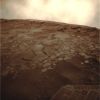
OPP-SOL1298-1N243420226EFF86L0P1909L0M1-2.jpgOn the edge of Victoria - Sol 1298 (interpret. n. 2 - possible natural colors; dominant: grey - brown/yellow - orange; elab. Lunexit)64 visitenessun commentoMareKromium
|
|

ZZ-ZZ-ZZ-Martian_Hollow.jpgMartian Hollow (possible natural colors)64 visiteUna leggera depressione del suolo, di forma vagamente circolare od ellittica - ma che non è un cratere! -, ricolma di polvere e detriti: questo è un "Hollow" (un "vuoto", letteralmente), una tipica surface configuration che troviamo nella Regione di Gusev, ancora oggi visitata ed investigata dal MER Spirit.
Questa è una bellissima interpretazione in possible natural colors, forse realizzata da Keith Laney (ma non ne siamo certi).
Comunque bellissima.MareKromium
|
|

Enceladus-PIA08386.jpgThe Blue Fountains of Enceladus (false colors; elab. NASA)64 visiteThis false-color view was created by combining 3 clear filter images taken at nearly the same time of PIA07759. This image product was then specially processed to enhance the individual jets that compose the plume (while PIA07759 was instead processed to reveal subtleties in the brightness of the overall plume that comprises the jets).
Some artifacts due to the processing are present in the image. The final product was colored as blue for dramatic effect.
The images were acquired with the Cassini spacecraft narrow-angle camera on Nov. 27, 2005 at a distance of approx. 148.000 Km (about 92.000 miles) from Enceladus and at a Sun-Enceladus-Spacecraft, or phase, angle of 161°.
Scale in the original images is about 880 meters (0,5 mile) per pixel.
This view has been magnified by a factor of two from the original images".MareKromium
|
|
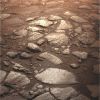
OPP-SOL1339-1P247059974EFF8788P2393R1M1-1.jpgThe "Inner Paving" and the "Red Sands" of Victoria - Sol 1339 (red-orange filter ON - possible natural colors - elab. Lunexit)64 visitenessun commentoMareKromium
|
|

002-Kaguya-20071009_kaguya_03l.jpgRstar Separation from Kaguya (2) - after separation64 visiteCaption JAXA:"The Rstar has been released and moving toward the upper left of the image.
The right one, the VRAD satellite, was scheduled to be released on Oct. 12th, 2007).MareKromium
|
|
| 25353 immagini su 2113 pagina(e) |
 |
|
|
|
|
1049 | |
|
|
|
|





