| Piú viste |
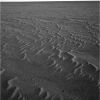
OPP-SOL358-1P159971557EFF40FWP2372R1M1.jpg"Side-Winders" from Sol 358 (2)64 visiteProsieguo della panoramica delle "Side-Winders"; per questo frame è stato utilizzato il "Filtro 1".
|
|
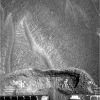
OPP-SOL366-1N160677102EFF42D9P1901L0M1.jpgDigging...64 visiteIl terreno di Meridiani Planum, a dispetto delle apparenze e della temperatura (durante il giorno, ufficialmente, nonostante il Sole brillante siamo sempre abbondantemente sotto lo 0), rimane piuttosto "soffice", vista la semplicità con cui il Rover riesce a scavare buche profonde svariati centimetri.
Buche interessanti e contraddittorie, a ben guardare...
|
|

Enceladus-PIA06581_modest.jpgEnceladus: getting closer...64 visiteCaption NASA originale:"This Cassini image of Saturn's moon Enceladus shows a region containing bizarre, wrinkled terrain. Enceladus is covered with bright water ice. The part of its surface visible here appears to be largely free of craters - indicating that it is geologically young (NOTA LUN-EX-IT: la mancanza di crateri non è solo indice di "gioventù geologica"; essa può anche essere dipendente dal fatto - improbabile ma da NON escludersi a-priori - che taluni processi geologici sìano ancora in corso!
Il tutto senza escludere la possibilità - anch'essa remota ma non assurda - che Encelado sia stata una "luna fortunata" e bombardata in misura inferiore rispetto alle altre...).
The first close imaging of this moon will be done by Cassini in February 2005 and should reveal many surprises. Enceladus has a diameter of 499 Km (310 miles). This view shows primarily the leading hemisphere of Enceladus and it was taken from a distance of 367.000 Km. Resolution in the original image was about 2 Km per pixel".
|
|

AA-Neptune-HST-PIA01284.jpgNeptune in "Primary Colors" - HST64 visiteCaption NASA originale:"These 2 NASA HST images provide views of weather on opposite hemispheres of Neptune. Taken Aug. 13, 1996, with Hubble's Wide Field Planetary Camera 2, these composite images blend information from different wavelengths to bring out features of Neptune's blustery weather. The predominant blue color of the planet is a result of the absorption of red and infrared light by Neptune's methane atmosphere. Clouds elevated above most of the methane absorption appear white, while the very highest clouds tend to be yellow-red as seen in the bright feature at the top of the right-hand image. Neptune's powerful equatorial jet - where winds blow at nearly 900 mph! - is centered on the dark blue belt just south of Neptune's equator. Farther south, the green belt indicates a region where the atmosphere absorbs blue light".
|
|
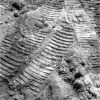
SOL404-2P162233661EFFA618P2559L2M1.jpgRover's tracks (1)64 visiteSempre in attesa di ricevere "notizie" dalla NASA relativamente ai Soles 393-397 (i Soles che avrebbero dovuto dirci qualcosa della curiosa Anomalia di Superficie che avevamo notato qualche settimana fa), eccoVi un paio di dettagli delle tracce lasciate dalle ruote di Spirit sulla "sabbia" Marziana.
Si tratta di due frames ravvicinati - ma non consecutivi - che ci mostrano i 'gradini' che le ruote di Spirit disegnano, letteralmente, sul suolo delle Columbia Hills. Questo terriccio è, a parere di un nostro collega Geologo, del tutto particolare e di difficile catalogazione. Forse, in un prossimo futuro, dedicheremo qualche pagina alle sabbie di Marte, cercando di metterle a confronto (almeno visivamente) con le sabbie terrestri.
Un'anticipazione? Si tratta, apparentemente, di sabbie MOLTO diverse...
Nota: si tratta di (possibili) Sali e Solfati.
|
|

SOL407-2N162503419EFFA776P0675R0M1.jpgExtremely unusual rock formations around Spirit (3)64 visiteNota: quando parliamo di "tettoia", intendiamo indicare una sorta di "sporgenza" della roccia, al di sotto della quale si vede (basta operare qualche modesto ingrandimento ed effettuare un minimo di 'pulitura' dell'immagine) che c'è uno spazio vuoto. Insomma: la posizione (oltre che la conformazione stessa) di tantissime rocce Marziane ci spinge a pensare che dietro alla configurazione del paesaggio del Pianeta Rosso non vi sia soltanto la casualità (la quale si esprime ora attraverso movimenti sismici, ora tramite vibrazioni del suolo a seguito di impatti meteorici o magari mediante processi di gravity wasting), bensì di qualcosa d'altro. Un'ipotesi ricorrente nell'ambiente dei Ricercatori (azzardata, ma molto intrigante...) è che il suolo di Marte possa (almeno in parte) essere "modellato" in maniera tale da risultare più ospitale per forme di vita indigene PROFONDAMENTE DIVERSE dalle forme di vita a noi più familiari.
|
|
OPP-SOL389-1P162717452ESF4700P2563L7M1.jpgA new crater on the way... (2)64 visitenessun commento
|
|

Aeolian_Features-Dust_Devils-2005_03.jpgLight-toned DD Streaks in Schiaparelli Crater (Original NASA/MGS/MSSS b/w Frame)64 visiteCaption NASA originale:"In honor of Giovanni V. Schiaparelli's 170th birthday (04-03-1835/04-03-2005), we present this MGS-MOC image showing light-toned dust devil streaks on the southern floor of Schiaparelli Crater".
Location near: 5,3° South Lat. and 343,3° West Long.
Image width: ~3 km (~1.9 mi)
Illumination from: upper left
Season: Southern Autumn
|
|
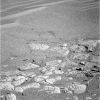
OPP-SOL400-1P163699129EFF5000P2384L7M1.jpgSpherules (1) - Sol 40064 visiteCelebriamo il Sol 400 di Opportunity con un primo piano sulle rocce affioranti del Vostok Crater (che il Rover sta fotografando da tre giorni) e su alcune piccole "dune" (che poi sìano sabbiose, terrose o addirittura rocciose non ci è ancora dato saperlo...). Ed inoltre, così come la rubrica di questo frame intitola, primo piano anche sopra un numero davvero impressionante di sferule Marziane le quali, come vedete, coprono la totalità del terreno visibile.
Notate altresì che, intorno a quasi tutte le rocce, si sono formate delle bordature più scure che riteniamo sìano il prodotto del deposito di sabbie sottilissime le quali, da questa distanza e con questa definizione (e con questo filtro/colore!), sembrano essere davvero dei "rivoli d'acqua".
|
|
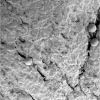
OPP-SOL401-1M163692601EFF5000P2956M2M1.jpgSpherules (5)64 visiteMolto diversa è invece, come si vede benissimo da questo frame, la configurazione delle "sferule" allorchè esse vengano a trovarsi in prossimità delle (o sopra le) rocce.
Non è ovviamente possibile esprimere certezze, ma sensazioni. La nostra sensazione è che le "sferule", alle rocce (e forse non tutte...), si "attacchino", per poi diventare - nel tempo - parte di esse.
Minerali o animali, dunque?
E se si trattasse di animali, le "sferule", ora, le potremmo ritenere delle creature "vive" o soltanto dei fossili?
Domande, domande, domande...
|
|
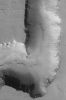
Channels-Unnamed_Channel_near_Ascraeus_Mons-2004_05.jpgA big channel on Ascraeus Mons64 visiteCaption NASA originale:"This MGS-MOC image shows a portion of a deep Channel formed on the Northern Flank of the large Volcano, Ascraeus Mons. Layers of Volcanic Rock are exposed in the Channel Walls, and the dark dots on the Valley Floor are Boulders derived from erosion of these materials.
The picture occurs near 14,5° North Lat. and 102,8° West Long. and is illuminated from the lower left. The picture covers an area about 3 Km (1,9 mi) across".
|
|

Volcanic_Features-Collapse_Pit-2003_07_12.jpgCollapse Pit in Tractus Fossae (Original NASA/MGS/MSSS b/w Frame)64 visiteCaption NASA originale:"Extensional faulting, wherein some fraction of the Martian Crust is pulled apart and Faults are formed where the Bedrock breaks, has also led to formation of Collapse Pits in the Tractus Fossae Region. This MGS-MOC image shows one such pit and the layered bedrock exposed in its walls. Dark Streaks on the Slopes of the Pit result from Avalanches of dry, fine-grained debris (probably Dust, as these streaks are only found in the dust-mantled regions of Mars).
This Pit is located near 23,5° North Lat. and 103,8° West Long. Sunlight illuminates the scene from the lower left".
|
|
| 25353 immagini su 2113 pagina(e) |
 |
|
|
|
|
1045 | |
|
|
|
|





