| Piú viste |

NGC-4579-PIA08007.jpgNGC 4579 - Spiral Galaxy64 visite"...Omnia Mors aequat..."
(Claudiano)
"...La Morte riconduce tutto a zero..."
|
|
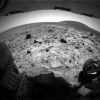
SOL772-2R194900758EFFAPD9P1309L0M1.jpgMartian "fly", "cube" and "strange balance" - Sol 77264 visite...rispetto al corpo inquadrato ed alla distanza che li separa.
Un curioso, ma talvolta fuorviante, fenomeno ottico che il nostro Tecnico delle Immagini chiama "deformazione stroboscopica". Per quanto attiene, infine, la 'roccia equilibrista', noi abbiamo una teoria: le forme di equilibrio conosciute sono quelle sussunte sotto le tre macro-classi di "Equilibrio Stabile", "Instabile" ed "Apparente". Tralasciando la spiegazione di ciascuna di queste tre classi, attraverso l'analisi dei frames NASA in arrivo da Marte noi abbiamo "inventato" - si fa per dire... - una quarta classe: quella dell'Equilibrio Improprio (E.I.).
L'E.I. (che, a sua volta, può essere Stabile, Instabile od Apparente) consiste in una situazione di inerzia in virtù della quale un corpo ci appare - di regola "curiosamente" - appoggiato ad un altro corpo o ad una superficie, pur non essendolo affatto.
Un esempio di E.I. lo abbiamo allorchè un corpo "appare" in equilibrio su di un altro corpo (ex.: roccia su roccia) o su di una superficie (roccia su suolo), ma solo perchè è l'angolo visuale dell'osservatore a determinare questa situazione la quale altro non è, in realtà, che un'illusione ottica.
Un altro esempio di E.I. lo si ha quando le immagini sono "confuse" (bassa risoluzione - LR - e bassa definizione - LD) e quindi gli occhi "percepiscono" equilibri inesistenti nella realtà oppure allorchè è l'attività di manipolazione del frame a determinare "rocce impossibili" le quali, in sostanza, danno vita anche ad equilibri impossibili (e cioè, in accordo alla definizione di cui sopra, ad "Equilibri Impropri").
|
|

NGC-3324-2.jpgNGC 3324 - Tthe "Keyhole Nebula", and NGC 3372, the "Great Carina Nebula"64 visite"...Dum Fortuna favet, parit et taurus vitulum..."
(Binder)
"...Quando la Sorte è propizia, un toro può anche partorire un vitello..."
|
|

SOU-SOL020.jpgRock Garden - Sol 20 and 3864 visiteThis preliminary enhanced color image mosaic of the area North-East of the lander was made using images acquired in the afternoon of Sol 20 (top portion of the mosaic) and Sol 38 (bottom portion of the mosaic) by the IMP camera as part of the Super-Pan data set. The differences in brightness between the upper and lower portions of the mosaic result from slightly different sun angle positions between Soles 20 and 38, and can be compensated by subsequent analysis of the reflectance of surface rocks and soils under different lighting conditions.
Red, green, and blue filter images from the right eye were combined to simulate slightly amplified natural color. The bright, flat areas Scooby Doo and Baker's Bench are visible left of center and above center in the mosaic, respectively. Airbags and a portion of one of the lander petals are visible in the foreground.
|
|

Titan-N00055569.jpgWhat's happening on Titan? (6)64 visiteCaption NASA:"N00055569.jpg was taken on March 20, 2006 and received on Earth March 20, 2006. The camera was pointing toward Titan that, at the time, was approximately 974.790 Km away.
The image was taken using the P120 and BL2 filters".
|
|

Mimas-N00055634.jpgMimas (3)64 visiteCaption originale:"N00055634.jpg was taken on March 21, 2006 and received on Earth March 22, 2006. The camera was pointing toward Mimas that, at the time, was approximately 191.303 Km away.
The image was taken using the P0 and MT2 filters".
|
|

Q-pia08014-01-AEB1-full-reduced1.jpgMartian Southern Highlands (1) - HR64 visitenessun commento
|
|

Eta Carinae - HST-1.jpgEta Carinae (HR-HST)64 visite"...Si charta cadit, tota scientia vadit..."
(anonimo medioevale)
"...Se la carta cade, la scienza evade..."
Frase fortemente ironica usata per indicare coloro che non sono capaci nè di improvvisare, nè di "spiccicare quattro parole" su un qualsiasi tema senza essere dotati di note, cartelle ed appunti vari, per lo più preparati da altri.
|
|

Aeolian_Features-Dust_Devil-Argyre_Planitia.JPGDust Devil in Argyre Planitia (Original NASA/MGS/MSSS b/w Frame)64 visiteCaption NASA originale:"This MGS-MOC image shows Dust Plumes created by gusting winds on a Plain SouthWest of Argyre Planitia".
Location near: 67,0° South; 75,2° West
Image width: ~3 Km (~1,9 mi)
Illumination from: upper left
Season: Southern Autumn
|
|

Jupiter_sMap00-PIA07782-2.jpgSuper-detailed Jupiter's Map (2)64 visiteThe map shows a variety of colorful cloud features, including parallel reddish-brown and white bands, the Great Red Spot - frame 1), multi-lobed chaotic regions, white ovals and many small vortices. Many clouds appear in streaks and waves due to continual stretching and folding by Jupiter's winds and turbulence. The bluish-gray features along the north edge of the central bright band are equatorial "hot spots" meteorological systems such as the one entered by NASA's Galileo probe. Small bright spots within the orange band north of the Equator are lightning-bearing thunderstorms. The Polar Regions are less clearly visible because Cassini viewed them at an angle and through thicker atmospheric haze.
Pixels in the rectangular map cover equal increments of planetocentric latitude (which is measured relative to the center of the Planet) and longitude, extending to 180° of latitude and 360° of longitude.
|
|

OPP-SOL778-1F197254745EFF67J9P1211R0M1.jpgThe "paving" is everywhere! - Sol 77864 visiteCome molti Ricercatori stanno supponendo, i Pavimenti Marziani - forse - si stendono per decine di Km, al di sotto delle sabbie di Meridiani Planum. L'immagine di Meridiani Planum così come è oggi rispetto a come poteva essere nel passato è sempre più ambigua ed intrigante.
Che cos'era Meridiani Planum prima di diventare questa specie di deserto (che rimane comunque indecifrabile)?!?
Caption originale:"Right Front HazCam Non-linearized Full frame EDR acquired on Sol 778 of Opportunity's mission to Meridiani Planum at approximately 13:07:59 MLT".
|
|

Craters-Unnamed_Crater_in_Terra_Tyrrhena-01.jpgUnnamed Crater and Dunes in Terra Tyrrhena (Original NASA/MGS/MSSS b/w Frame)64 visiteCaption originale:"This MGS-MOC image shows a portion of a Field of Dark Sand Dunes superposed on the light-toned Floor of an Unnamed Crater located in Eastern Tyrrhena Terra. The orientation of the Dunes — with the steep faces toward the South (right) — suggests that winds generally blew from North to South at the time the dunes were formed".
Location near: 14,6° South Lat and 262,3° West Long.
Image width: ~3 Km (~1,9 mi)
Illumination from: lower left
Season: Southern Summer
Nota: la caption originale, come spesso sta accadendo, esprimendosi sulla direzione dei venti che avrebbero scolpito le dune della Terra Tirrena è - scusateci - così stupida che meriterebbe la censura (faremmo solo un favore alla NASA). Tuttavia, dato che il servizio che noi cerchiamo di rendere vuole coprire anche alcuni lati "curiosi" (sic!) della Divulgazione Scientifica, abbiamo pensato di lasciare il commentino ufficiale integro, così che qualsiasi Lettore, leggendolo, possa rendersi conto di che cosa significa "parlare (rectius: scrivere) quando non si ha proprio nulla da dire (scrivere)".
|
|
| 25353 immagini su 2113 pagina(e) |
 |
|
|
|
|
1042 | |
|
|
|
|





