| Piú viste |

20000322.jpg433-Eros in HR (True Colors; credits: NASA)65 visiteAs the NEAR Shoemaker spacecraft descends into lower orbits around Eros, it continually returns higher spatial resolution images of the asteroid. The true color image at left was taken February 12, 2000, from a range of 1748 Km (about 1083 miles), and shows details only as small as 180 meters (590 feet) across.
It was taken two days before orbit insertion, as part of an image sequence designed to provide moderate-resolution color mapping of Eros at a near-constant viewing geometry.
The true color image inset at right was taken February 29 from a range of 283 Km (about 175 miles) and shows much smaller details only 27 meters (89 feet) across.
The higher spatial resolution (by a factor of 6) brings out a whole class of surface details that were either invisible or at the margin of visibility in the earlier images. For example, the bright material on the wall of the large crater in the inset image is barely evident in the lower-resolution image at left, but by virtue of its limited spatial coverage the inset image lacks information on the crater's regional geologic setting. NEAR Shoemaker's imaging strategy makes use of both types of images, with lower-resolution images providing "context" for higher-resolution images that bring specific features into sharper focus.
(Product of images 0125748893, 0125748895, 0125748897, 0127229466, 0127229468, 0127229470)
MareKromium
|
|
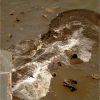
SOL721-MF-LXT.jpgRover Tracks and Sulphates - Sol 721 (True Colors; credits: Dr M. Faccin & Lunexit)65 visitenessun commentoMareKromium
|
|
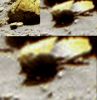
SOL1144-2-MF.jpgMartian "Mickey Mouse"? - Sol 1144 (by Dr M. Faccin)65 visiteDedicata ai "Topi" di tutto il Sistema Solare...Perchè i "topi", al pari degli esami, a quanto pare, non finiscono mai!
Un'immagine ironica ed intrigante (certo MILLE volte più intrigante della "Statuetta del Marziano che corre" - o "Madonna di Marte"), che vuole solo dimostrare una realtà del tutto incontrovertibile: VOLENDO, su Marte (ed ovunque nel Sistema Solare), SI PUO' VEDERE DI TUTTO E DI PIU'...Basta avere un pizzico di "occhio", molta "attitudine" ed una buona dose di Fantasia.
...E comunque, tanto per gradire, l'extra-detail mgnf che vedete in basso, mostra - in effetti - un bel "musino di topo", con tanto di occhi, naso a punta e baffetti...MareKromium
|
|
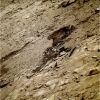
SOL1473-4.jpgIvory Land... - Sol 1473 (True Colors; credits: Dr G. Barca)65 visitenessun commentoMareKromium
|
|
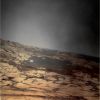
OPP-SOL1454-1.jpgVictoria's Paving - Sol 1454 (natural Colors; credits: Dr G. Barca)65 visitenessun commentoMareKromium
|
|

Dione-N00119792.jpgCross-Worlds! (8)65 visitenessun commentoMareKromium
|
|
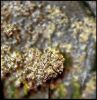
PHOE-SOL110-MF-LXT.jpgMicroscopic Vastitas - Sol 110 (Superdefinition and True Colors; credits: Dr M. Faccin & Lunexit)65 visitenessun commentoMareKromium
|
|

Panoramic-AS15-85-11448-11456.jpgFrom AS 15-85-11448 until 11456 (EVA-1; Station 2)65 visitenessun commentoMareKromium
|
|
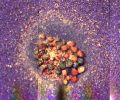
PHOE-SOL058-PIA11204.jpgUnbelievable!!!65 visiteEnnesima SCOPIAZZATURA NASA di un frame processato dal nostro Dr Faccin, addirittura 2 mesi e mezzo fa!!!
Che dire? Non hanno davvero ritegno...
Caption NASA:"This image from NASA's Phoenix Mars Lander's Optical Microscope shows a strongly magnetic surface which has scavenged particles from within the microscope enclosure before a sample delivery from the lander's Robotic Arm. The particles correspond to the larger grains seen in fine orange material that makes up most of the soil at the Phoenix site. They vary in color, but are of similar size, about one-tenth of a millimeter.
As the microscope's sample wheel moved during operation, these particles also shifted, clearing a thin layer of the finer orange particles that have also been collected. Together with the previous image, this shows that the larger grains are much more magnetic than the fine orange particles with a much larger volume of the grains being collected by the magnet. The image is 2 milimeters across.
It is speculated that the orange material particles are a weathering product from the larger grains, with the weathering process both causing a color change and a loss of magnetism".
Nota Lunexit: l'Imperial College di Londra, dopo aver esaminato (usando le nostre Funzioni Statistiche) la lista delle Università che si collegano con Lunar Explorer Italia, risulta essere un "aficionado" della nostra Fondazione!
Ok, è un onore. Ma dire "Grazie" al Dr Faccin ed a Lunexit sarebbe stato MOLTO EDUCATO ed APPREZZATO.
Che altro aggiungere? Anche gli Inglesi, a quanto pare, hanno imparato che "rubacchiare" è più facile che creare...MareKromium
|
|

OPP-SOL1666-1P276097767EFF90__P2357R2M1.jpgFarewell Victoria! - Sol 1666 (possible True Colors; credits: Lunexit)65 visitenessun commentoMareKromium
|
|

Mercury.jpgDawn at Mercury65 visitenessun commentoMareKromium
|
|

PSP_009913_1910_RED_abrowse-00.jpgFissures in Cerberus Fossae (natural colors; credits: Lunexit)65 visiteThis image shows an example of “en echelon” fractures in the Cerberus Fossae Region.
These fractures formed tectonically, meaning by the movement of Mars’ crust.
En "echelon" means that the fractures are laterally displaced from each other in a way consistent with the lateral displacement of other fractures in the same area.MareKromium
|
|
| 25353 immagini su 2113 pagina(e) |
 |
|
|
|
|
1040 | |
|
|
|
|





