| Piú viste |
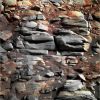
SOL1788-2.JPGRockland! - Sol 1788 (False Colors; credits: Dr G. Barca)65 visitenessun commentoMareKromium
|
|
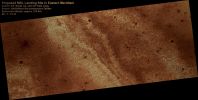
PSP_003326_1800_RED_browse.jpgProposed MSL Landing Site in Eastern Meridiani (possible True Colors; credits: Lunar Explorer Italia)65 visitenessun commentoMareKromium
|
|

ESP_011618_1885_RED_abrowse-00.jpgRecent Double-Impact (ctx frame - possible Natural Colors; credits: Lunar Explorer Italia)65 visiteMars Local Time: 15:46 (middle afternoon)
Coord. (centered): 8,6° North Lat. and 46,8° East Long.
Spacecraft altitude: 273,6 Km (such as about 171,0 miles)
Original image scale range: 27,4 cm/pixel (with 1 x 1 binning) so objects ~82 cm across are resolved
Map projected scale: 25 cm/pixel
Map projection: EQUIRECTANGULAR
Emission Angle: 5,9°
Phase Angle: 64,1°
Solar Incidence Angle: 58° (meaning that the Sun is about 32° above the Local Horizon)
Solar Longitude: 193,2° (Northern Autumn)
Credits: NASA/JPL/University of Arizona
Additional process. and coloring: Lunar Explorer ItaliaMareKromium
|
|
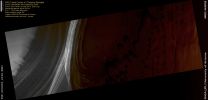
PSP_009905_2650_RED.jpgNorth Polar Layered Deposits (NPLD) and Dunes in Chasma Boreale (natural colors; credits: Lunexit)65 visiteThis image shows a steep, layered slope and flatter, dune-covered plains in Mars’ North Polar Region. The layers are composed of varying contents of water ice and dust.
On Earth, icy layers like these in Greenland and Antarctica are important because they contain a record of past climate conditions. By looking at the detailed sequence of Polar Layers on Mars, scientists hope to be able to discover the types of variations that Mars’ climate may have experienced.
The lowest section in the stack of light layers is noticeably darker because of the presence of dark, sandy material. Erosion of this dark material is thought to provide the sand making up the large dunes on the plains.
Several exceptionally well-developed barchan (crescent-shaped) dune forms up to approximately 50 meters (160 feet) across are present in the center of the image.MareKromium
|
|

Atlas-N00084627.jpgAtlas (by Dr M. Faccin)65 visitenessun commentoMareKromium
|
|

Enceladus-N00048288.jpgEnceladus (RAW Natural Colors; credits: Dr M. Faccin)65 visitenessun commentoMareKromium
|
|

Amalthea-Galileo.jpgAmalthea, from Galileo65 visiteOn its way in and out, Galileo took these two snapshots of Amalthea. The purpose was to improve navigation for the upcoming flyby of this little moonlet, but such images also help in the study of the shape of irregular worlds.MareKromium
|
|
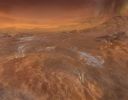
Titan-PIA11838.jpgRainy Day at Hotei Arcus65 visiteA short but fierce "gullywasher" rainstorm of Methane falls on the mountains surrounding the intriguing flows of Titan's Hotei Arcus in this artist's concept, based upon radar mapping data from the Cassini Spacecraft in orbit around Saturn.
Radar data show that the arc of Hotei is the boundary between rugged mountains to the South and East and a broad valley. Emerging from the mountains are several radar-bright channels that are likely now dry riverbeds that were carved by flowing Methane due to rainfall. Within the valley, the channels end near lobate (blobby) flows some 100 to 200 meters (300 to 600 feet) thick, which some scientists think could be slushy ice lava from cryovolcanoes.
These flows are portrayed here as the rough and elevated lighter tan areas in the foreground. It is possible that such phenomena could release Methane from beneath the surface, helping to explain how Titan's Atmosphere sustains its supply of Methane.
The area depicted is located at approximately 28° South Latitude and 78° West Longitude.MareKromium
|
|

OPP-SOL005-1N128623968EFF0205P1549L0M1.jpgEagle Crater Panorama (1) - Sol 5 (Natural Colors; credits: Lunar Explorer Italia)65 visiteNon meravigliateVi per il tipo di colorizzazione che abbiamo ottenuto: è genuino (nel senso che non abbiamo "toccato" i parametri standard della colorizzazione made by Lunexit).
Il punto è che le primissime immagine in arrivo da Meridiani Planum, quale che sia il processing di colorizzazione da noi utilizzato (MULTISPECTRUM; Natural Colors; possible True Colors etc.), confermano sempre queste caratteristiche cromatiche dell'ambiente: la superficie è color rosso acceso ed il cielo biancastro, con riflessi azzurri e rossi (verso l'orizzonte).
La nostra opinione è che questo tipo di colore (comunque non surreale, anzi...) dipenda sia dal fatto che gli obbiettivi delle camere di Opportunity erano nuovi e pulitissimi, sia dal fatto che la calibrazione effettuata a Terra - ma sulla Scala dei Grigi - era ancora imperfetta.
Ci è difficile dire, comunque, se sia più "vero" questo color rosso scuro, con punte marroni, dei primi Soles, oppure l'arancio-giallo, con note ora verdastre ed ora marroni, degli ultimi.MareKromium
|
|
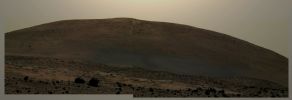
SOL1081-PANORAMIC2-GB-LXT.jpgHusband Hill and El Dorado Dunefield - Sol 1081 (Panoramic - Natural Colors; credits: Dr G. Barca & Lunar Explorer Italia)65 visitenessun commentoMareKromium
|
|

SOL626-GIF-GP.gifBetween Day and Night... - Sol 626-631 (GIF-Movie; credits: Giorgio Picciau)65 visiteUn interessantissimo GIF-Movie realizzato dal nostro Amico e Partner, Giorgio Picciau, il quale ci mostra (a condizione che osserviate il filmato con la MASSIMA attenzione!) delle possibili e minime - ma non per questo scarsamentre significative - alterazioni digitali (tampering).
Le Yellow Bars aggiunte da Giorgio Vi saranno di uteriore aiuto per cogliere delle leggere (e non agevolmente spiegabili) variazioni del contesto ripreso.
ATTENZIONE: onde non essere fraintesi, ribadiamo che non stiamo parlando di un SICURO Image Tampering, ma solo di una POSSIBILE alterazione (ed infatti l'eventualità che le citate variazioni di contesto - che qualifichiamo come "minime" - possano essere attribuite sia ad un modestissimo cambio delle condizioni superficiali esterne - Tau + lighting conditions -, sia ad un fattore generico di disturbo del segnale nella trasmissione dei dati da Marte a Terra - noise + data loss - non è eliminabile).
Ed in ogni caso...Complimenti a Giorgio Picciau per l'Occhio e la Pazienza!MareKromium
|
|
SOL336-2N156199649EFF9946P1579L0M1.jpgUp-Sun - Sol 336 (Natural Colors; credits: Lunar Explorer Italia)65 visitenessun commentoMareKromium
|
|
| 25353 immagini su 2113 pagina(e) |
 |
|
|
|
|
1036 | |
|
|
|
|





