| Piú viste |

Dione-N00119792.jpgCross-Worlds! (8)65 visitenessun commentoMareKromium
|
|
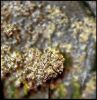
PHOE-SOL110-MF-LXT.jpgMicroscopic Vastitas - Sol 110 (Superdefinition and True Colors; credits: Dr M. Faccin & Lunexit)65 visitenessun commentoMareKromium
|
|

Panoramic-AS15-85-11448-11456.jpgFrom AS 15-85-11448 until 11456 (EVA-1; Station 2)65 visitenessun commentoMareKromium
|
|

Mercury.jpgDawn at Mercury65 visitenessun commentoMareKromium
|
|
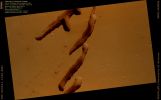
PSP_009913_1910_RED_abrowse-00.jpgFissures in Cerberus Fossae (natural colors; credits: Lunexit)65 visiteThis image shows an example of “en echelon” fractures in the Cerberus Fossae Region.
These fractures formed tectonically, meaning by the movement of Mars’ crust.
En "echelon" means that the fractures are laterally displaced from each other in a way consistent with the lateral displacement of other fractures in the same area.MareKromium
|
|
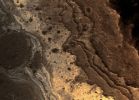
PIA11377.jpgMartian "Opal" (natural colors; credits: Lunexit)65 visiteNASA's Mars Reconnaissance Orbiter has revealed Martian rocks containing a hydrated mineral similar to Opal.
The rocks are light-toned and appear cream-colored in this natural-color image taken by the High Resolution Imaging Science Experiment (HiRISE) camera. Images acquired by the orbiter reveal that different layers of rock have different properties and chemistry.
The Opal minerals are located in distinct beds of rock outside of the large Valles Marineris Canyon System and are also found in rocks within the canyon. The presence of opal in these relatively young rocks tells scientists that water, possibly as rivers and small ponds, interacted with the surface as recently as two billion years ago, one billion years later than scientists had expected.
The discovery of this new category of minerals spread across large regions of Mars suggests that liquid water played an important role in shaping the Planet's Surface and possibly hosting life. MareKromium
|
|

IC-5067-3d.jpgIC-5067 - Reflection Nebula65 visiteMareKromium
|
|

Mimas-PIA10517.jpgCrescent Mimas (possible natural colors; credits: Lunexit)65 visiteCaption NASA:"Mimas's lit crescent has the appearance of a golf ball thanks to its heavily cratered surface.
This image was taken with the Cassini Spacecraft narrow-angle camera on Oct. 24, 2008 using a spectral filter sensitive to wavelengths of IR light centered at 752 nanometers.
The view was obtained at a distance of approx. 189.000 Km (such as about 117.000 miles) from Mimas and at a Phase Angle of 136°.
Image scale is about 1 Km (such as 3707 feet) per pixel".MareKromium
|
|

Venus_and_the_Moon.jpgNight Lovers'...65 visitenessun commentoMareKromium
|
|
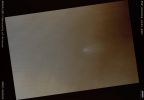
Psp_009404_2635_red.jpgSmall Crater on the NPLD (possible True Colors; credits: Lunar Explorer Italia)65 visiteMars Local Time: 14:04 (early afternoon)
Coord. (centered): 83,5° North Lat. and 346,8° East Long.
Spacecraft altitude: 317,7 Km (such as about 198,5 miles)
Original image scale range: 31,8 cm/pixel (with 1 x 1 binning) so objects ~95 cm across are resolved
Map projected scale: 25 cm/pixel
Map projection: EQUIRECTANGULAR
Emission Angle: 3,7°
Phase Angle: 57,3°
Solar Incidence Angle: 60° (meaning that the Sun is about 30° above the Local Horizon)
Solar Longitude: 105,2° (Northern Summer)
Credits: NASA/JPL/University of Arizona
Additional process. and coloring: Lunar Explorer ItaliaMareKromium
|
|
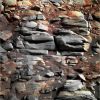
SOL1788-2.JPGRockland! - Sol 1788 (False Colors; credits: Dr G. Barca)65 visitenessun commentoMareKromium
|
|

NGC-2818.jpgNGC 2818 - Planetary Nebula65 visite"...Sapientia aedificabitur domus, et Prudentia roburabitur..."
(Salomone, prov.: 24, 3)
"...La Saggezza costruisce la casa e la Prudenza la rende forte..."MareKromium
|
|
| 25353 immagini su 2113 pagina(e) |
 |
|
|
|
|
1033 | |
|
|
|
|





