| Piú viste |
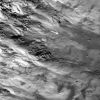
LRO-2500-Epigenes_A_Crater-3.jpgEpigenes A65 visiteImpact Melt (the dark material) flowed around and over Rocky Outcrops on the upper portion of the Crater Wall.
The white arrow points to the Crater Floor.
The initial outward surge of material during the excavation of the crater threw Impact Melt near the Rim and then gravity pulled the Melt downward during the modification stage of the impact.
(this image is approx. 540 meters wide)MareKromium
|
|

Moons-EB.gifKnown and Unknown Saturnian Moons' Carousel... (GIF-Movie; credits: Elisabetta Bonora - Lunexit Team)65 visitenessun commentoMareKromium
|
|
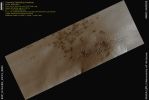
ESP_016280_2655_RED_abrowse.jpgMartian Tears... (possible Natural Colors; credits: Dr Paolo C. Fienga - Lunexit Team)65 visitenessun commentoMareKromium
|
|

SOL422-MF-LXTT.jpgGreen Patches near Spirit? - Sol 422 (an Image-Mosaic by Dr Marco Faccin)65 visitenessun commentoMareKromium
|
|

The_Sun_over_Stonehenge.jpgSunrise Solstice at Stonehenge 65 visitenessun commentoMareKromium
|
|
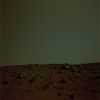
SOL381-2N160199039EFFA2JHP0874L0M1.jpgApproaching Nightfall - Sol 381 (Possible Absolute Natural Colors; credits for the additional process. and color.: Dr Paolo C. Fienga - Lunexit Team)65 visitenessun commentoMareKromium
|
|

PIA13120.jpgWISE Eyes...65 visiteThis frame shows the progress of the WISE All-Sky Survey at the present time. WISE, or NASA's Wide-field InfraRed Survey Explorer, is perched up in the sky like a wise, old owl, scanning the whole sky one-and-a-half times in IR Light. On July 17, 2010, it will have completed its first scan of the entire sky, delivering more than one million image frames so far.
This map is filled in to show the sky areas that WISE scanned over time. Red indicates regions with the greatest coverage, and blue the least. The Poles received the most coverage because WISE orbits Earth around the Poles, scanning out strips of sky as Earth moves around the Sun. The red lines between the Poles show areas that received extra coverage because of the mission's strategy to avoid the Moon.
When the moon is in WISE's field of view, about twice every month, the space telescope captures the region it blocks, by first moving ahead of the moon and then behind it. This results in overlapped coverage for certain slices of sky. During this first all-sky scan, every point was covered by at least eight image frames.
The Infrared Astronomical Satellite was a joint project of the United States, United Kingdom and the Netherlands.
The Two-Micron All-Sky Survey was a project of NASA; the National Science Foundation; the University of Massachusetts, Amherst, and the California Institute of Technology, Pasadena, California.MareKromium
|
|

OPP-SOL2296-GB-LXTT.jpgThe (many) Colors of Meridiani Planum - Sol 2296 (Natural Colors; credits for the additional process. and color.: Dr Gianluigi Barca - Lunexit Team)65 visitenessun commentoMareKromium
|
|

SOL0520-2P172547561EFFABEJP2698L7M1.jpgSunset - Sol 520 (Natural Colors; credits for the additional process. and color.: Dr Paolo C. Fienga - Lunexit Team)65 visitenessun commentoMareKromium
|
|

SOL0813-2P198554525EFFAR00P2408R1M1.jpgPanorama - Sol 813 (Natural Colors; credits for the additional process. and color.: Dr Paolo C. Fienga - Lunexit Team)65 visitenessun commentoMareKromium
|
|

SOL0578-2N177683883EFFADIHP0755L0M1.jpgHorizon - Sol 578 (Absolute Natural Colors; credits for the additional process. and color.: Dr Paolo C. Fienga - Lunexit Team) 65 visitenessun commentoMareKromium
|
|
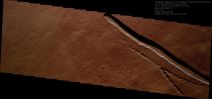
Collapse_Features-PavonisMons-20080306a.jpgChannel on Pavonis Mons (Natural Colors; credits for the additional process. and color.: Dr Paolo C. Fienga - Lunexit Team)65 visitenessun commentoMareKromium
|
|
| 25353 immagini su 2113 pagina(e) |
 |
|
|
|
|
1026 | |
|
|
|
|





