| Piú viste |

OPP-SOL1749-1.jpgReddish Pebbles on the Paving - Sol 1749 (possible True Colors; credits: Dr G. Barca)65 visitenessun commentoMareKromium
|
|

Asteroid-PIA11735.jpgUnsuccesful crossing of the Roche Limit65 visiteIl Limite di Roche è la distanza minima dal centro di un Pianeta o di una Stella (qui di seguito definiti "Corpo Maggiore"), al di sotto della quale un satellite, o un pianeta (qui di seguito definito "Corpo Minore"), si può frammentare a causa delle Onde Gravitazionali Mareali (o "Forze di Marea"). Se si suppone che entrambi i Corpi (Maggiore e Minore) considerati abbiano la medesima densità, il Limite di Roche viene fatto pari a circa 2,5 volte il raggio del Corpo Maggiore (Pianeta o Stella che sia).
È possibile che all'interno di tale Limite esistano dei satelliti, ma essi devono essere sufficientemente piccoli e leggeri, così che le tensioni ad essi interne gli impediscano la frammentazione.
In un disco di frammenti che avvolge un pianeta appena formato (cd. "Protoplanetary Cloud Remainders" o anche "Accretion Disk"), la materia esistente oltre il Limite di Roche può assemblarsi in uno o più satelliti di modeste dimensioni, poichè all'interno di tale Limite le Forze di Marea impediscono la formazione di satelliti grandi.
Un buon esempio di questo tipo di fenomeno è negli anelli che vediamo intorno a Giove, Saturno, Urano e Nettuno: tutti questi anelli, infatti e ad esempio, si trovano all'interno del Limite di Roche.
Nel Sistema Solare sono quattro i pianeti che presentano anelli e per ciascuno di essi è stato calcolato il relativo Limite di Roche:
Giove = 175.000 Km
Saturno = 147.000 Km
Urano = 62.000 Km
Nettuno = 59.000 Km
Édouard Albert Roche, nel 1850, studiò in particolare gli Anelli di Saturno e giunse a dimostrare che il valore di 2,44 Raggi Planetari Saturniani si posizionava leggermente al di fuori dell'Anello più esterno, dentro il quale effettivamente non esistevano corpi di rilevanza.
Dalle riprese effettuate durante i Programmi Voyager e CASSINI-Huygens, si è potuto notare che gli Anelli di Saturno (al pari di quelli di tutti i Giganti Gassosi) non sono "unitari e compatti", bensì composti da aggregazioni promiscue di rocce di modeste dimensioni e ghiaccio: tutti elementi, questi, che - come detto - trovandosi all'interno del Limite di Roche ed avendo resistito alle Onde Gravitazionali emanate da Saturno, ci dimostrano una scarsissima densità intrinseca (e dunque una evidente idoneità alla "sopravvivenza" verso le Onde Gravitazionali Mareali).MareKromium
|
|
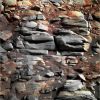
SOL1788-2.JPGRockland! - Sol 1788 (False Colors; credits: Dr G. Barca)65 visitenessun commentoMareKromium
|
|

NGC-2818.jpgNGC 2818 - Planetary Nebula65 visite"...Sapientia aedificabitur domus, et Prudentia roburabitur..."
(Salomone, prov.: 24, 3)
"...La Saggezza costruisce la casa e la Prudenza la rende forte..."MareKromium
|
|
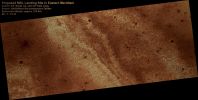
PSP_003326_1800_RED_browse.jpgProposed MSL Landing Site in Eastern Meridiani (possible True Colors; credits: Lunar Explorer Italia)65 visitenessun commentoMareKromium
|
|
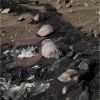
SOL351-1.JPGThe colourful Surface of Mars - Sol 351 (possible True Colors; credits: Dr G. Barca)65 visitenessun commentoMareKromium
|
|
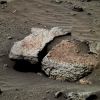
SOL372-1.jpgBroken Shell... - Sol 372 (possible True Colors; credits: Dr G. Barca)65 visiteLa prova visiva LAMPANTE che alcune rocce Marziane (tutte? La maggior parte? O solo alcune?...) sono solo "gusci": scatole di "pietra" che contengono un "qualcosa" sulla cui Natura - ad oggi - nessuno può offrire certezze.
Un grande complimento al nostro - sempre bravissimo - Dr Barca per la qualità del suo processing e della relativa colorizzazione!MareKromium
|
|

Craters-Crommelin_Crater-PCF-LXTT.jpgCrommelin Crater (Natural Colors; credits for the additional process. and color.: Dr Paolo C. Fienga - Lunar Explorer Italia)65 visiteCoord.: 5,1° North Lat. and 349,8° East Long.MareKromium
|
|

PSP_009905_2650_RED.jpgNorth Polar Layered Deposits (NPLD) and Dunes in Chasma Boreale (natural colors; credits: Lunexit)65 visiteThis image shows a steep, layered slope and flatter, dune-covered plains in Mars’ North Polar Region. The layers are composed of varying contents of water ice and dust.
On Earth, icy layers like these in Greenland and Antarctica are important because they contain a record of past climate conditions. By looking at the detailed sequence of Polar Layers on Mars, scientists hope to be able to discover the types of variations that Mars’ climate may have experienced.
The lowest section in the stack of light layers is noticeably darker because of the presence of dark, sandy material. Erosion of this dark material is thought to provide the sand making up the large dunes on the plains.
Several exceptionally well-developed barchan (crescent-shaped) dune forms up to approximately 50 meters (160 feet) across are present in the center of the image.MareKromium
|
|
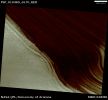
PSP_010489_2670_RED_abrowse.jpgTrough on the North Polar Layered Deposits (Natural Colors; credits: Lunar Explorer Italia)65 visiteMars Local Time: 11:00 (late morning)
Coord. (centered): 87,0° North Lat. and 195,5° East Long.
Spacecraft altitude: 316,1 Km (such as about 197,6 miles)
Original image scale range: 31,6 cm/pixel (with 1 x 1 binning) so objects ~ 95 cm across are resolved
Map projected scale: 25 cm/pixel
Map projection: EQUIRECTANGULAR
Emission Angle: 0,7°
Phase Angle: 73,7°
Solar Incidence Angle: 73° (meaning that the Sun is about 17° above the Local Horizon)
Solar Longitude: 145,4° (Northern Summer)
Credits: NASA/JPL/University of Arizona
Additional process. and coloring: Lunar Explorer ItaliaMareKromium
|
|

Martian_Residual_Lake-2779-22384.jpgResidual Lake on Mars65 visitenessun commentoMareKromium
|
|

Kaguya-049-20090619_kaguya_hdtv_L7.jpgThe very final images taken by the HDTV (7)65 visitePicture taken at 03:17 a.m.
Coord.: about 89° South Lat. and approx. 266° East Long.
Spacecraft altitude: 14,1 Km
Relative Position: near De Gerlache Crater (about 32 Km dia.)
NASA said:"Japan's Kaguya Spacecraft crashed into the Moon last week (June, 11th, 2009), as planned.
Officially named the Selenological and Engineering Explorer (SELENE), the spacecraft was given the nickname "Kaguya" after the princess in the Japanese folklore story "The Tale of the Bamboo Cutter".
Pictured above is the last frame taken by Kaguya during the last orbit of its 20-month Lunar Mission.
A desolate, hilly and cratered terrain passed underneath the Spacecraft as it barely cleared a few peaks. At the end of the descent, the Spacecraft disappeared into darkness near Gill Crater.
Robotic SELENE carried thirteen scientific instruments and two HDTV cameras. The groundbreaking mission took data on Lunar Topology and composition that are being used to better understand the origin and history of Earth's unique and ancient companion.
Data and images from Kaguya and the recently launched Lunar Reconnaissance Orbiter could be used to choose good locations to land future Moon-exploring Astronauts".MareKromium
|
|
| 25353 immagini su 2113 pagina(e) |
 |
|
|
|
|
1023 | |
|
|
|
|





