| Piú viste |

Martian_Residual_Lake-2779-22384.jpgResidual Lake on Mars65 visitenessun commentoMareKromium
|
|

Kaguya-049-20090619_kaguya_hdtv_L7.jpgThe very final images taken by the HDTV (7)65 visitePicture taken at 03:17 a.m.
Coord.: about 89° South Lat. and approx. 266° East Long.
Spacecraft altitude: 14,1 Km
Relative Position: near De Gerlache Crater (about 32 Km dia.)
NASA said:"Japan's Kaguya Spacecraft crashed into the Moon last week (June, 11th, 2009), as planned.
Officially named the Selenological and Engineering Explorer (SELENE), the spacecraft was given the nickname "Kaguya" after the princess in the Japanese folklore story "The Tale of the Bamboo Cutter".
Pictured above is the last frame taken by Kaguya during the last orbit of its 20-month Lunar Mission.
A desolate, hilly and cratered terrain passed underneath the Spacecraft as it barely cleared a few peaks. At the end of the descent, the Spacecraft disappeared into darkness near Gill Crater.
Robotic SELENE carried thirteen scientific instruments and two HDTV cameras. The groundbreaking mission took data on Lunar Topology and composition that are being used to better understand the origin and history of Earth's unique and ancient companion.
Data and images from Kaguya and the recently launched Lunar Reconnaissance Orbiter could be used to choose good locations to land future Moon-exploring Astronauts".MareKromium
|
|
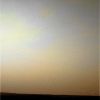
SOL1948-MF-LXT.jpgComplexity of the Martian Atmosphere - Sol 1948 (Natural Colors; credits: Dr M. Faccin & Lunar Explorer Italia)65 visitenessun commentoMareKromium
|
|

Starburst_Spider_(ESP_011842_0980)-1.jpgStarburst Spiders (Natural Colors; credits: Dr G. Barca & Lunar Explorer Italia)65 visitenessun commentoMareKromium
|
|

PHOE-SOL150-365048main_phx17062-516_edited.jpgVastitas' Horizon - Sol 15065 visiteNota Lunexit:"Se veramente Marte fosse il mondo perennemente rosso "monocromatico" descritto dalla NASA, avremmo una bella rogna tecnica: praticamente, in mancanza di - effettiva - luce bianca, qualora il cielo marziano fosse davvero PERENNEMENTE arrossato dalle micropolveri in costante sospensione nella sua (presunta) rarefatta atmosfera, qualsiasi veicolo presente al suolo (dotato di pannelli solari) avrebbe avuto una vita breve.
Molto breve, anzi: brevissima! Perchè? Perchè i Pannelli Solari necessitano di captare i fotoni dell'intero spettro visibile se si vuole che ogni cosa funzioni a modo, specie considerando il fatto che la frequenze della luce rossa è meno della metà di quella della luce violetta. I Pannelli Solari, Cari Amici, si chiamano così proprio perchè funzionano...Ad Energia Solare e cioè, a Spettro Pieno (Full Spectrum)! Spettro Pieno e quindi...usando la vecchia e cara luce bianca (che alla NASA proprio non piace".MareKromium
|
|

Titan-PIA11526.jpgTitan's "Atmospheric Halo" (Natural Colors; credits: Lunar Explorer Italia)65 visiteCaption NASA:"The Cassini Spacecraft looks down on Titan's North Pole and unveils the moon's upper-most Atmospheric Hazes, creating the appearance of a halo around Saturn's largest moon.
Terrain seen here is on the Trailing Hemisphere of Titan, which is facing Saturn. This view is centered on 54° North Latitude and 251° West Longitude.
Titan's north pole lies on the Terminator, about one-third of the way inward from the top of the image.
The image was taken in Violet Light with the Cassini Spacecraft wide-angle camera on May 21, 2009. The view was obtained at a distance of approx. 147.000 Km (such as about 91.000 miles from Titan and at a Sun-Titan-Spacecraft, or Phase, Angle of 121°.
Image scale is roughly 9 Km (a little les than 6 miles) per pixel".MareKromium
|
|

PSP_006250_2200.jpgVan Gogh (on Mars)65 visiteUna splendida elaborazione in JP2 realizzata dal nostro Dr Faccin e relativa ad un cratere che, nell'immagine MRO "panoramica", risulta praticamente invisibile. Il titolo del frame (Van Gogh), se osservate le fattezze del Cratere ripreso...è autoesplicativo!
Nel quadrante Sx: colorazione Naturale che tiene conto del Tau Medio Marziano e la relativa colorizzazione ed opacità del Suolo nelle vedute orbitali;
Nel quadrante Dx: colorazione Naturale che ignora il Tau Medio Marziano e la relativa colorizzazione ed opacità del Suolo nelle vedute orbitali.MareKromium
|
|
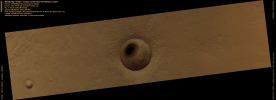
PSP_007004_2000_RED_abrowse.jpgRelatively "Fresh" Crater on the Floor of Pasteur Crater (Natural Colors; credits: Lunar Explorer Italia)65 visitenessun commentoMareKromium
|
|

Solar_Corona_vangorp_big.jpgSolar Corona65 visiteDa "NASA - Picture of the Day" del giorno 26 Luglio 2009:"Most photographs don't adequately portray the magnificence of the Sun's Corona. Seeing the Corona first-hand during a Total Solar Eclipse is best. The human eye can adapt to see features and extent that photographic film usually cannot.
Welcome, however, to the digital age. The above picture is a combination of 33 photographs that were digitally processed to highlight faint features of a Total Eclipse that occurred in March of 2006. The images of the Sun's Corona were digitally altered to enhance dim, outlying waves and filaments. Shadow seekers need not fret, though, since as yet there is no way that digital image processing can mimic the fun involved in experiencing a Total Solar Eclipse.
Last week, a spectacular Total Solar Eclipse occurred over Southern Asia, while the the next Total Solar Eclipse will be visible from the South Pacific on July, 11, 2010".MareKromium
|
|

Panoramic-AS14-64-9099-9108.jpgFrom AS 14-64-9099 until 9108 (EVA-2; Station C1, Saddle Rock and the Rim of Cone Crater)65 visitenessun commentoMareKromium
|
|
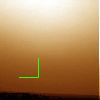
SOL2002-Sunshine-MF.gifGood-Morning Starshine! - Sol 2002 (GIF-Movie; credits: Dr M. Faccin)65 visiteSplendida: non si può dire altro.MareKromium
|
|

ESP_014159_1670_RED_abrowse-01.jpg"Worm-like" Surface Feature in the Southern Highlands (EDM - Natural Colors; credits: Lunexit)65 visitenessun commentoMareKromium
|
|
| 25353 immagini su 2113 pagina(e) |
 |
|
|
|
|
1017 | |
|
|
|
|





