| Piú viste |

McNaught-09.jpgThe "Tail" of McNaught, at Sunset...65 visiteCaption NASA originale:"What's happening over the horizon? Many a sky enthusiast who thought they had seen it all had never seen anything like this. To the surprise of many Northern Hemisphere observers, the tail of Comet McNaught remained visible even after the comet's head set ahead of the Sun. What's more, visible were bright but extremely rare filamentary striae from the comet's expansive dust tail. The cause of dust tail striae are not known for sure, but are possibly related to fragmentation of comet's nucleus. The last comet to show prominent striae was Comet Hale-Bopp in 1997.
Pictured above, the tail of Comet McNaught was caught just after Sunset last Friday above the Carnic Alps of Northern Italy".
|
|

SOL1103-2N224289287EFFASJ0P0775L0M1.jpgA lonely Dust Devil is passing-by... - Sol 1103 (false colors)65 visitenessun commento
|
|

030-Mars-17-PIA09225_fig1.jpgThe "Lower Boundary" of the Icy Layers Covering Mars' South Polar Region (Map 2)65 visiteThis map shows the topography of the South Polar Region of Mars, including topography buried by thick deposits of icy material. The map is a combination of surface elevation data acquired by the Mars Orbiter Laser Altimeter aboard NASA's Mars Global Surveyor orbiter, and subsurface elevation data acquired by the Mars Advanced Radar for Subsurface and Ionospheric Sounding (MARSIS) aboard the European Space Agency's Mars Express orbiter.
The black line shows the boundary of the South Polar Layered Deposits, an ice-rich geologic unit that was probed by MARSIS. Elevation values within the black outline, as measured by MARSIS, show the topography at the boundary between the layered deposits and the underlying material, an interface known as the "bed" of the deposits. The elevation of the terrain is shown by colors, with purple and blue representing the lowest areas, and orange and red the highest. The total range of elevation shown is about 5 Km.
The radar data reveal previously undetected features of topography of the bed, including depressions as deep as 1 Km (0,6 miles) shown in purple in the near-polar region.
The boundary of the layered deposits was mapped by scientists from the U.S. Geological Survey. The dark circle in the upper center is the area poleward of 87° South Latitude, where MARSIS data cannot be collected.
The map covers an area of 1670 by 1800 Km (about 1035 by 1115 miles).
|
|
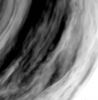
Venusian_Atmosphere-ORB157_01_17_WB_H.jpgVenusian Turbulence: the Alpha Regio Area65 visiteThis image of the Venusian South Polar Region was acquired on 24 September 2006 by the Ultraviolet, Visible and Near-Infrared Mapping Spectrometer (VIRTIS) on board ESA’s Venus Express, from a distance of about 65.000 Km from the Planet’s surface.
The image, showing a complex cloud system, was taken on the night-side of Venus (04:00 Local Time - V.L.T.), at a wavelength of 1,7 micron that allows viewing the deep atmospheric layers. The field of view covers an area located at approximately 20° West Longitude (diagonal top left to bottom right), spanning from the Equator (at the horizon on the right) to 60° Southern Latitude (top left corner of the image).
The grey-scale of the image is such that black means more transparency, therefore less clouds, while white means more opacity, therefore more cloud concentration.
The Alpha Regio area is at the bottom left of the image. This area is characterised by a series of troughs, ridges, and faults that are oriented in many directions, with surface features that can be up to 4 kilometres high. It is not yet clear if atmospheric turbulences may be induced by the rough topography below the clouds.MareKromium
|
|

Atlas-N00084635.jpgAtlas (3)65 visitenessun commentoMareKromium
|
|

ZZ-ColorMars-08-KL-V03689003color.jpgMars from Orbit, as a "Human" would see it...by Keith Laney (2)65 visitenessun commentoMareKromium
|
|
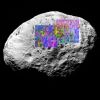
Hyperion-PIA09214.jpgWhat's all over Hyperion? (context image)65 visiteCaption NASA:"Hyperion, the eighth largest of Saturn's nearly 60 known moons, is covered in craters and landslides. Sprinkled over the icy surface is a thin layer of organic dust, which has somehow been concentrated in the bottoms of some of the craters, forming a reddish/black deposit.
This new color map shows the composition of a portion of Hyperion's surface determined with the Visual and Infrared Mapping Spectrometer aboard the Cassini spacecraft. The new composition map is overlaid onto a previously released Cassini image of Hyperion, taken with the Imaging Science Subsystem.
(...) Discovered in 1848, Hyperion held its secrets until the Cassini spacecraft flew close in September 2005, revealing its icy and organic composition.
Hyperion is irregular in shape, tumbles chaotically, and takes 21 days to orbit Saturn. It is 300 Km (about 180 miles) in its longest dimension".MareKromium
|
|

Saturn-PIA08982.jpgIn the Night...65 visiteCaption NASA:"Graceful giant Saturn poses with a few of the small Worlds it holds close. From this viewpoint the Cassini Spacecraft can see across the entirety of the Planet's shadow on the Rings, to where the Ring-Plane emerges once again into Sunlight.
Tethys shines large and bright near the bottom of the scene. Pandora sits outside the F-Ring, below center. Epimetheus is a speck on the far side of the Ring-Plane, immediately to the right of Saturn's limb. Most of the other bright specks near the Rings are background stars.
This view looks toward the unilluminated side of the Rings from about 8° above the Ring-Plane. The image has been brightened to enhance the appearance of the small moons.
The image was taken with the Cassini spacecraft wide-angle camera on June 2, 2007 using a spectral filter sensitive to wavelengths of infrared light centered at 918 nanometers.
The view was obtained at a distance of approx. 2,2 MKM (such as about 1,4 MMs) from Saturn.
Image scale is roughly 131 Km (about miles) per pixel".MareKromium
|
|

SOL442-2N165615279EFFA978P1997R0M1-2.jpgDreaming a New Day...65 visite"...Il Sole che tramonta per alcuni, per altri è il Sole che sorge..."
(anonimo)MareKromium
|
|

Craters-Unnamed_Crater_with_Pedestal-MGS.jpgAnother "Pedestal Crater" (Enhanced Natural Colors; credits for the additioanl process. and color.: Dr Paolo C. Fienga - Lunexit Team)65 visitenessun commentoMareKromium
|
|

Rhea-PIA08986.jpgRhea, in the Saturnshine (natural colors - elab. Lunexit)65 visiteCaption NASA:"The night side of Rhea shines softly in reflected light from Saturn. A similar effect, called Earthshine, can often be seen dimly illuminating the dark side Earth's Moon.
Background stars make short, dim trails across the black sky. The sunlit terrain on Rhea is so much brighter than the part lit by Saturn that the former is completely overexposed in this view, which took more than 30" to acquire.
This view looks toward the Leading Hemisphere on Rhea. North is up and rotated 28° to the left.
The image was taken in visible light with the Cassini spacecraft narrow-angle camera on June 11, 2007. The view was obtained at a distance of approx. 364.000 Km (such as about 226.000 miles) from Rhea and at a Sun-Rhea-spacecraft, or phase, angle of 154°. Image scale is roughly 4 Km (about 3 miles) per pixel".MareKromium
|
|
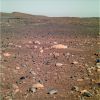
ZZ-ZZ-Horizon-S39.jpgGusev's Panorama (natural colors - elab. Keith Laney)65 visitenessun commentoMareKromium
|
|
| 25353 immagini su 2113 pagina(e) |
 |
|
|
|
|
1015 | |
|
|
|
|





