| Piú viste |

OPP-SOL297-1R154552293EFF3897P1311L0M1.jpgStar-Like Object? - Sol 29766 visitenessun commento
|
|

M-027-1.jpgM 27 - The "Dumbbell Nebula"66 visite"...In everything, do to others as you would have them do to you; for this is the Law and the Prophets..."
- Matthew 7:12
|
|

OPP-SOL321-1R156683426EFF4000P1311R0M1-A.jpgA new (small) "Silver Anomaly"? (context image) - Sol 32166 visiteIl Dr Barca, andando a ritroso fra le migliaia di frames Opportunity, si è specializzato nell'individuare (opera, credeteci, tutt'altro che semplice!) dettagli intriganti i quali, ora in toto ed ora in parte, ci riconducono a possibili Anomalìe di Superficie le quali, a parte NASA ed ESA, cominciano ad essere chiare proprio a tutti gli Studiosi e gli Appassionati di "Marte & Dintorni".
In questo context frame, ritroviamo quel tipico effetto "goccia di luce" che, come abbiamo già detto in passato, evidenzia una iper-saturazione dell'immagine dovuta ad una eccessiva luminosità dell'oggetto ripreso.
Si tratta di un cristallo o di qualcosa di metallico?
O forse qualcosa di completamente diverso e, per certio versi, inatteso?
Andiamo a vedere il detail mgnf...
|
|
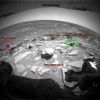
OPP-SOL898-1R207903396EFF74ZGP1305R0M1.jpgRock Variety (4) - Sol 89866 visitenessun commento
|
|

Volcanoes-The_FootPrint_Volcano-A-MGS.jpgThe "Footprint Volcano" (Original NASA/MGS/MSSS b/w Frame)66 visiteCaption NASA originale:"This MGS-MOC image shows a small, dust-mantled volcano on the plains East of the giant martian volcano, Pavonis Mons".
Location near: 1,6° South Lat.; 105,7° West Long.
Image width: ~3 Km (~1.9 mi)
Illumination from: lower left
Season: Southern Spring
|
|

Exoplanet-3.jpgID of "Exoplanet Host Star OGLE-2003-BLG-235L/MOA-2003-BLG-53L" (1)66 visite"...Initium est salutis notitia peccati..."
(Seneca)
"...La conoscenza del male (nel senso morale del termine) segna l'inizio della guarigione..."
|
|

Perseid-1.jpgShooting Star (1)66 visiteL'immagine è sicuramente bella, ma quello che vorremmo farVi notare è la tessitura della striscia lasciata dalla "stella cadente" la quale, come ben si vede (anche senza operare ingrandimenti), contiene "nodi" (modesti rigonfiamenti dovuti, probabilmente, a perdita/consunzione di materiale a seguito dell'attrito durante la caduta del frammento di Corpo Celeste attraverso l'atmosfera) e "brillamenti" (delle vere e proprie "fiammate" che si avviano, di regola, in corrispondenza dei "nodi" e che indicano cambi di temperatura - ergo di luminosità - del Corpo in questione).
|
|
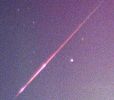
Perseid-2.jpgShooting Star (2) - detail mgnf66 visiteOsservate questo ingrandimento della Perseide immortalata dal nostro Amico Jimmy Westlake e poi provate a riguardare il (presunto) bolide che Cassini potrebbe aver fotografato nello Spazio di Saturno: noterete con semplicità che le caratteristiche delle due "strisciate di luce" (streaks) sono MOLTO simili.
Peccato che la NASA si affanni a dare credito solo ad alcuni personaggi e ad alcune (sempre più discutibili o insulse) "scoperte" (come il presunto colorito "rosato" di Iperione), senza mai prendere atto che anche in Italia esistono Ricercatori attenti e competenti i quali, di tanto in tanto, sono i primi a notare l'esistenza di qualcosa di veramente raro...
Peccato.
|
|
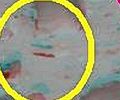
SOL391-B-site_AA3_navcam_180_cyp_A-A391R1-B.jpg3D or not 3D? That is the question... (2) - Sol 39166 visiteSappiamo bene che l'immagine in 2D è limitata e, spesso (grazie anche alle manipolazioni digitali - dette anche "taroccamenti"), ingannevole, ma che dire dell'ingannevolezza del 3D? Ebbene, per segnare un punto a favore dei sostenitori della maggiore affidabilità della bidimensionalità, interviene questo dettaglio del frame NavCam che abbiamo presentato nel quadro precedente: la roccia che vedete, sta per caso...volando?!?
Così pareva e pare - e, credeteci, sino a quando guarderete l'immagine tridimensionale, il sassetto piatto che giace, semi-infossato, accanto al più intrigante outcrop che si vede a Sx del frame precedente, continuerà a darVi l'impressione di essere sollevato dal suolo.
Che succede, quindi? Siamo davanti ad un fenomeno che si pone quale pesante ed assai intrigante elemento di sostegno all'esistenza dell'anti-gravità?
O si tratta di "Levitazione Marziana"?
|
|
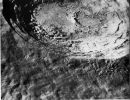
APOLLO 15-0326.jpgAPOLLO 15-0326 - Aristarchus66 visiteAristarchus is a large crater on the edge of a plateau within Northern Oceanus Procellarum. In this scene the crater is viewed obliquely from the North. One of the brightest and youngest craters of its size on the Near-Side of the Moon, Aristarchus is believed to be younger even than Copernicus. The general appearance of Aristarchus and of parts of the plateau around it led Alfred Worden, the Apollo 15 CMP, to describe this part of the Moon as "... probably the most volcanic area that I've seen anywhere on the surface". For many years before the Apollo Missions, Earth-based viewers had reported telescopic sightings of TLP's centered on Aristarchus. These brief, subtle changes in color or in sharpness of appearance have been suggested as evidence for volcanic activity or the venting of gases from the lunar interior. The sightings are controversial, but Aristarchus remains a center of interest.
About 39 Km in diameter, Aristarchus is on the borderline between medium-sized and large- sized craters. We have included it among the large craters because its welldeveloped concentric terraces are characteristic of most large craters that have not been too severely degraded. Its terraced walls, as well as its arcuate range of central peaks, are particularly well shown in this view. The walls and parts of the crater floor are extremely rough and cracked, a characteristic feature of other young impact craters of this size range, such as Tycho and Copernicus. The rough deposits in the floor are probably made up largely of shockmelted material formed at the time of the impact. The inner, rougher portions of the rim show a series of channels, lobate flows, and smooth puddlelike deposits that may represent shock-melted material deposited on the crater rim. The outer, smoother portions show the rhomboidal pattern characteristic of crater ejecta blankets.
|
|

APOLLO 15 AS 15-1030.jpgAS 15-1030 - Tsiolkovsky66 visiteThis vertical view shows the central part of Tsiolkovsky in more detail. From the nature of the boundary between the dark mare lavas and the lighter materials at the base of the walls and in the central peak, we know that the lavas must have lapped upon and embayed the lighter materials. The relatively level areas of lighter material in the southwest and northwest parts of the floor have a distinctly different texture than the coarse blocky materials of slumped wall that surround the floor elsewhere. Finely cracked, furrowed, and hummocky, they closely resemble parts of the floor of the crater King. They probably consist of impact melt that solidified to form the original floor of Tsiolkovsky before it was flooded by mare lavas.
|
|

North_Polar_Features-Unconformities-00.jpgNorth Polar "Unconformity" (Original NASA/MGS/MSSS b/w Frame)66 visiteCaption NASA originale:"This MGS-MOC image shows an Unconformity in an exposure of North Polar Layered Material, at which older Layers were cut-off and eroded before a new suite of Layers was deposited above them.
The Terrain in the entire scene was covered by a thin layer of CO2 Frost at the time this picture was acquired in June 2006".
Location near: 86,1° North Lat. and 208,5° West Long.
Image width: ~4 Km (~2,5 mi)
Illumination from: lower left
Season: Northern Spring
|
|
| 25353 immagini su 2113 pagina(e) |
 |
|
|
|
|
1006 | |
|
|
|
|





