| Piú viste - The Lunar Surface in HR |

Moon-Lunar_Unnamed_Crater-f56dcf43b7768c6f7ecee39e14ad2696_XL.jpgUnnamed Crater177 visiteQui non si fa Politica, ma qualcosa occorre scriverla. Dato che l'India é arrivata sulla Luna e vorrebbe arrivare su Marte (come Cina ed USA), io mi chiedo, oggi.... - quote -
"Come sarebbe stato nascere in India? C’è chi la domanda se l’è posta davvero. E ha anche deciso di toccare con mano, di vedere come si vive in questo grande Paese.
È possibile dare una prima risposta: nascere in India significa, fin da piccoli, imparare a dover fare i conti con la povertà.
La povertà…
Si parla di povertà estrema quando una parte, più o meno consistente, di popolazione vive con meno di 1,90 dollari al giorno. Secondo i dati della Banca mondiale, nel 2015 l’India aveva una popolazione pari a un miliardo e trecento milioni di persone.
La percentuale di popolazione che vive con meno di 1,90 dollari al giorno è di circa il 21%. Fatto il calcolo, sono più di 270 milioni di persone.
…la fame…
Ci sono tre dati, la cui fonte è il Programma alimentare mondiale, che descrivono perfettamente la situazione:
• In India vive un quarto delle persone denutrite di tutto il mondo.
• Nove donne incinte su dieci soffrono di malnutrizione e anemia.
• Più della metà dei bambini sotto i cinque anni è malnutrita o soffre di nanismo.
Qui comincia un circolo vizioso. Chi non mangia abbastanza, non ha forze sufficienti per lavorare e guadagnare. Senza lavorare e guadagnare, non si ha la possibilità di comprare cibo. Un circolo vizioso fatto di fame e povertà. Un circolo difficile da spezzare.
…e gli altri problemi dell’India
Perché non ci sono “solo” la fame e la povertà. Il tasso di mortalità materna è tra i più alti del mondo: ogni anno, circa 120.000 donne non superano il parto o la gravidanza. La metà delle donne è analfabeta e i loro diritti fondamentali vengono negati sistematicamente. Anche il tasso di abbandono scolastico è molto alto e questo significa che i bambini sono costretti a lavorare".
Ed i Governanti di questo ricchissimo Inferno, anziché far qualcosa, vanno a guardare da vicino la Luna? L'India l'ho vista e vissuta, poco o tanto non conta. Ma son stato lì e non mi sono fermato ai telegiornali, quando ne parlano (e cioé quasi mai, salvo che per le "tensioni" politiche e militari con i "Vicini").
Non ho parole. Anzi si. Specie dopo aver visto, ieri, a Milano (Italia, la "Capitale del Nord", dicono, e NON Nuova Delhi, Calcutta, o qualche altra "Città della Gioia"....), un pò (un BEL pò!) di miseria e di degrado.
Che nausea.
Che vergogna.
Povera India.
E poveri noi......MareKromium
|
|

Moon_Quakes-Aldrin_and_Seismometer-Apollo_11.jpgMoon Quakes?148 visiteLunamoti? Eventi inesistenti o, nella migliore delle ipotesi, "eventi residuali". Questa la posizione ufficiale NASA sino a pochissimo tempo fa.
Poi, nella rubrica "NASA - Picture of the Day" del giorno 10 Ottobre 2010, ecco che i Moonquakes vengono definiti come eventi "surprisingly common" (la traduzione non serve...).
E meno male che la NASA è sempre chiara, coerente e cristallina...
"Why are there so many moonquakes?
A recent reanalysis of seismometers left on the Moon by the Apollo Moon Landings has revealed a surprising number of Moonquakes occurring within 30 Km of the Surface. In fact, 28 Moonquakes were detected in data recorded between 1972 and 1977. These Moonquakes were not only strong enough to move furniture but the stiff rock of the Moon continued vibrating for many minutes, significantly longer than the soft rock Earthquakes on Earth.
The cause of the Moonquakes remains unknown, with one hypothesis holding that Landslides in Craters cause the vibrations. Regardless of the source, future Moon buildings need to be built to withstand the frequent shakings.
Pictured above in 1969, Apollo 11 Astronaut Buzz Aldrin stands beside a recently deployed Lunar Seismometer, looking back toward the Lunar Landing Module".
Dunque, se ho capito bene, i dati raccolti sono stati rivisitati (con quarant'anni di ritardo...) ed è stato scoperto che i Lunamoti ci sono, eccome, ma non dovrebbero esserci. Perchè la Luna, ovviamente, è un Astro "geologicamente defunto". Si, questa posizione è molto simile a quella assunta dalla NASA stessa a proposito dell'Evento Della Torre.
"...Si, c'è stato. Però non può essere dipeso da nessuna causa conosciuta e/od ipotizzabile. Dunque non c'è stato...".
Pubblicheremo (prestissimo) la corrispondenza NASA laddove la summenzionata (pseudo)"posizione" viene presa ed esplicitata. E poi qualcuno si offende se si pensa che, forse, l'Ente Spaziale più ricco, preparato e potente al Mondo, potrebbe nascondere qualcosa...
MareKromium
|
|

APOLLO_12_-_AS_12-49-7318_HR1.jpgAS 12-49-7318 - Mysterious reflection... (HR; additional process. by Giorgio Picciau)76 visitenessun commentoMareKromium
|
|
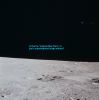
APOLLO_14_AS_14-66-9297_(HR).jpgAS 14-66-9297 (HR) - Looking for the Blue Flare... (9)75 visitenessun commentoMareKromium
|
|

APOLLO 16 AS 16-4471.jpgAS 16-4469 and AS 16-4471 - Crater Messier "A" (stereo pair)71 visitenessun commento
|
|
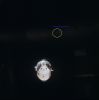
APOLLO_14_AS_14-66-9350_(HR).jpgAS 14-66-9350 (HR) - Looking for the Blue Flare... (21)69 visitenessun commentoMareKromium
|
|

APOLLO_15_-_AS15-84-11313_HR.jpgAS 15-84-11313 - Mount Hadley68 visitenessun commentoMareKromium
|
|

APOLLO_12_-_AS_12-49-7318_HR2.jpgAS 12-49-7318 - Mysterious reflection... (HR; additional process. by Dr M. Faccin)68 visitenessun commentoMareKromium
|
|

APOLLO 15 AS 15-0757.jpgAS 15-0757 - Tsiolkovsky66 visiteTsiolkovsky is one of the most prominent features on the Far-Side of the Moon. It is a 1 90-Km- wide impact crater with a large, complex central peak that is offset from the apparent center of the crater. Differences in tone and texture between the central peak, the lava-flooded floor, the terraced walls and the ejecta blanket are dramatically displayed in this oblique view. The ejecta blanket is dominated by a coarse pattern of ridges radiating outward from the crater; superposed on this pattern are many small level pools of smooth material that are much lighter than the otherwise similar smooth dark mare in the floor of Tsiolkovsky. The pools probably originated differently. They may consist of rock that was melted by the heat and pressure generated during the impact event and that flowed into depressions before it hardened.
Cratering experiments on Earth have shown that central peaks consist of bedrock that has been displaced upward by a distance equal to about 1/10th the diameter of the resulting crater. If samples could be obtained from the central peak at Tsiolkovsky, they might be rocks that were 20 km below the Moon's surface before Tsiolkovsky was created.
|
|

APOLLO_14_AS_14-66-9286_(HR).jpgAS 14-66-9286 (HR) - Looking for the Blue Flare... (1)65 visiteIl fascino discreto (ma non troppo) della Blue Flare ha colpito ancora e quindi, su richiesta di un nostro Amico Olandese, abbiamo deciso di riproporre in questa Sez. di Lunexit (secondo noi decisamente bella, ma certo poco visitata e dunque...oscura) una panoramica dell'orizzonte lunare che, nei suoi frames AS 14-66-9286, 9297 e 9299 (ben individuati dal Dr Gianluigi Barca, il quale sta riesaminando un enorme quantitativo di frames alla ricerca di "dettagli sfuggiti"), ci mostra la presenza, non molto lontano dagli Astronauti ed in prossimità della superficie, della nostra Fiaccola Blu.
MareKromium
|
|

APOLLO_15_-_AS15-84-11309_HR.jpgAS 15-84-11309 - The Texture of Hadley65 visite144:47:51 MT - This is the first in a vertical strip of 500mm images of Mt. Hadley taken by Dave Scott from Station 6. Two sets of linear features can be seen on the mountain: a set running diagonally down from the upper right to the lower left and a nearly horizontal set dipping down slightly to the left. The diagonal set is the more prominent when the mountain is viewed as a whole and these are believed to be due to lighting effects. The features in the horizontal set, when viewed from lunar orbit, appear to be benches that may have resulted from slumping on the steep mountain face. A full discussion can be found starting on page 5-11 in the Apollo 15 Preliminary Science Report.MareKromium
|
|
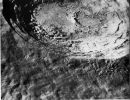
APOLLO 15-0326.jpgAPOLLO 15-0326 - Aristarchus64 visiteAristarchus is a large crater on the edge of a plateau within Northern Oceanus Procellarum. In this scene the crater is viewed obliquely from the North. One of the brightest and youngest craters of its size on the Near-Side of the Moon, Aristarchus is believed to be younger even than Copernicus. The general appearance of Aristarchus and of parts of the plateau around it led Alfred Worden, the Apollo 15 CMP, to describe this part of the Moon as "... probably the most volcanic area that I've seen anywhere on the surface". For many years before the Apollo Missions, Earth-based viewers had reported telescopic sightings of TLP's centered on Aristarchus. These brief, subtle changes in color or in sharpness of appearance have been suggested as evidence for volcanic activity or the venting of gases from the lunar interior. The sightings are controversial, but Aristarchus remains a center of interest.
About 39 Km in diameter, Aristarchus is on the borderline between medium-sized and large- sized craters. We have included it among the large craters because its welldeveloped concentric terraces are characteristic of most large craters that have not been too severely degraded. Its terraced walls, as well as its arcuate range of central peaks, are particularly well shown in this view. The walls and parts of the crater floor are extremely rough and cracked, a characteristic feature of other young impact craters of this size range, such as Tycho and Copernicus. The rough deposits in the floor are probably made up largely of shockmelted material formed at the time of the impact. The inner, rougher portions of the rim show a series of channels, lobate flows, and smooth puddlelike deposits that may represent shock-melted material deposited on the crater rim. The outer, smoother portions show the rhomboidal pattern characteristic of crater ejecta blankets.
|
|
| 86 immagini su 8 pagina(e) |
1 |
 |
|
|
|
|
|





