| Piú viste - Mars Opportunity Anomalies and Maps |

ZH-south-A357R1_br2.jpgHeading South!136 visiteCaption NASA originale:"After NASA's Mars Exploration Rover Opportunity finishes examining its Heat-Shield, the rover team plans to direct Opportunity southward toward a round feature dubbed "Vostok," about 1,2 Km (three-fourths of a mile) away. The plan is to check out small craters along the way.
This image is from the Mars Orbiter Camera aboard NASA's Mars Global Surveyor. North is up, and the big circle at the top is "Endurance Crater" .
|
|

ZQ-MERB-2_528_2.jpgOpportunity's Traverse Map through Sol 530136 visiteUna Mappa interessante ma che richiede un piccolo commento: è un peccato che da questa immagine non si riescano a cogliere le "linee" disegnate dai Side-Winders.
Se fosse possibile (almeno) intravederli, infatti, i passaggi del Rover da canale a canale (from through to through) - dato e premesso che ad (e per) ogni cresta di Side-Winder, e cioè la parte più difficile da superare, fa seguito un avvallamento, o through, o canale - risulterebbero, a nostro parere, molto più chiari e comprensibili.
Ora come ora e con questo tipo di Mappa, invece, la marcia del Rover Opportunity verso Erebus Crater ('via Erebus Highway' - che qui non si vede nè si intuisce) appare di comprensione piuttosto difficile .
|
|
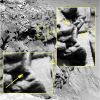
ZZ-ZZ-ZZ-ZZ-ZZ-OPP-SOL1213-1P235875841EFF85MYP2444L6M1-IT1.jpg"Tubular Bells"... - Sol 1213 (CTX Frame and EDMs nn.1 e 2 - credits: Ivana Tognoloni - Lunexit Team)129 visiteDalla nostra Amica e Senior Partner, Ivana Tognoloni, ci giunge l'invito (che raccogliamo con piacere) a gettare un'occhiata attenta e disincantata ad una bizzarra Surface Feature che caratterizza l'Inner Rim del Cratere Victoria.
Si tratta di un profilo "simil-tubolare", con fissurazione "a gomito", che abbiamo già incontrato altre volte e che - ad oggi - nessuno è ancora riuscito a spiegarci in maniera completa ed esaustiva.
ATTENZIONE: nessuno di noi ha detto (nè scritto!) che si tratta di una Surface Feature avente una Matrice non naturale! Stiamo solo dicendo che si tratta di un rilievo "curioso, bizzarro ed intrigante", che merita di essere guardato più da vicino e con curiosità.
Proviamo a farlo insieme...MareKromium
|
|

ZV-Victoria Crater_traverse_labels-A810R1_br2.jpgNext Stop: Victoria Crater!128 visiteCaption NASA originale:"This image from the Mars Orbiter Camera on NASA's Mars Global Surveyor highlights the MER Opportunity's approach toward Victoria Crater.
North is to the left. Opportunity's location at Sol 804 (such as April 29, 2006) is marked, as are the left and right edges of Victoria's rim from the Rover's point of view. The labeled "promontory" is a bright spot that scientists believe is an outcrop on the far side of the crater. Marked in light purple is a small, 35-mt (about 115-foot) crater.
Victoria Crater is 800 mt (nearly half a mile) in diameter, about six times wider than Endurance Crater, where Opportunity spent several months in 2004 examining rock layers affected by ancient water".
|
|

ZU-Opp-Path-R1400021R22640MERBannot-2.jpg...and all-the-way to Victoria! (HR)125 visiteOriginal caption:"The MER Opportunity initially examined sedimentary rock outcrops and sandy, windblown regolith within Eagle Crater; then it was driven by the Rover Team out of Eagle Crater and on into Endurance Crater.
By the end of 2004, Opportunity left Endurance and started investigating the site where the Heatshield impacted the surface.
After that, the Rover spent much of the year 2005 driving from the Heatshield location down to the shallow Erebus Crater.
Long-term plans call for driving Opportunity from Erebus to Victoria Crater, where a substantially thicker sequence of layered rock is expected to be found, relative to previous outcrops examined in the craters Endurance and Eagle".
Location near: 2,0°S and 5,6° W
300 mt scale bar = 984 ft
Illumination from: left
|
|

ZZ-ZZ-ZZ-ZZ-ZZ-OPP-SOL1213-1P235875841EFF85MYP2444L6M1-IT4.jpg"Tubular Bells"... - Sol 1213 (EDM n.3 - credits: Ivana Tognoloni - Lunexit Team)125 visitePerchè ci siamo soffermati su questo dettaglio? Perchè - anche sulla Terra - di "simil-rocce" aventi questa forma è difficile trovarne. Molto difficile!
E' altresì evidente che NESSUNA congettura/implicazione di artificialità può essere fatta avendo come base di riferimento solo questa immagine e relativi EDMs - perchè sia l'original CTX Frame, sia gli EDMs, sebbene assai curiosi ed intriganti, non sono nè possono essere sufficienti a dimostrare alcunchè.
Quello che si può dire, operando con Razionalità e Pragmatismo, è che l'Inner Rim di Victoria - assai più di quello di Endurance - presenta dei rilievi assai curiosi e, tenutesi presenti le Meccaniche di Impatto e le loro conseguenze ed implicazioni, difficilmente spiegabili (di rocce "curve" o "tubolari" non se ne trovano, per quanto si sa, molto spesso...).
Questo - ovviamente - non vuol dire che tali rilievi sono necessariamente di orgine "non naturale" o - chissà... - magari Bio-Magnetica, o comunque frutto di Eventi e/o Processi Esotici di un qualche tipo.
La Verità, ad oggi, è nelle mani del Futuro e di quelli che verranno. Chiunque, oggi, manifesti delle certezze assolute (in senso Razionale o Esotico non fa differenza) in questo campo, non è credibile (almeno a nostro modesto parere).
Grandi Complimenti, sempre e comunque, alla nostra Amica e Senior Partner, Ivana Tognoloni, che non smette mai di individuare dettagli i quali, come minimo, meritano un pò di discussione ed approfondimento.
Poi, sulla Reale Natura di quello che stiamo guardando e commentando, qualcuno, un giorno, scriverà la Verità e porrà fine alle controversie dialettiche ed ideologiche.
Ma questo - sia detto ancora una volta - avverrà in un Futuro (temiamo, ancora) lontano.
Per ora, tutto (ed il contrario di tutto) è sostenibile: basta che si agisca in Buona Fede e quindi con Prudenza, Pragmatismo ed Umiltà.
Virtù, queste ultime, che sembrano - ahinoi! - scarseggiare sempre più (assieme al Buon Senso ed all'Educazione).MareKromium
|
|

ZP-MERB_Traverse_Map_Sol413_all-A441R1_br2.jpgOpportunity: Yesterday - Today - Tomorrow119 visitenessun commento
|
|

ZS-PIA03609_fig1-2.jpgOpportunity Traverse Map: up to Erebus Crater (annotated)115 visiteOriginal caption:"This image shows the route that Opportunity has taken from its landing site inside Eagle Crater to its position on its 656th Sol (such as Nov. 27, 2005) at the edge of Erebus Crater. The base image is a portion of a mosaic (previously released as PIA07506) combining images from the Mars Observer Camera on NASA's Mars Global Surveyor orbiter, the Thermal Emission Imaging System on NASA's Mars Odyssey orbiter and Opportunity's own Descent Image Motion Estimation System. The scale bar at lower right is 800 mt (about one-half of a mile).
As of Sol 656, Opportunity had driven a total of 6.502 meters (about 4,04 miles)".
|
|

ZT-Opp-Path-R1400021R22640MERBannot-1.jpgFrom the Landing Site up to Endurance Crater (HR)113 visiteOriginal caption:"It was two years ago that the MER Opportunity landed on Meridiani Planum.
The Rover marked its first Mars-year (equivalent to 687 Earth Days - and therefore 2 Earth years) in December 2005.
In the picture shown here the "key-sites" have been labeled and the colored portion is a 3D stereo-anaglyph which can be viewed using red (left eye) and a blue (right eye) glasses.
During the landing in January 2004, rockets were fired to slow the final descent, just before the inflated airbags (containing the folded-up Lander and Rover) were released. The rockets disturbed the sandy surface at the location labeled "blast effects".
Following release, the airbags bounced and rolled until coming to rest inside Eagle Crater. The Lander, in fact, can be seen as a bright spot near the center of Eagle Crater.
Meanwhile, the jettisoned parachute and backshell landed to the South-West of Eagle while the Heatshield fell just South-West of Endurance Crater".
|
|

ZR-TraverseMap-PIA03616-1.jpgOpportunity Traverse Map: let's go to Victoria!112 visiteOriginal caption:"This image shows the route that Opportunity had driven through its 659th Martian day, or Sol, (Dec. 1, 2005) relative to the potential destination of "Victoria Crater" farther South. The base image is a portion of a mosaic (previously released as PIA07506) combining images from the Mars Observer Camera on NASA's Mars Global Surveyor Orbiter, the Thermal Emission Imaging System on NASA's Mars Odyssey Orbiter and Opportunity's own Descent Image Motion Estimation System. The scale bar at lower right is 800 mt (about one-half of a mile)".
|
|

ZZ-ZZ-ZZ-ZZ-ZZ-OPP-SOL1213-1P235875841EFF85MYP2444L6M1-IT3.jpg"Tubular Bells"... - Sol 1213 (EDM n.2 - credits: Ivana Tognoloni - Lunexit Team)112 visite...Ed in effetti, a parte la apparente Natura "Tubolare" (diciamo apparente poichè dobbiamo essere prudenti e pragmatici, dato che non sarebbe la prima volta che commettiamo degli errori di valutazione allorchè osserviamo un dettaglio superficiale da un singolo angolo di ripresa) del rilievo ivi ripreso, è proprio questa fissurazione (doppia?!?) "ad angolo" (con squadratura davvero rimarchevole) che potrebbe non essere semplicissima da spiegare...
Insomma: se la roccia a forma di tubo, in qualche modo e misura, non ci sorprende quel più di tanto, è la fissurazione ad angolo (quasi) retto che ci lascia un pochino perplessi.MareKromium
|
|

ZY-Victoria_Campaign_Traverse-B951R1_br2.jpgVictoria Crater: the Map107 visiteThis image from the Mars Orbiter Camera aboard NASA's MGS Spacecraft shows an overview of Victoria Crater and a portion of the area NASA's Mars Exploration Rover Opportunity has covered to reach the enormous depression.
Images such as this one from the MOC on NASA's MGS are helping scientists and engineers decide the best path for NASA's MER Opportunity as it approaches Victoria Crater.
The blue dot indicates Cape Verde and the red dot Cabo Frio. These two points mark the extent of the crater visible from the Rover's position on its 945th Sol (such as Sept. 20, 2006), a location it had reached two Soles earlier and from which much of this monster depression was still out of sight. The green annotations indicate Duck Bay, a location expected to allow a view to the other side of the crater. A dune, or ripple, is to the left of the crater, right in front of the green dot location.
This is where the team initially talked about sending Opportunity for the rover's first view down into the crater. After further consideration, the team opted for a drive to the right of that ripple (south of the green dot) near the rim.
The yellow lines that surround and intersect Victoria Crater are used to measure the crater and the distance to the far "bays." North is up. Victoria Crater is about 800 meters (half a mile) in diameter.
|
|
| 110 immagini su 10 pagina(e) |
 |
|
|
|
|
|
8 | |
|





