| Piú viste - The Chinese Moon Program |

Luna-11.jpgThe "Dark Side of the Moon": Rover Tracks90 visitenessun commentoMareKromium
|
|
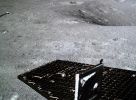
Luna-14.jpgThe "Dark Side of the Moon": approaching the (Relatively small) Impact Crater90 visitenessun commentoMareKromium
|
|

Luna-15.jpgThe "Dark Side of the Moon": Surface and small Craters89 visitenessun commentoMareKromium
|
|

Luna-02.jpgLunar Surface85 visiteThe radar images obtained by the Chinese Rover Yutu-2 have been combined with previous geological information to reveal the Subsurface Geological Structure of the Von Kármán Crater which, apparently, underwent various Geological Processes, including Basaltic Magmatism, Ejecta Coverage and the interaction of Volcanic Eruptive Clastics and Lava.MareKromium
|
|

Luna-06.jpgThe Chinese-Twins85 visiteJust after midnight (UTC) on February 1, 2019, the Lunar Reconnaissance Orbiter (LRO) passed nearly overhead the Chang'e 4 Landing Site. From an altitude of about 82 Km the LROC Narrow Angle Camera - pixel scale was 0,85 mt (such as approx. 33"), allowed a sharper view of the Lander as well as the Yutu-2 Rover. At the time the Rover was about 29 mt North-West of the Lander, but the Rover has likely moved since the image was acquired. This view has close to the smallest pixel size possible in the current LRO orbit. In the future however, LROC will continue to image the Site as the lighting changes, and the Rover (just to check if they are fine, of course...).MareKromium
|
|

Luna-10.jpgThe "Dark Side of the Moon": the Surface78 visitePoco più di un anno fa, la sonda cinese Chang'e 4 è diventata la prima ad atterrare sul lato della Luna non visibile dal nostro pianeta: per celebrare questo anniversario, la Cina ha rilasciato una serie di dati scientifici e immagini catturate dal veicolo spaziale. Dal suo atterraggio il Rover ha in realtà percorso poco più di 350 metri studiando le formazioni rocciose del nostro satellite, e grazie a una "Terrain Camera" montata nella parte superiore del Lander ha fornito scatti ad altissima definizione, come potete vedere nelle foto di questa Gallery. La speciale macchina fotografica, morta alla fine del primo giorno lunare (circa 29,5 giorni terrestri), era in grado di ruotare di 360° e ha fornito dettagliati e interessanti materiali di studio per gli scienziati.MareKromium
|
|

Luna-00.jpgVon Kármán Crater75 visiteThe Chinese "Chang'E-4" (CE-4) spacecraft achieved the first successful soft landing on the Floor of the Von Kármán Impact Crater located in the Nort-Eastern portion of the South Pole-Aitken (SPA) Basin on the Moon (Far-Side). Here, through analysis and processing of the dual-channel Lunar Penetrating Radar (LPR) data, the shallow regolith structure and deep Geological Strata below the Landing Site are exposed. The high-frequency data (CH-2, 500 MHz) show that the Von Kármán Crater underwent remodeling because of ejecta from multiple craters within a thickness of about 40 meters.
Nota: questa Galleria è dedicata agli Appassionati dell'Esplorazione Spaziale (ivi: Lunare) e non intende essere un "tributo" alla Cina ed alla sua Agenzia di Bandiera. Il motivo è semplice: i risultati delle Missioni Spaziali Cinesi sono sempre avvolti in coltri di fitta nebbia, le immagini sono difficili da reperire e quelle "(diciamo) pubbliche" sono scadenti e sostanzialmente insignificanti. Probabilmente anche la "Propaganda" ha dei limiti...palesi.
Note: this Gallery is dedicated to the Space (here: Lunar) Exploration "lovers" and does not mean at all to be a "tribute" whatsoever to the Republic of China and its Space Agency (CSA). The reason of this premise is very simple: the results of the Missions carried out by the CSA are always wrapped in a thick cloud of fog; the images (frames) are hard to find (unless the CSA releases them "willingly"...) and the ones, let's say, "public" are shoddy and meaningless. We therefore believe that even the "propaganda" must have its own undisguised limits...MareKromium
|
|

Luna-03.jpgThe Yutu-2 Rover from LRO74 visiteI dati sino ad ora in nostro possesso sono stati raccolti nel Cratere Von Kármán a partire dal 3 gennaio 2019 quando la navicella spaziale cinese Chang'e 4 è atterrata al suo interno, così diventando la prima Navicella Spaziale ad atterrare dolcemente sul lato (a noi) "nascosto" della Luna . Il Sito ha un valore simbolico oltre che scientifico. Theodore von Kármán (1881-1963) è stato il consigliere di dottorato di Qian Xuesen , il fondatore del Programma Spaziale Cinese.
Il 4 febbraio 2019, la IAU ha approvato il nome del sito di atterraggio come Statio Tianhe . Il picco centrale del Crater Von Kármán, a nord-ovest del Sito di atterraggio, è stato chiamato Mons Tai . Sono stati anche nominati tre piccoli crateri: Hegu, a sud del Landing Site, Zhinyu a Ovest e Tianjin a Nord-Est.MareKromium
|
|
| 20 immagini su 2 pagina(e) |
2 |
|





