| Piú viste - The Moon from JAXA - The "Kaguya" Lunar Probe |

Kaguya-029-Tycho-tc_012_a_l.jpgTycho: the Central Peak (perspective view - natural colors; credits: Lunexit)56 visiteCaption JAXA:"Tycho Crater, located on the Lunar Nearside in the Highlands of the Southern Hemisphere at about 43° South Lat. and 7° West Long. is a young crater formed by an impact about 100 Million Years ago. On nights when the Moon is fully lighted, you can see bright rays coming out from Tycho Crater.
The study of Tycho Crater contributed to the development of Lunar Science. The first data on the chemical composition of the Lunar Highlands were obtained by the analytical instrument onboard Surveyor 7, which soft-landed about 20 Km North of the Rim of Tycho, in 1968 (see Note n. 1).
Dr. J. A. Wood of the Smithsonian Astrophysical Laboratory discovered some tiny fragment of Anorthosite in the regolith (soil) samples collected by the Apollo 11 Astronauts. Because of the observation that the chemical composition of the fragments was similar to that of Tycho taken by the Surveyor, Dr. Wood inferred that these fragment were ejected from Tycho by the impact. He proposed the "Lunar Magma Ocean Hypothesis" (see Note n. 2) in order to account for his finding that the Lunar Highlands are composed of Anorthosite.
One of the major objectives of the subsequent Apollo Missions was to find a pristine Anorthosite rock in the Highlands.
The impact that created Tycho Crater ejected highland anorthositic crust all over the Near Side of the Moon. This impact by a small asteroidal body took place, as we said, about 100 MY ago, when the dinosaurs inhabited the Earth. It was, however, still a relatively recent event in Lunar History, and the effects of the impact event can still be seen.
Note 1) In preparation for the manned Lunar Missions of the Apollo Program, NASA developed soft-landing techniques with the Surveyor Program. Surveyor 7 was the final spacecraft of the series and landed near the north rim of Tycho Crater on 10 January 1968 (UT). During this mission, many photographs of the Lunar Highland landscape were taken and a geological survey was performed.
Note 2) “Lunar magma ocean hypothesis”: To explain the formation of Anorthosite that the Lunar Surface was once completely molten to a depth of about 200 Km, thus forming a “lunar magma ocean”. This hypothesis has contributed not only to Lunar Science but also to ideas about the formation of the Earth. MareKromium
|
|

Kaguya-045-20090619_kaguya_hdtv_L5.jpgThe very final images taken by the HDTV (5)56 visitePicture taken at 03:15 a.m.
Coord.: about 83° South Lat. and approx. 261° East Long.
Spacecraft altitude: 18,4 Km
Relative Position: South of Drygalski CraterMareKromium
|
|

Kaguya-044-20090619_kaguya_hdtv_L4.jpgThe very final images taken by the HDTV (4)56 visitePicture taken at 03:14 a.m.
Coord.: about 81° South Lat. and approx. 261° East Long.
Spacecraft altitude: 20,7 Km
Relative Position: near Drygalski CraterMareKromium
|
|
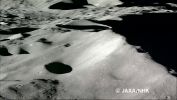
Kaguya-043-20090619_kaguya_hdtv_L3.jpgThe very final images taken by the HDTV (3)56 visitePicture taken at 03:13 a.m.
Coord.: about 79° South Lat. and approx. 261° East Long.
Spacecraft altitude: 23,0 Km
Relative Position: near side of Drygalski Crater (approx. 30 Km dia.)MareKromium
|
|

Kaguya-028-hdtv_002_2c.jpgSome Lunar Geography from Kaguya: proximities of Hertzsprung Crater (FarSide)55 visiteHertzsprung Crater - Coord.: 2,6° South Lat. and 129,2° West Long.; Diam.: about 591 KmMareKromium
|
|
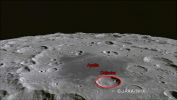
Kaguya-025-hdtv_002_6c.jpgSome Lunar Geography from Kaguya: the Apollo "Plain" and Onizuka Crater (FarSide)55 visiteApollo Plain - Coord.: 36,1° South Lat. and 151,8° West Long.; Diam.: about 537 Km
Onizuka Crater - Coord.: 36,2° South Lat. and 148,9° West Long.; Diam.: about 29 Km
Note: Ellison Onizuka (1946-1986) was an American Astronaut. He actually was the 1st Asian-American who flew into space and he died in the tragic explosion of the Space Shuttle Challenger, in 1986 (that would have been his second flight mission).MareKromium
|
|

Kaguya-031-Tycho-tc_012_d_l.jpgTycho: the Inner Rim (perspective view - natural colors; credits: Lunexit)55 visitenessun commentoMareKromium
|
|

Kaguya-030-Tycho-tc_012_c_l.jpgTycho: the Inner Rim (perspective view - natural colors; credits: Lunexit)55 visitenessun commentoMareKromium
|
|
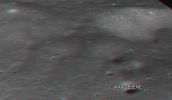
Kaguya-015-20071128_kaguya_tc03_04_l.jpgDyson Crater Region (3-D)54 visitenessun commentoMareKromium
|
|
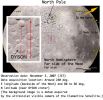
Kaguya-014-20071128_kaguya_tc04_01_e.jpgDyson Crater Region as to the North Pole of the Moon54 visitenessun commentoMareKromium
|
|
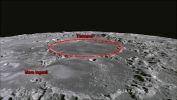
Kaguya-022-hdtv_004_3c.jpgSome Lunar Geography from Kaguya: Thomson Crater and Mare Ingenii (FarSide)54 visiteMare Ingenii - Coord.: 33,7° South Lat. and 163,5° East Long; Total length: about 318 Km
Thomson Crater - Coord.: 32,7° South Lat. and 166,2° East Long.; Diam.: about 112 Km
MareKromium
|
|
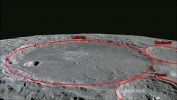
Kaguya-020-hdtv_004_1c.jpgSome Lunar Geography from Kaguya: around Leibnitz Crater (FarSide)54 visiteLeibnitz Crater - Coord.: 38,3° South Lat. and 179,2° East Long; Diam.: about 245 Km
Davisson Crater - Coord.: 37,5° South Lat. and 174,6° West Long.; Diam.: about 87 Km
Finsen Crater - Coord.: 42,0° South Lat. and 177,9° West Long.; Diam.: about 72 KmMareKromium
|
|
| 55 immagini su 5 pagina(e) |
 |
|
4 |
|





