| Piú viste - A Tribute To Mars Global Surveyor |

Volcanic_Regions-Rocky_Outcrops-MGS-00.JPGStreamlined Rocky Outcrops near Olympus Mons (Original NASA/MGS/MSSS b/w Frame)65 visiteCaption NASA originale:"This MGS-MOC image shows wind-eroded Outcrops overlying Lava Flow Surfaces located to the West of Olympus Mons. Outcrops with this appearance are also called Yardangs.
Yardangs typically form in Sedimentary Rock or Volcanic Ash that contains some amount of Sand.
The weathering of the Rock due to the Aeolian action cause the release of sand-sized particles from the Outcrops and, in time, such a form of erosion slowly shape the rock into the classic, inverted boat hull-like shapes of Yardangs".
Location near: 13,2° North Lat. and 160,1° West Long.
Image width: ~3 Km (~1,9 mi)
Illumination from: lower left
Season: Northern Spring
|
|

South_Polar_Features-Swiss_Cheese_Terrain-03.jpgThe "drawings" of the South Polar Residual Cap (1)65 visiteCaption NASA originale:"This MGS-MOC image shows a Summertime view of the South Polar Residual Cap of Mars. In this image, mesas composed largely of solid Carbon Dioxide are separated from one another by irregularly-shaped depressions. The variation in brightness across this scene is a function of several factors including, but not limited to, varying proportions of dust and solid Carbon Dioxide, undulating topography, and differences in the roughness of the slopes versus the flat surfaces".
Location near: 86,7° South; 343,3° West
Image width: ~3 Km (~1,9 mi)
Illumination from: upper left
Season: Southern Summer
|
|

Craters-Unnamed_Craters-MGS.JPGMartian "Spectacles"! (Original NASA/MGS/MSSS b/w Frame)65 visiteCaption NASA originale:"This MGS-MOC image shows a pair of partially-buried impact craters which are being exhumed on a plain east of Hellas in the Promethei Terra Region Mars".
Location near: 45,5° South; 256,5° West
Image width: ~3 Km (~1,9 mi)
Illumination from: upper left
Season: Southern Autumn
Nota: "spectacles"---> occhiali
|
|

North_Polar_Features-Dunes-MGS-00.jpgNorth Polar Dunes (Original NASA/MGS/MSSS b/w Frame)65 visiteCaption NASA originale:"This MGS-MOC image shows dunes in the North Polar Region of Mars. In this Springtime view, the dunes are largely covered by frozen Carbon Dioxide (CO2) that was deposited during the Winter months in the Northern Hemisphere. Dark spots indicate areas where the frost has begun to either sublime away, acquire a roughened texture, or both".
Location near: 77,3° North; 95,4° West
Image width: ~3 Km (~1,9 mi)
Illumination from: lower left
Season: Northern Spring
|
|

North_Polar_Features-Dunes-MGS-05.jpgNorth Polar Dunes (Original NASA/MGS/MSSS b/w Frame)65 visiteCaption NASA originale:"This MGS-MOC image shows dunes in the North Polar Region of Mars. In this scene, the dunes and the plain on which the dunes reside, are at least in part covered by a bright CO2 frost.
Dark spots indicate areas where the frost has begun to change, either by subliming away to expose dark sand, changing to a coarser particle size, or both.
The winds responsible for the formation of these dunes blew from the South-West toward the North-East.
Location near: 76,3° North; 261,2° West
Image width: ~3 Km (~1,9 mi)
Illumination from: lower left
Season: Northern Spring
|
|

South_Polar_Features-Fans-PIA08658.jpgSouth Polar Fans (Original NASA/MGS/MSSS b/w Frames)65 visiteCaption NASA originale:"Dark spots (left) and 'Fans' appear to scribble dusty hieroglyphics on top of the Martian South Polar Cap in two High-Resolution MGS-MOC images taken in Southern Spring. Each image is about 3-Km wide".
|
|

North_Polar_Features-Dunes-MGS-07.jpgNorth Polar Dunes (Original NASA/MGS/MSSS b/w Frame)65 visiteCaption NASA originale:"This MGS-MOC image shows dunes in the Martian North Polar Region. The dunes are composed of dark,
coarse (--> ruvido, di tessitura grossolana) sand.
The white areas around the dunes are the last remaining areas of seasonal CO2 frost cover.
The solid CO2 accumulates during the Autumn and Winter and sublimes (goes from solid to gas) away in the Spring.
This image was taken near the end of the Northern Spring".
Location near: 78,0° North; 244,5° West
Image width: ~3 Km (~1,9 mi)
Illumination from: lower left
Season: Northern Spring
|
|

North_Polar_Features-North_Polar_Cap-MGS.jpgAnnular Clouds over the North Pole (Natural Colors; credits: NASA/JPL/MSSS)65 visiteCaption NASA:"Two annular (---> somewhat circular) clouds are seen in the upper left corner of this mosaic of MOC wide angle camera daily global mapping images. To the right of the picture's center is the Martian North Polar Cap. The image has a scale of about 7,5 Km (about 4,7 miles) per pixel. Annular clouds are common in mid-Northern Summer in the North Polar Region and may result from eddy currents in the lower atmosphere. The appearance of such clouds happens every year; this year they came like clockwork within a two-week forecasted period, based on the previous 4 Martian Years of experience gained from MGS MOC daily global imaging.
Despite their superficial resemblance to Earth-orbiting satellite views of hurricanes, these cloud features are not the result of strong winds and they typically dissipate later in the day. The pictures used to make this mosaic were acquired less than 2 days before the MOC was turned off for MGS's 5th Mars-Earth Solar Conjunction period. During Conjunction, Mars was on the other side of the Sun, relative to Earth, and thus MGS could not transmit data (through the Sun) during the second half of October".
|
|
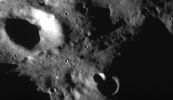
Phobos_from_Mgs-009.jpgPhobos, from MGS (Original NASA/MGS/MSSS Full Frame n. 3)65 visiteLett. E: il secondo (più piccolo, ma certo non meno inesplicabile) Monolito di Phobos.
Nota: nella parte superiore del frame sono visibili anche altri rilievi colonnari - riconoscibili a causa delle ombre assolutamente peculiari che proiettano in condizioni di illuminazione radente - ancora più piccoli.
Le "Colonne di Phobos" e le "Cuspidi di Blair": potrebbe esistere una connessione? Questi rilievi possono essere il frutto di processi geologici simili?
Che ne pensate?MareKromium
|
|

Thaumasia_Region-The_Electric_Dunes-05.jpgThe "Bright Dunes" of Thaumasia (CTX Frame - Enhanced Natural Colors; credits for the additional process. and color.: Dr Paolo C. Fienga - Lunexit Team)65 visiteLe "Dune Luminose" di Thaumasia: per una Scuola di Pensiero si tratta di tubazioni, un tempo interrate, le quali sono state poi riportate alla luce dalla combinazione di azioni geologiche (da un lato) e meteorologiche (dall'altro). Tubazioni metalliche i cui scopi sono un mistero che, probabilmente, è destinato a rimanere tale.
Per altri Ricercatori, invece, si potrebbe trattare di spezzoni visibili di tunnel traparenti i quali, sempre a causa del concorso fra azioni geologiche (sismi, subsidenze, fratture tettoniche etc.) ed azioni meteorologiche (piogge torrenziali, alluvioni, venti et sim.), sono "emersi" dalle profondità del Pianeta Rosso sino a rendersi, in parte, visibili.
Per altri ancora, infine, si potrebbe trattare delle strutture che reggevano i tunnels di cui sopra (diciamo gli scheletri di queste ipotetiche costruzioni).
Per la NASA, si tratta di "ripples", ossìa di dune costituite da sabbie rapprese e, nel tempo, divenute simili a rocce (ancorchè - relativamente - fragili).
L'ESA è d'accordo con questa costruzione ma - e diremmo "ovviamente" - nè la NASA, nè l'ESA spiegano il motivo di questa albedo così inusuale per delle strutture rocciose.
Noi, come Gruppo di Ricerca Indipendente, riteniamo che queste strutture sìano, di fatto, dei rilievi naturali. Il motivo della loro "luminosità", come Geologia e Razionalità ci suggeriscono, dovrebbe essere ricercato - prima di lasciarsi andare a teorizzazioni esotiche (e prive di fondamenta) - nella composizione di questi rilievi. Svariate aree di Marte "brillano" e, come Spirit stesso ha già evidenziato, la superficie di Marte è ricca di sali e di sostanze aventi una natura ed una struttura cristallina.
Forse, prima di pensare a "tubi" e "tunnel", varrebbe la pena di pensare anche a sali, quarzi, superfici vetrificate e - perchè no? - ghiaccio.
|
|
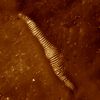
Thaumasia_Region-The_Electric_Dunes-06.jpgThe "Bright Dunes" of Thaumasia (EDM n.1 - Enhanced Natural Colors; credits for the additional process. and color.: Dr Paolo C. Fienga - Lunexit Team)65 visitenessun commento
|
|

Noachis_Terra-M1501427-PCF-LXTT-01.jpgNoachis Panorama (EDM - Enhanced and Saturated Natural Colors; credits for the additional process. and color.: Dr Paolo C. Fienga - Lunexit Team)65 visitenessun commento
|
|
| 512 immagini su 43 pagina(e) |
 |
|
|
|
|
|
39 | |
|
|
|








