| Piú viste - A Tribute To Mars Global Surveyor |

Volcanoes-Unnamed_Volcano_in_Syria_Planum-MGS.jpgBuried Volcano in Syria Planum (Original NASA/MGS/MSSS b/w Frame)67 visiteCaption NASA originale:"This MGS-MOC image shows a small Volcano in the Syria Planum Region of Mars. Today, the Lava Flows that compose this small Volcano are nearly hidden by a mantle of rough-textured, perhaps somewhat cemented, Dust. The light-toned Streaks that cross the scene were formed by passing Dust Devils, a common occurrence in Syria".
Location near: 13,0° South Lat. and 102,6° West Long.
Image width: ~3 Km (~1,9 mi)
Illumination from: upper left
Season: Southern Autumn
|
|

Aeolian_Features-Yardangs-Terra_Sabaea-MGS-00.jpgYardangs in Terra Sabaea (1 - Original NASA/MGS/MSSS b/w Frame)67 visiteCaption NASA originale:"This MGS-MOC image shows the contact between a group of Yardangs, tapered Ridges formed by the removal of relatively easily-eroded material (e.g.: Sedimentary Rock) and a concentration of dark-toned windblown Sand on the Floor of an Unnamed Crater in the Terra Sabaea Region of Mars".
Location near: 1,4° North Lat. and 333,9° West Long.
Image width: ~3 Km (~1,9 mi)
Illumination from: upper left
Season: Northern Spring
|
|

Aeolian_Features-Yardangs-Terra_Sabaea-MGS-02.jpgYardangs in Terra Sabaea (3 - Original NASA/MGS/MSSS b/w Frame)67 visiteLocation near: 1,4° North Lat. and 333,9° West Long.
Image width: ~3 Km (~1,9 mi)
Illumination from: upper left
Season: Northern Spring
|
|

Craters-Unnamed_Crater_with_Intra-crater_Dunes-M0700566-01.jpgIntra-Crater Dunes (EDM)67 visitenessun commento
|
|
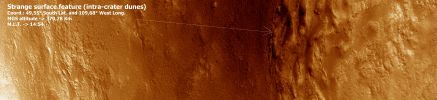
Craters-Unnamed_Crater_with_Intra-crater_Dunes-M0700566-00.jpgIntra-Crater Dunes (CTX Frame - Extremely Enhanced and Saturated Natural Colors; credits for the additional process. and color.: Dr Paolo C. Fienga - Lunexit Team)67 visitenessun commento
|
|
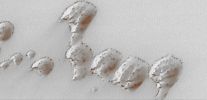
North_Polar_Features-Dunes-PCF-LXTT.jpgThe Frozen Dunes of the North in early Spring (Natural Colors; credits for the additional process. and color.: Dr Paolo C. Fienga - Lunexit Team)67 visiteCaption NASA originale:"This MGS-MOC image shows a group of sand dunes, covered by seasonal Carbon Dioxide frost, in the Martian North Polar Region. Over the course of Northern Hemisphere Spring, the CO2 frost sublimes away, slowly revealing the dark sand that makes up the dunes.
The dark spots in this image may be patches of freshly-exposed sand, or they could be places where the CO2 frost has changed, either becoming rougher, coarser-grained (larger crystals), or both.
A rougher or coarser-grained surface will appear darker because of an increase in shadowing of the surface by the small-scale roughness elements".
Location near: 75,2° North Lat.and 51,3° West Long.
Image width: ~3 Km (~1,9 mi)
Illumination from: lower left
Season: Northern SpringMareKromium
|
|

North_Polar_Features-Dunes-MGS-08.jpgNorth Polar Dunes (Natural Colors; credits for the additional process. and color.: Dr Paolo C. Fienga - Lunexit Team)67 visiteCaption NASA originale:"This MGS-MOC image shows dunes in the Martian North Polar Region. The dunes are composed of dark,
coarse (--> ruvido, di tessitura grossolana) sand.
The white areas around the dunes are the last remaining areas of seasonal CO2 frost cover.
The solid CO2 accumulates during the Autumn and Winter and sublimes (goes from solid to gas) away in the Spring.
This image was taken near the end of the Northern Spring".
Location near: 78,0° North; 244,5° West
Image width: ~3 Km (~1,9 mi)
Illumination from: lower left
Season: Northern SpringMareKromium
|
|

Chaotic_Terrain-Aram_Chaos-S0100839-PCF-LXTT-01.jpgUnusual Surface Features in Aram Chaos (EDM - False Colors)67 visiteRilievo n. 1: il "Triangolo Isoscele". Probabilmente un'ombra o (più verosimilmente) un collapse pit o, comunque, un'area depressa: l'immagine MGS è, purtroppo, di qualità molto scarsa ed i nostri tentativi di migliorarla sono inevitabilmente produttivi di image-artifacts i quali, alla fine, confondono ancora di più le idee. Comunque sia, non abbiamo elementi per congetturare una possibile origine "non naturale" del dettaglio;
Rilievo n. 2: le (gigantesche, dato che risultano visibili da grandi altezze) "Dune Rigide" (o "Ripples") che attraversano questa Regione, come ben si vede nel frame in oggetto (ed anche senza magnificarlo), vista la facilità che hanno nel passare da aree "piatte" ad aree "elevate" rispetto al Datum" (modeste colline o dossi, ad esempio) senza modificare la loro struttura - sostanzialmente liscia e lineare -, diremmo che assomigliano di più a dei veri e propri "ponti" (i famosi "Bridges of Aram Chaos", dopo quelli di Becquerel Crater, se volete), piuttosto che a meri accumuli di sabbie e polveri dapprima rappresi (dal freddo) e poi modellati (scolpiti) dall'azione dei Venti Marziani.
Ponti, ovviamente, di origine assolutamente naturale ma di matrice "discutibile"...;
Rilievo n. 3: un "ponte" ricurvo e ad albedo elevata, COMPLETAMENTE incongruo rispetto al panorama al quale accede (per la NASA, si ribadisce, si tratta sempre e solo di Ripples, ma NESSUNO - alla NASA... - ha spiegato come delle semplici Dune Rigide potrebbero arrivare a configurarsi in questo modo...);
Rilievo n. 4: un altro "ponte" ricurvo e ad albedo elevatissima che sembra "emergere" dal sottosuolo e sulla cui origine si potrebbe discutere (restando "a tavolino") per un secolo e mezzo senza arrivare assolutamente a nulla.
Morale: la Regione di Aram Chaos (e qui l'attribuzione della caratterizzazione "Chaos" ci appare quanto mai appropriata) costituisce un autentico Paradiso di (possibili) Anomalìe.
Ma la domanda essenziale (che rivolgiamo a noi stessi ed a Voi) era ed è sempre la stessa ed è solo una: quali di queste possibili Anomalìe sono effettivamente tali e quante, invece, sono il prodotto di illusioni ottiche determinate dalla distanza e dall'angolo di ripresa?
Il che vuol dire, in breve: prima di provare anche solo a domandarci "che Natura potrebbe avere il rilievo che vediamo?", è sempre meglio cercare di capire se esso ESISTE DAVVERO oppure se si tratta solo del prodotto di un inganno ottico determinato da elementi oggettivi, reali e, per l'Osservatore, insormontabili (altezza, angolo slant del particolare ripreso, condizioni di illuminazione locale, risoluzione e definizione del frame etc.).
Tutto ciò premesso, agendo sulla base della nostra competenza ed esperienza, possiamo dire questo: la Regione di Aram Chaos presenta, effettivamente, delle Caratterizzazioni Locali ASSOLUTAMENTE peculiari e di difficile (o impossibile) spiegazione. Si potrebbe trattare di molte cose diverse ed eccezionali, oppure di nulla di speciale: noi non lo sappiamo. Quello che sappiamo, è che solo l'analisi pragmatica e razionale (e NON pre-orientata) dei dati - ivi: le immagini - ci può aiutare a capire qualcosa di quello che osserviamo.
Ma la certezza (QUALSIASI certezza) potrà arrivare solo andando in loco.
Operando al di fuori di questo "range di razionalità" - credeteci - si "naviga a vista" in un oceano di congetture, illazioni, speculazioni e bufale vere e proprie (e che Hoagland & Compagnia Bella ci perdonino...).MareKromium
|
|

Craters-Unnamed_Crater_with_Gullies-MGS-1-PCF-LXTT.jpgUnnamed Crater with Gullies (Absolute Natural Colors; credits for the additional process. and color.: Dr Paolo C. Fienga - Lunar Explorer Italia)67 visiteCaption NASA originale:"This MGS-MOC image shows Gullies and cracked and stressed Gully-Apron Deposits in a South Mid-Latitude Unnamed Crater. Gullies can also be seen in the deep shadow on the North Wall of the Crater. These Gullies might have formed by the erosive action of liquid water, sometime in the not-too-distant Martian Past".
Location near: 36,7° South; 206,2° West
Image width: ~3 Km (~1,9 mi)
Illumination from: upper left
Season: Southern Autumn
Nota: attenzione a quello che la NASA ha scritto in sede di commento: adesso il passato al quale fare riferimento per pensare ad acqua che scorre "allo stato liquido" su Marte non è più remoto (un miliardo di anni o giù di lì); adesso questo passato è "...not too distant..." e cioè "passato prossimo". RicordateVi, in futuro, di quello che stiamo scrivendo da mesi: un frame dopo l'altro ed una parola dopo l'altra, la NASA si sta (lentamente ma) costantemente ridefinendo in chiave possibilista molte delle proprie posizioni (da anni più che consolidate) su molti aspetti/enigmi del Pianeta Rosso.
A quando l'ammissione di una "forma vitale" attuale, magari sotterranea?!?... MareKromium
|
|

Volcanoes-The_FootPrint_Volcano-A-MGS.jpgThe "Footprint Volcano" (CTX Frame- Saturated Natural Colors; credits for the additional process. and color.: Dr Paolo C. Fienga - Lunar Explorer Italia)67 visitenessun commentoMareKromium
|
|
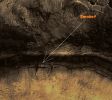
Utopia_Planitia-Smoke-C-M0202863-PCF-LXTT.jpgControversial Surface Feature in Utopia Planitia (False Colors; credits: Lunar Explorer Italia)67 visiteAlcuni "crack" che caratterizzano la porzione superiore del margine interno (Inner Rim) di questo cratere senza nome SEMBRANO presentare delle tracce di "affumicamento" (portate l'immagine a schermo pieno e poi verificate Voi stessi); tuttavia, prima di parlare di "fumi" che emergono dal sottosuolo - il che può anche essere - bisognerebbe escludere tutte le altre possibilità (ivi incluso il vizio di visione - il frame, a dire il vero, non è un granchè in quanto a risoluzione e definizione - ed il "trascinamento" di polveri sottili a seguito di azioni eoliche - un'azione che spesso sfocia nella produzione di "dust streaks" i quali, ve detto, assomigliano terribilmente - specie se guardati da grande distanza (ivi: oltre 380 Km) - alle tracce di affumicamento).
Ma questa esclusione, usando SOLO questo frame, è impossibile farla e quindi...restiamo dubitativi.
Il che significa, per farla breve, che FORSE si tratta effettivamente di tracce di fumo...e FORSE no.MareKromium
|
|
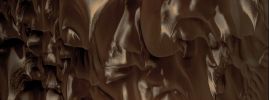
Craters-Hellespontus_Crater-1-M0201817Det.jpgFrost on the dunes of Hellespontus Crater (Natural Colors; credits for the additional process. and color.: Dr Paolo C. Fienga - Lunar Explorer Italia)67 visitenessun commentoMareKromium
|
|
| 512 immagini su 43 pagina(e) |
 |
|
|
|
|
36 | |
|
|
|
|








